

by Joseph DeMaio, ©2026


(Oct. 20, 2026) — As the 2026 midterm election derby winds down, followed a few nanoseconds later by the 2028 general election presidential sweepstakes taking over, your humble servant offers the following truncated summary of the past fifteen-plus years of pontificating on who can …, and of greater importance, who cannot serve as President under the “natural born Citizen” (“nbC”) clause of the Constitution. Your servant posits that the task takes on more relevance as rumors of yet another Kamala Harris candidacy fester. Stated otherwise, it is like a “Cliff’s Notes” version of the issue.
The following “short version” (suitable for townhall meetings, press releases and podcast or cable news appearances) presupposes faithful P&E readers’ passing knowledge and understanding of the “basics,” including (1) § 212 of Book 1, Ch. 19 of Emer de Vattel’s treatise “The Law of Nations”; (2) the Eligibility Clause itself; (3) John Jay’s July 25, 1787 letter to Constitutional Convention Chairman George Washington; and (4) the 2015 Harvard Law Review article by former U.S. Solicitors General Paul Clement and Neal Katyal, advancing a definition of the nbC term corresponding to a “citizen at/by/from birth” and critiqued by your servant here, here and here. If readers are “rusty” on these documents, they may wish to brush up on them first.
One preliminary caveat: unless and until the Supreme Court assumes jurisdiction and issues a decision in a live “case or controversy” with a litigant possessing “standing” on the nbC issue – and does not again “punt” on the issue as being purportedly a “political question” – the following is neither “precedent” nor “binding authority.” Instead, it is but your servant’s “best take” on what the Founders of this Republic, rather than today’s “experts,” meant when they adopted the nbC eligibility restriction into the Constitution. And as Charlie Kirk would say: “Prove me wrong.”
Ready?
Excellent …, let us begin.
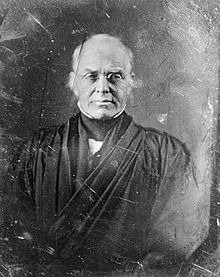
First, the Founders adopted the nbC eligibility restriction in order to preclude — not just impede, delay or frustrate — the insinuation of foreign influence into the presidency. SCOTUS Justice Joseph Story confirms this in § 1473 of his seminal treatise on the Constitution: “[T]he purpose of the natural born Citizen clause was … to ‘cut[] off all chances for ambitious foreigners, who might otherwise be intriguing for the office; and interpose[] a barrier against those corrupt interferences of foreign governments in executive elections.’” (Emphasis added) This fact dovetails precisely with the concern noted by Publius Alexander Hamilton in Federalist 68, where he warns of the dangers residing in foreign powers seeking to “raise a creature of their own to the chief magistracy of the union ….”
A definition of an nbC which is based solely on being a “citizen at/by/from birth,” ignoring the de Vattel § 212 “two citizen parents” requirement, may “cut off” one chance for foreign influence insinuation, but not all chances, as noted by Justice Story, and as does the § 212 alternative.
Indeed, the objective of barring and precluding even the potential for such influence and “corrupt interferences of foreign governments” was underscored by Founder John Jay in his July 25, 1787 letter to Constitutional Convention Chairman George Washington. There he “hinted” to Washington “whether it would not be wise & seasonable to provide a strong check to the admission of Foreigners into the administration of our national Government; and to declare expressly that the Command in chief of the [A]merican army shall not be given to, nor devolve on, any but a natural born Citizen.” A “strong check” on (i.e. “against”) the admission of foreigners and the embedded alien influence they carried with them is the antithesis and opposite of a disfavored “invitation” to insinuate. A “citizen at/by/from birth” definition of an nbC is precisely what the Founders sought to prevent rather than facilitate.
Second, Jay’s “hint” is couched in terms of advising Washington to adopt an exclusion and prohibition on the admission of foreigners into, among other components of the new nation’s administration, i.e., the presidency. Plainly, Jay’s motivating concern was ensuring that the office of the Commander-in-Chief of the nation’s military be occupied exclusively by a person of sole and undivided loyalty and allegiance to the United States, and no other nation. A President who was a “dual citizen” of the Republic and another nation – as is Kamala Harris today under the Constitution of Jamaica – was anathema to the Founders.

In other words, the § 212 definition implements the Founders’ goal, while the “citizen at/by/from birth” does exactly the opposite by providing, at minimum, a pathway for foreign influence to enter the office. While the recent SCOTUS decision in Trump v. Barbara regarding so-called “birthright citizenship”) makes little, if any sense in the 14th Amendment context (read the Alito and Thomas dissents), it makes no sense at all in the nbC context under Art. 2, § 1, Cl. 5, the presidential Eligibility Clause. Moreover, beyond independently making no sense, it directly conflicts with the Founders’ original intent of excluding “foreign influence” from even the potential of insinuation into the office of the President.
Third, further compounding the error of equating a 14th Amendment “citizen at/by/from birth” with an Eligibility Clause nbC is the fact that, when the delegates to the 1787 Constitutional Convention were presented with the option of requiring the President to be merely a “citizen” of the United States (under the proposed Madison-Pinckney amendment [Madison’s Notes of Aug. 22, 1787), the delegates rejected that proposal. Then, some two weeks later, on Sept. 4, 1787 (Madison’s Notes of Sept. 4, 1787), they instead adopted, nem con. (without dissent, thereby including delegates Madison and Pinckney), the nbC alternative recommended by delegate Judge David Brearley, Chairman of the Convention’s Committee on Postponed Matters.
If the Founders intended in 1787 to treat as equivalent to an nbC a “citizen at/by/from birth,” why would they have included an otherwise superfluous exception in the Eligibility Clause for any person who was “a Citizen of the United States, at the time of the Adoption of this Constitution…?” The suggestion by some that it was done as a “favor” to Alexander Hamilton, who although a citizen, was known to have been born a foreigner, is counterintuitive: even Hamilton rejected the idea by supporting John Adams for President in 1796 instead of running himself.
The answer is clear: the Founders differentiated between a “citizen” and a “natural born Citizen” for purposes of presidential eligibility. The politically-motivated and result-oriented theories of today’s constitutional “experts,” including Messrs. Clement and Katyal along with a host of other purported “authorities,” cannot withstand rational analysis against these historical realities.

Finally, the faux “citizen at/by/from birth” theory – equating such a person with an nbC as contemplated by the Founders in 1787 – is undermined, if not outright demolished by the SCOTUS decision in Minor v. Happersett. There, the Court confirmed – albeit in (arguable) judicial dicta and without mentioning John Jay’s “hint” letter or citing § 212 – that in the “nomenclature” of the day with which the Founders were familiar in 1787, an nbC was a person born here to two citizen parents.
Although the decision regarding Virginia Minor’s suffrage status was abrogated in 1920 by the 19th Amendment, the Court’s factual statement relating to the Founders’ understanding of the nbC term they used in 1787 remains as accurate and vital today as when the unanimous decision was rendered in 1874. Those who would substitute a “close-enough-for-government-work” false definition of an nbC as adopted by the Founders either misunderstand – or choose to ignore – the statement of the Supreme Court in Minor.
Moreover, the fact that the statement might be deemed to be dicta does nothing to alter or affect its empirical truth. Apart from the fact that the record in the case supports the conclusion that Virginia Minor was, in fact, an nbC – thus converting the “judicial dicta” into part of the necessary “holding” of the case – as was recently noted in United States v. Watkins, 10 F.4th 1179, 1182 (11th Cir. 2021): “There is dicta, and then there is dicta, and then there is Supreme Court dicta.” (Emphasis added)
And, of course, none of the foregoing helps to explain or rehabilitate the manifest factual error of Associate Justice Horace Gray in the Wong Kim Ark case regarding Congress’s repeal of the 1790 Naturalization Act (1 Stat. 103), the “nbC” rationale of which Messrs. Clement and Katyal seem to believe persists unchanged from 1790 to today, despite its repeal in 1795 by 1 Stat. 414.
In conclusion, and against the foregoing historical, empirical backdrop, those who contend that someone who is but a “citizen at/by/from birth” is the equivalent of an nbC as contemplated and intended by the Founders in drafting the Constitution, as opposed to, for example, the 14th Amendment, are…, to state the matter bluntly and colloquially: “barking up the wrong tree.” If they want a different result, the proper way of doing that is amending the Constitution. The tactic of accepting “close-enough-for-government-work” solutions when interpreting the Constitution and ascertaining the intent of the Founders should be rejected.
And to repeat Charlie Kirk: “Prove me wrong.”
Leave a Reply