

by Robert Kalebra, ©2025
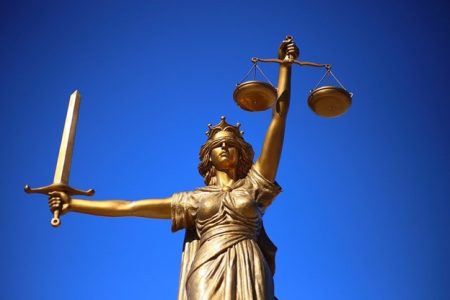
(Jan. 8, 2025) — Every state in the United States has specific laws that provide individuals with the authority to arrest someone who has committed a felony, whether the offense occurred in their presence or not. This right generally exists without the need for a warrant, as long as the person making the arrest has a reasonable belief that the individual in question has engaged in conduct that legally qualifies as a felony.
However, in some jurisdictions, the law requires that individuals consult with a magistrate judge or law enforcement authorities before making an arrest. In these cases, the authorities can help the person making the arrest complete any necessary legal paperwork and guide them through the process to ensure everything is done according to the law. This requirement is designed to help individuals navigate the complexities of the legal system and ensure that any action taken is consistent with the protections afforded to all parties under the law.
In certain states, it is also possible for an individual to arrest someone for committing a misdemeanor, but only if the offense occurred in their presence. Even then, the arrest must happen immediately after the crime is committed. If the individual does not act right away, their only recourse is to file a complaint with law enforcement, a prosecutor, or a magistrate judge. By doing so, they can request that a warrant be issued for the person’s arrest, allowing law enforcement to handle the situation moving forward.
No jurisdiction in the United States has laws that explicitly prohibit the arrest of a public official who has committed a felony, as long as the conditions for arrest are met as described above. In fact, interfering with an arrest of a public official under such circumstances would be considered obstructing justice, which is itself a criminal offense. This means that anyone, including law enforcement or other government officials, who tries to prevent the lawful arrest of a public official could face severe legal consequences for their actions.
Although many people frequently express concerns about corrupt public officials, there is often a significant gap between their complaints and their willingness to take legal action. Despite having the legal authority, a “statutory right,” to intervene and hold officials accountable, many individuals choose not to take action, either out of fear of government retaliation or a belief that the responsibility belongs to someone else. This hesitation and apathy contribute to the lack of accountability for corrupt officials, allowing them to continue their behavior with little risk of consequence. As a result, the system remains broken, and the individuals who could help resolve these issues by taking action often remain inactive.
The Declaration of Independence, a foundational document in the United States’ history, reminds us of our duty to act when faced with governmental corruption or oppression. It states, “When any form of government evinces these objects as to be absolute despotism, it is their right, it is their duty to throw off that government and institute new safeguards.” This principle highlights that citizens not only have the right but also the responsibility to stand up against a corrupt or oppressive government. It calls for individuals to take proactive steps to protect their rights and ensure the integrity of the government, rather than passively accepting the status quo.
In conclusion, it is vital for citizens to act responsibly when they witness corruption or unlawful behavior, especially by public officials. By understanding and exercising their legal powers, individuals can play an essential role in maintaining justice and holding corrupt individuals accountable. Ultimately, the responsibility to uphold the law and challenge systemic corruption rests with each of us.
Comments
2 responses to “Can You Arrest a Public Servant? Actually, Yes!”
“Ultimately, the responsibility to uphold the law and challenge systemic corruption rests with each of us.”
Robert Kalebra’s article herein is right on target; We the People, being the first three words, and being the largest and boldest words of the originally penned U.S. Constitution, are ultimately responsible for the behavior of our convenient/consented governance of Our nation’s daily affairs.
https://en.wikipedia.org/wiki/Constitution_of_the_United_States
“We the People” on Main Street USA, simply as legal U.S. citizens from all walks of Life, and not “Thee the Government” and not “Me the President”, etc., are ultimately responsible for all behaviors and for all living conditions inside Our sovereign U.S. borders.
However, after 08-28-08, the ideal theory in We the 300,000,000 People’s governance SUPERVISING the actual practice of some 10,00,000 consented governance employees, now reveals a virtually unsupervised runaway U.S. Government with a life all its own.
https://www.brookings.edu/articles/the-true-size-of-government-is-nearing-a-record-high/
Quite simply, until every able-bodied adult We the People on Main Street USA, YOU and me, punish Nancy Pelosi and her herd of U.S. Government sheeple for their collective election treason of
08-28-08 -Today
>>>
, and for her other “Legacy of Lunacy” transgressions, Our USA, even with today’s common sense leadership of President Donald Trump, will remain a nation principally governed by unaccountable/untouchable criminals.
Where there’s a will, there’s a way;
Where there’s an unwillingness, there’s something in the way!
Does your argument apply to arresting people over charged in a “struggle session” highly politically charged, and politically motivated “show me the person and I will find the crime” accusation type environment, and then later convicted in what amounts to being a Kangaroo Court overseen by a corrupt Judge?