
by Ioannesfrobenius, froebelgalleries, ©2026
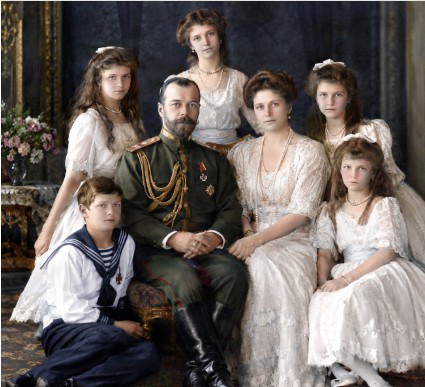
(Oct. 13, 2026) — [To listen to the interview, click here.]
Pip: Welcome to Froebelgalleries, where the Cold War, the Romanovs, and a 1963 New Year’s Eve tape recording walk into a radio studio in Hudson, New York.
Mara: Exactly the territory we’re covering today. ioannesfrobenius brings us a full radio transcript from WGXC’s Monday Morning Show — a dramatized conversation between a woman claiming to be Anastasia Romanov and a KGB defector who claimed to be her brother Alexei. Let’s start with the broadcast itself and what it puts on the table.
A Taped New Year’s Eve and the Question It Never Settled
Pip: The setup here is genuinely strange in the best way — a 1963 New Year’s Eve meeting, requested by the woman herself, between Evgenia Smetisko, also known as Eugenia Smith, who claimed to be Grand Duchess Anastasia, and Michael Goleniewski, a KGB defector who showed up calling himself Mr. Borg. The tape was made, endorsed page by page with Goleniewski’s signature, and then sent to the Justice Department — which, as the post notes, is odd behavior for someone running a con.
Mara: The transcript, drawn from Guy Richards’ 1970 book The Hunt for the Tsar and read aloud during the broadcast, captures the moment Smetisko apparently recognizes her visitor. The setup: Goleniewski whispers a private family word, and she breaks. “He knows. He knows. He is my brother, Alexei. My darling, my darling. They should know. I cannot believe it. It is wonderful! It is unbelievable!”
Pip: And that’s the hinge the whole segment turns on — because either that is a genuine reunion across four decades of exile and silence, or it is two people performing grief for a room full of witnesses. The post is careful not to decide which.
Mara: Author J. Froebel-Parker, reading from Richards mid-broadcast, frames it precisely that way: “Do either or both of the two on the transcript seem to be charlatans? The reader is just as well qualified as we to judge that to his or her own satisfaction.” Polygraph expert Cleve Backster, credited in the post as the father of the CIA polygraph lie detection unit, had already run thirty hours of testing on Smetisko and concluded she was telling the truth about her identity.
Pip: Thirty hours. Either she believed it completely, or she had the most disciplined nervous system in Cold War history.
Mara: The broadcast also surfaces a declassified CIA memorandum from cia.gov, read aloud by participant Bob Martin, noting that by 1967 the agency had decided to take a “final stand” with Goleniewski and make no further efforts to placate him. And a 1964 Wilmington Star article, read during the show, quotes Representative Feighan asking whether it was true that Goleniewski had named Russian agents in the State Department and the CIA — none of whom had been arrested.
Mara: Froebel-Parker also connects Goleniewski’s credibility to the Portland spy ring: declassified MI5 files confirm his tip, under the CIA codename Sniper, directly led to the bust of a Soviet illegal residency in Britain.
Pip: So the man claiming to be Tsarevich Alexei also happened to be one of the most consequential intelligence sources of the Cold War. Which does not prove he was Alexei, but it does mean dismissing him required some effort.
Mara: The post includes the full post-dramatization discussion — guests Patrice Maynard and Victoria Signorelli, alongside Froebel-Parker and host Garrett Roche — working through why Smetisko opens the taped conversation with “I am so ashamed of myself,” why Aunt Olga refused to see her in Canada, and what post-traumatic stress might explain about her behavior afterward. The audio itself is archived at wavefarm.org starting at the thirty-minute mark.
Pip: A century of mystery, a New Year’s Eve tape, and the question of why the Bolsheviks were asking a jailed princess to identify a girl in September — two months after the supposed execution. The post leaves that one open too, which feels right.
Mara: What stays with me is the polygraph detail — that her emotional responses went flat on questions about the execution itself, and that no one at the time considered the obvious reason why.
Pip: Right. Absence of grief as evidence of absence of event. Next time, more from Froebelgalleries — and presumably more questions that the archive has not finished asking.
Leave a Reply