
by James Lyons-Weiler, PhD, Popular Rationalism, ©2026

(Aug. 15, 2026) — On August 13, 2026, Flock Safety announced a substantial revision of the privacy and accountability controls surrounding its automated license plate reader network. The company is recommending that its default retention period fall from 30 days to seven. It is adding an “Evidence Mode” for preserving particular records associated with active investigations, mandatory case codes and offense classifications for searches, stronger auditing, proactive lockouts, and additional security requirements. Existing customers, however, can retain the retention periods they have already adopted.
Those are sensible changes. They are also clarifying. But they are offered, not required. They are pablum compared to what is needed.
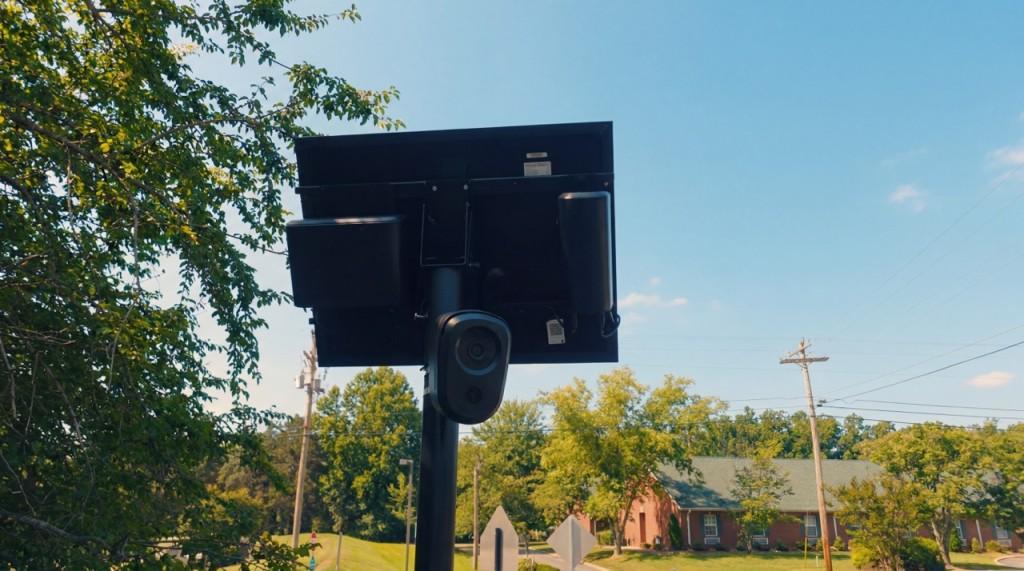
Flock says its network now contains more than 120,000 cameras across 49 states, giving participating agencies what the company itself describes as a broader view of vehicle movement and a larger pool of investigative information. At that scale, the question confronting the country is no longer whether police should be permitted to photograph a license plate visible on a public road. They plainly can, and there are legitimate reasons for doing it. A stolen vehicle, an abducted child, a wanted violent offender, an Amber Alert or a vehicle known to have left the scene of a serious crime can make automated identification extraordinarily useful.
The question is what happens after millions of innocent observations have been stored, networked, searched, shared and reconstructed.
That question is harder, because the legal doctrine inherited from the twentieth century begins with a factual premise that no longer describes the technology. Courts have long said that a driver has little expectation of privacy in a license plate displayed to everyone on a public highway. That proposition remains true. But a police officer seeing your car at 2:17 p.m. on Main Street and a nationwide computer system capable of telling an investigator where your vehicle appeared yesterday, last Tuesday, outside a church, near an attorney’s office and on the route to somebody else’s home are not equivalent surveillance events merely because both begin with a public license plate.
A camera sees a vehicle. A database can remember a life.
And a seven-day default is a product setting, not a constitutional amendment.
The Constitutional Question Has Moved From the Camera to the Query
The weakest constitutional case against an automated license plate reader is the camera itself. Someone driving on a public road has exposed the vehicle, its exterior and its plate to ordinary observation. Courts have repeatedly relied on that proposition.
But that does not mean it cannot be raised again.
Right now, the stronger case begins when government takes observations that were historically scattered, temporary and expensive to reconstruct and converts them into a searchable historical system and use it – without a warrant.
This distinction matters because the Supreme Court has been dealing with precisely this transformation for more than a decade. United States v. Jones confronted long-term GPS tracking. Carpenter v. United States held that government acquisition of historical cell-site location information could constitute a Fourth Amendment search even though the information was held by a third party. The important feature of Carpenter was not simply that a telephone generated records. It was that technology gave government inexpensive retrospective access to a person’s movements on a scale that ordinary visual surveillance could not realistically reproduce.
On June 29, 2026, the Supreme Court carried that reasoning considerably further in Chatrie v. United States.
Police investigating a bank robbery had used a geofence warrant to obtain Google Location History information for devices appearing near the bank. The Supreme Court held that police conducted a Fourth Amendment search when they acquired Chatrie’s location information from Google. The Court deliberately left for remand the separate question of whether the particular geofence warrant satisfied probable cause and particularity.
That limitation is important. Chatrie did not declare Flock cameras unconstitutional. It did not hold that every geofence warrant fails. And a vehicle traveling public roads differs materially from a cell phone that accompanies its owner into homes, medical facilities and other private places.
But some of the Court’s reasoning is difficult to confine to phones.
The federal government argued in Chatrie that the two hours of location information obtained were too brief to trigger the concerns identified in Carpenter. The Supreme Court rejected the premise. Even short-term location surveillance, it explained, can reveal familial, political, professional, religious and sexual associations, as well as one-time visits or events whose significance may be highly private. The Court specifically discussed locations and events such as medical treatment, a criminal-defense attorney, a gun show and a political rally.
Then came the passage that should now be read in every city council considering an Automated License Plate Reader (ALPR) contract.
The constitutional concern, the Court explained, is not erased when officials select only a short time interval from an all-encompassing database. The existence of that database can furnish government with what the Court called a “virtual panopticon” capable of retrospective scrutiny.
The analogy to ALPR systems is not exact. It is nevertheless obvious enough that courts will now have to confront it.
Flock does not ordinarily know where a person is every two minutes. It does something different: it records where a particular vehicle was whenever that vehicle crossed one of an enormous number of instrumented locations. With enough cameras, enough interoperability and enough time, the distinction between “sporadic observations” and a practical movement history becomes one of degree.
The constitutional mistake would be to treat every database search as though an officer had merely happened to be standing beside each road at every relevant moment. He was not. The machine was. The government eye.
The Government Has a Serious Counterargument
A good constitutional argument should survive contact with the best argument against it. Here, that argument is substantial.
In United States v. Porter, decided March 17, 2026, the Fifth Circuit rejected a Fourth Amendment challenge to license-plate-reader information. The court emphasized that the data reflected periodic observations of a vehicle traveling public streets rather than the near-continuous location record involved in Carpenter. It also relied on the longstanding absence of a privacy interest in a publicly displayed license plate.
A federal district court reached a similar result in Schmidt v. City of Norfolk in January 2026. Norfolk operated a large Flock system, but the court concluded on the factual record before it that the program did not cross the Fourth Amendment line. One important feature of that litigation was that the plaintiffs’ vehicles had been photographed but apparently had not actually been subjected to investigative database queries outside the litigation itself.
Massachusetts provides another useful example. In Commonwealth v. McCarthy, its Supreme Judicial Court upheld the limited ALPR surveillance before it while expressly recognizing that a more pervasive deployment could present a different constitutional problem. The actual network there was too limited to reveal the whole of the defendant’s public movements.
These are not nuisance precedents to be waved away. They identify the factual hinge on which the next generation of litigation is likely to turn.
How many cameras? How geographically dense? How many captures of the plaintiff? How long are records available? How many agencies can search them? Can the investigator search by plate, vehicle description, time, place or pattern? Can an officer ask who was near a particular place rather than beginning with a particular suspect? Can agencies combine observations from multiple jurisdictions? What movements can actually be reconstructed? What associations can actually be inferred? And, critically, what query was actually performed?
That last question may become the constitutional center of gravity.
Read the rest here.
Leave a Reply