

by Sharon Rondeau
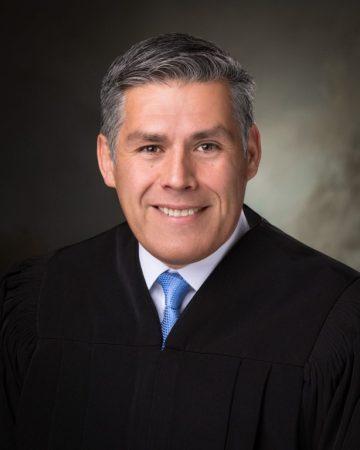
(Jul. 9, 2026) — 12:25 p.m. EDT – In the fourth day of a preliminary hearing Thursday regarding the murder of political and religious activist Charlie Kirk last fall, Utah Fourth District Judge Tony F. Graf, Jr. was to decide which exhibits from an interview between a key witness and law enforcement will be displayed to the public, limited to the attorneys involved, or maintained privately in an effort to balance the rights of the defendant, Tyler Robinson, and Kirk’s widow, Erika Kirk.
The difference between a preliminary hearing and trial is that there is no jury present in the former. Should the case go to trial, all evidence would customarily be released.
The purpose of the hearing is to establish probable cause given that no grand jury was empaneled to see and hear evidence, but rather, charges issued through the “information” method.
After the hearing commenced at 9:00 a.m. MDT/11:00 a.m. EDT, the prosecution, defense and victim’s attorneys were provided an opportunity to make their respective cases to the court.
In accordance with a filing made Wednesday evening, a lawyer for the victims, Jeffrey Nieman, requested that “every exhibit entered into evidence during the preliminary hearing concerning the death of her husband be visible to everyone present in the courtroom,” ABC4 reported.
The witness is Lance Twiggs, Robinson’s former roommate, who reportedly exchanged texts with Robinson shortly after the crime was committed in which Robinson claimed responsibility.
Graf was weighing whether the text exchanges constitute a “confession” on Robinson’s part.
Some legal commentators claim Graf has shown excessive “deference” to the defense, perhaps to avoid an appeal claiming compromising of constitutional rights. Graf was appointed to his post in May of last year.
Another criticism was that the judge has drawn out the process unnecessarily in light of the probable-cause standard being “low,” Fox News Legal Analyst Josh Ritter and contributor John Yoo stated separately on Thursday.
At 12:32 p.m. EDT/10:32 a.m. MDT, Graf read from a computer screen his ruling stating, “The defendant’s objection is overruled.”
Three exhibits at issue which Graf referenced by number as “16.1,” “16.2” and “16.3,” will be permitted to made public, he said. He added that a text exchange outside of police custody does not constitute “a confession.”
A total of approximately 17 minutes of Twiggs’s 37-minute interview will air, Fox News co-host Kayleigh McEnany said on “Outnumbered” at 12:55 p.m.
As of 12:42 p.m. EDT, Twiggs’s interview with law enforcement had not yet been aired.
Twiggs was granted “limited immunity” for his April 20, 2026 statement in both video and audio format. Only audio will be aired in the courtroom.
At 12:57 p.m. EDT, Graf announced the court would take a “brief recess” until “11:05” (1:05 p.m. EDT).
Once again, Yoo criticized Graf for elongating the process more than necessary in deference to the defense, perhaps fueling Yoo’s claim that many Americans have “lost faith in the justice system.”
At 1:03 p.m. EDT, Ritter characterized the defense as “fighting against this for weeks.” At 1:08, he described Graf as demonstrating “patience to a fault.”
At 11:14 a.m. Utah time, the court began airing the interview in which Twiggs was apparently chewing gum.
Seven minutes in, Twiggs reached for a nearby paper towel and expelled the gum.
The video was then cut, reverting to imagery associated with the case from Fox News as the audio continued.
A still picture of Twiggs and the interviewer, Ryan McBride, returned at 1:25 p.m. EDT as the interview continued.
At 1:29 p.m., the video resumed; it concluded at 1:38 p.m. EDT.
Comments
One response to “Judge Overrules Defense on Exhibit Publication in Kirk Case”
Dibs on the popcorn concession at Tyler Robinson’s hanging: also Luigi Mangione’s.
Chief New Leaf