

by James Lyons-Weiler, PhD, Popular Rationalism, ©2025
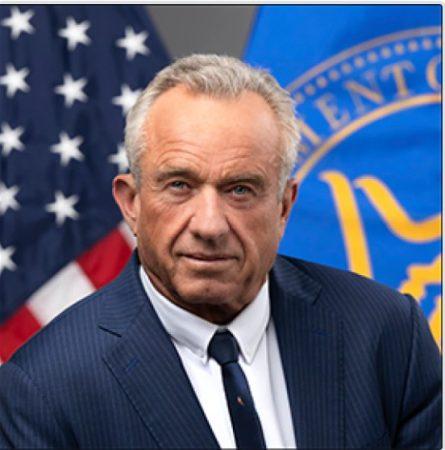
(Sep. 8, 2025) — In last week’s Senate Finance Committee hearing (September 2025), Health and Human Services Secretary Robert F. Kennedy Jr. faced repeated questions about how many lives the COVID‑19 vaccines saved and about vaccine effectiveness. He made it clear he was not fooling around. He replied, with gravitas worthy of a polar bear: “I don’t know”. He attributed the uncertainty to “data chaos” at CDC (coverage from AP, Washington Post, PBS; see also Nature). The AP summarized his line this way: “The only confusion I expressed is exactly how many lives were saved. I don’t think anybody knows that.” AP News The Washington Post PBS Nature
Those three words—I don’t know—are not an evasion. In medical education and patient safety, acknowledging uncertainty is a feature, not a bug. WHO’s training materials literally teach that “the three most important words in medical education are ‘I don’t know.’” The difference between rigor and rhetoric is what follows after “I don’t know”: an action plan to resolve uncertainty. Iris
What the literature actually contains on “lives saved” and effectiveness
In the pre-Kennedy HHS, bias in results was second only to the hubris and exuberance with which biased results were reported.
Deaths averted. The most‑cited global estimate is a merely a Lancet Infectious Diseases modeling study (Watson et al., 2022) which used reported and excess‑mortality data to calibrate counterfactuals. It estimated ~19.8 million deaths averted globally in the first vaccine year (Dec 8 2020–Dec 8 2021). That estimate is completely model‑dependent, with wide assumptions about reporting, variant waves, and non‑pharmaceutical interventions; the result is still the field’s anchor. (DOI: 10.1016/S1473‑3099(22)00320‑6, PMID: 35753318). PubMed.
Watson et al.’s 2022 estimate that COVID-19 vaccines prevented 14–20 million deaths has drawn sustained criticism on methodological and logical grounds. Klement and Walach argued that the team’s Bayesian SEIR framework assumed fixed reproduction numbers in a no-vaccine counterfactual, neglecting the adaptive ways human behavior, viral evolution, and policy would have shifted absent vaccines. In his view, this structural rigidity stripped the model of causal realism and rendered its results more an exercise in mathematics than a reflection of epidemiological dynamics. He further suggested that SEIR-style models cannot, by design, capture the full range of generative mechanisms that shape epidemic trajectories, meaning their output risks over-stating certainty while under-representing complexity.
Other critics have targeted the gap between Watson’s projections and empirical data. Amrit Šorli contended that the claim of millions of lives “saved” is logically inconsistent with the observed global mortality increase from 2020 to 2021, since such an effect would have implied fewer recorded deaths, not more. He characterized the “lives saved” construct as a theoretical fiction with no bijective mapping to real mortality outcomes. Meanwhile, Raphael Lataster situated Watson et al. within a broader metacritique of high-profile vaccine modeling, highlighting unexamined assumptions, endpoint manipulation, and potential conflicts of interest that, he argued, exaggerated benefits and muted uncertainties. Together these criticisms converge on the charge that the Watson model elevated counterfactual speculation to fact, while offering insufficient transparency about its limitations.
Regional analyses (e.g., Meslé et al., Lancet Respir Med, 2024) have produced national tallies (e.g., ~1.56 million lives saved across 34 European/North American countries), again model‑based and assumption‑sensitive. (DOI: 10.1016/S2213‑2600(24)00179‑6). The Lancet
U.S. toll and data uncertainty. CDC’s trackers and NCHS provisional death statistics remain the source of record but are subject to lags, backfills, and definitional updates—part of the “data chaos” Kennedy referenced. Multiple official dashboards exist (COVID Data Tracker, NCHS mortality, wastewater, COVID‑NET), which complicates single‑number “lives saved” claims without model choices with no assurance of accuracy or lack of bias. CDC COVID Data Tracker CDC
The bottom line is the peer‑reviewed literature does contain numeric estimates for “lives saved,” but every number is model‑contingent. Saying “I don’t know” is defensible only if accompanied by a precise plan to (1) define measurement, (2) state model structure, and (3) disclose uncertainty bands.
Read the rest here.
Comments
3 responses to “The Three Most Important Words Uttered By Secretary Kennedy in the Senate Finance Committee Hearing”
RFK, Jr. could have made so much more impact by instead saying: “We don’t know.” That would have completely sucked the wind out of the sails of the likes of Warner, Sanders and Fauxahantas. It would have been the perfect entre to explaining “data chaos”..
“There are unknown unknowns.” H/T, Donald Rumsfeld:
White Mosque! I’m stealing that.