
by Dennis Gladden, By Green Pastures, ©2024
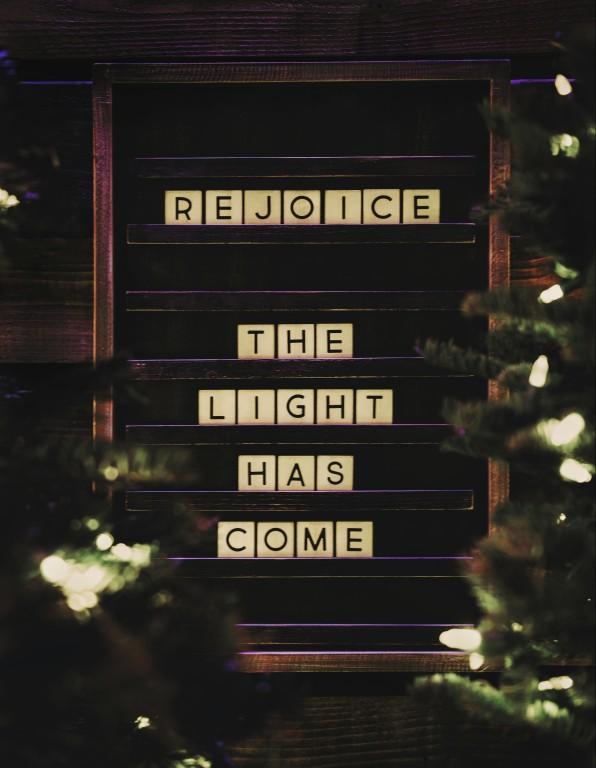
(Dec. 23, 2024) — I discovered a Christmas carol the other day—not one I found in an obscure songbook or heard on the radio, TV, or YouTube, but one I found while reading Isaiah 12.
The prophet’s words whispered of Christmas while I had devotions. Listen in, won’t you?
And in that day you will say: “O LORD, I will praise You; though You were angry with me, Your anger is turned away, and You comfort me.” (Isaiah 12:1).
I wasn’t looking for Christmas cheer, but I found it in these words when Isaiah’s reason for praise became clear: God was angry, but now He’s not.
You comfort me.
The words brought to mind when Christ the Savior was born—Christ the Comforter had come.
Hardship in the days of Mary and Joseph so wracked their country that Luke tells us some were waiting for the “consolation of Israel” (Luke 2:25). Theirs was another generation like Noah’s, whose hard labor brought his father to sigh about the times and pine about his son: “This one shall comfort us” (Genesis 5:29).
Consolation. Comfort. The longing of generations, the need of ours.
And one night in those dark days, unto us a child was born in a Bethlehem stable.
“Peace on earth, good will toward men,” God trumpeted through the angels.
“Your anger is turned away, and You comfort me,” replies Isaiah, speaking for us.
But the words, “You were angry with me,” clutched in my thoughts. When was God ever angry with me?
I have never been
Destitute,
So hungry as to say without exaggerating, “I’m starving.”
Without family,
Without work,
Severely sick…
None of the travails we associate with God’s displeasure have I experienced. So, the comfort of anger withdrawn seemed meaningless, until another servant of the Lord spoke.
“When we were yet without strength…, while we were yet sinners…, when we were enemies, Christ died for us, and we were reconciled” (Romans 5:6-10).
Here, and in Romans 7, the Apostle Paul sets a table where we all have a seat. He restated what Isaiah said another time, “All we like sheep have gone astray; we have turned every one to his own way” (Isaiah 53:6).
Stray sheep displease the shepherd. Those who disregard God and go their own way “are treasuring up for yourself wrath in the day of wrath” (Romans 2:5).
Now, I understand Isaiah. In Christ—the One Isaiah called a “great light” born to those who walk in darkness—in Jesus, God reconciled us.
“Your anger is turned away, and You comfort me.”
And then I came to Isaiah 12:4-5.
Declare His deeds among the peoples, make mention that His name is exalted. Sing to the LORD, for He has done excellent things.
In these words, I heard the invitation of Christmas to declare the excellent things God has done. Who thinks so these days? Who thinks God is doing anything?
His exalted names came to mind.
Wonderful, Counselor, Mighty God, Everlasting Father, Prince of Peace. (Isaiah 9:6)
As did some of the wonderful works of God:
God did not send His Son into the world to condemn the world, but that the world through Him might be saved. (John 3:17)
I have come that they may have life. (John 10:10)
I lay down My life that I may take it again. (John 10:17)
I go to prepare a place for you. and if I go and prepare a place for you, I will come again and receive you to Myself. (John 14:3).
As I went on, I came to this:
Blessed is he whose transgression is forgiven, whose sin is covered. Psalm 32:1
Blessed be the God and Father of our Lord Jesus Christ the God of all comfort who comforts us in all our tribulation (2 Corinthians 1:3-4).
There is blessing in both the Old and New Testaments, gathered around this: We were estranged from God and, in Christ, God reconciled the world to Himself (2 Corinthians 5:19).
Jesus condensed it into two words on the cross, “Father, forgive.”
Your anger is turned away, and You comfort me.
For these reasons, I think Isaiah 12 has a place among our Christmas carols.
Twice, the prophet said,
In that day you will say: "O LORD, I will praise You...
In that day you will say: "Praise the LORD..." (Isaiah 12:1, 4)
That day has come in Christmas.
It is reminiscent of the sentiment in Longfellow’s poem, Christmas Bells:
And in despair I bowed my head;
"There is no peace on earth," I said;
"For hate is strong,
And mocks the song
Of peace on earth, good-will to men!"

Then pealed the bells more loud and deep:
"God is not dead, nor doth He sleep;
The Wrong shall fail,
The Right prevail,
With peace on earth, good-will to men."