
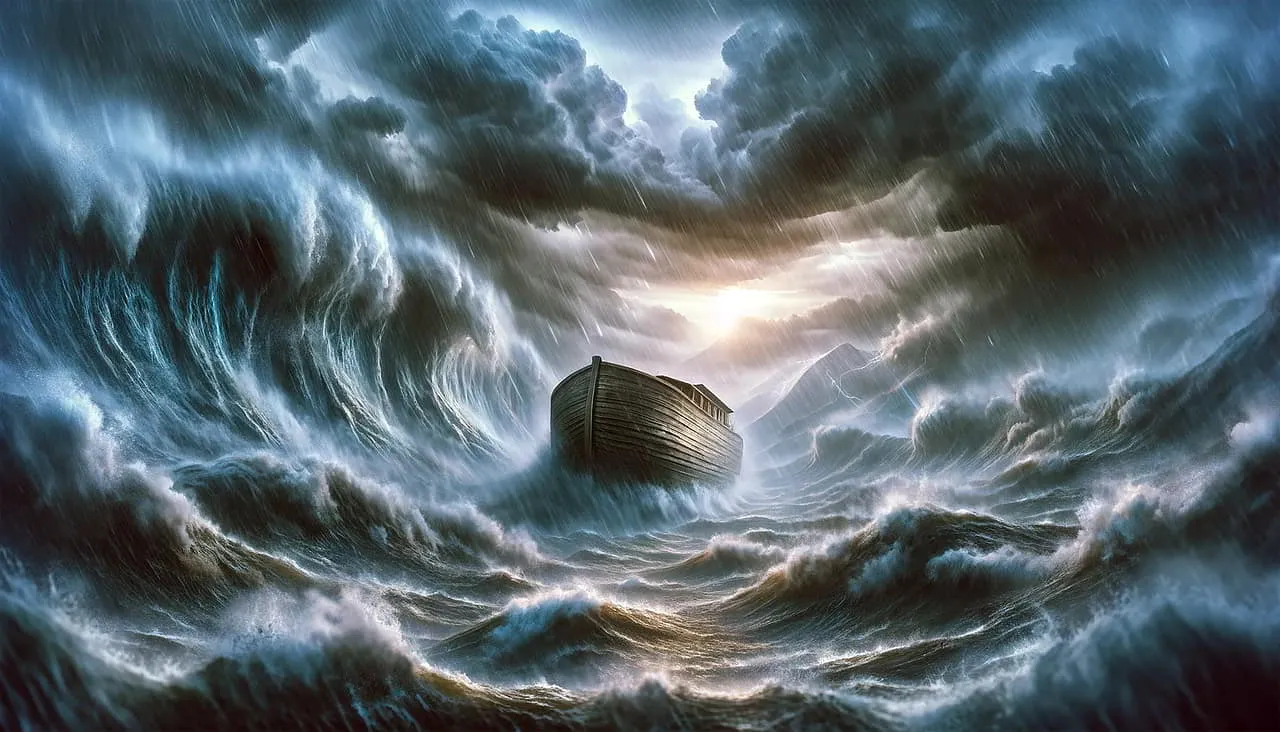
by Dennis Gladden, By Green Pastures, ©2024
(Sep. 9, 2024) — Noah lived by his ears.
Everyone else lived by their eyes.
Noah survived The Flood.
Everyone else perished.
The difference between Noah and everyone else is important to us because Jesus warned that conditions in the end will compare to those when The Flood submerged the world.
Jesus also said, “He who endures to the end shall be saved” (Matthew 24:13). Noah was saved; I want to be, too. Don’t you? Which makes me think a look at how Noah endured will be profitable.
I compared the conditions of then and now in a previous post. Here, I want to explore his character and in another post we’ll engage Noah the comforter, fulfilling his father’s dream.
There are two evaluations of Noah that will guide this study. One is by God, who said, “I have seen that you are righteous before Me in this generation” (Genesis 7:1). The other is by the New Testament writer who included Noah in what has been called the Hall of Faith: Hebrews 11. He wrote, “By faith, Noah prepared an ark for the saving of his household” (Hebrews 11:7).
Righteousness and faith: these are the linchpins that anchored Noah in turbulent times. They are religious terms that shade their simple meaning—Noah believed God and he listened to God. Together, they were Noah’s lifestyle, summarized as “Noah walked with God” (Genesis 6:9).
Righteousness: Believe God vs. Believe in God
We’re not told explicitly of anyone who believed God until Abraham—nine generations after Noah. The statement comes when Abraham was doubting God’s promise that he would be a father. He was still childless years after God promised, “I will make you a great nation” (Genesis 12:2). The next time God appeared, Abraham probed.
“Lord GOD, what will You give me, seeing I go childless, and the heir of my house is Eliezer of Damascus? Look, You have given me no offspring” (15:2-3).
God repeated His promise. “This one shall not be your heir, but one who will come from your own body shall be your heir” (15:4). To emphasize its certainty, He told Abraham to scan the sky. “Count the stars if you are able to number them. So shall your descendants be” (15:5).
And then comes the assessment. Abraham “believed in the LORD, and He accounted it to him for righteousness” (15:6).
Read the rest here.