

by James Lyons-Weiler, PhD, Popular Rationalism, ©2024

(Apr. 25, 2024) — Executive Summary of Public Health is a Failed Model – #PlanB is the Revolutionary Reform Way Forward
The traditional centralized public health system has faced significant challenges and criticisms, particularly highlighted by its handling of the COVID-19 pandemic. This model, characterized by slow responses, bureaucratic inertia, and one-size-fits-all mandates, has proven inadequate in addressing the complex, rapidly evolving health crises of our modern world. As trust erodes in these centralized institutions, exacerbated by inconsistent messaging and entrenched conflicts of interest, there is a clear and urgent need for a new approach. The failures manifest not only in delayed actions and mixed public health messages but also in a lack of adaptability to local conditions, leading to widespread dissatisfaction and questioning of the system’s efficacy and integrity.
PlanB proposes a radical transformation in biomedical, health, and environmental research and policy-making through the establishment of a decentralized network of 80 independent scientific laboratories across the United States. This approach is designed to overcome the limitations of the current centralized public health system by fostering a more dynamic, responsive, and transparent model.
Core Benefits:
- Enhanced Learning: By decentralizing biomedical, public health, environmental, and related research, PlanB allows each node to focus on both national and region-specific health issues, thereby tailoring interventions and responses to the unique needs of local populations.
- Promotion of Innovation: Independence from a central controlling authority eliminates biases and promotes free scientific inquiry, leading to more innovative solutions and breakthroughs in understanding, which in turn reduce morbidity and mortality.
- Rapid Adaptability: The decentralized nature of the network ensures that it can quickly adapt to emerging health threats, with each node capable of responding in real time to local, regional, national, and global conditions.
- Increased Transparency and Accountability: With each node producing independent annual reports and subject to Senate Committee reviews, PlanB ensures a high level of transparency and accountability.
- No Central Authority Mandates: PlanB operates without centralized mandates, focusing instead on gathering and disseminating empirical data about effective public health, biomedical, and environmental practices and policies. This approach respects community autonomy and encourages participatory health management.
- The End of Regulatory Capture Driving Policy: Reality-based science, not policy-driven science, should determine health, medical practice and environmental policies. Shifting to #PlanB will replace the perverse and misaligned incentives with more academic, reliable and reproducible science with no pressure from profit margins and stock market stakeholders.
Conclusion
PlanB represents a visionary step forward in revolutionary reform, promising to make the system more resilient, effective, and aligned with the diverse health needs of the American population. By leveraging the strengths of decentralized operation without strong oversight and coordination, PlanB offers a sustainable model for learning accurately about future challenges.
Public Health is a Failed Model – PlanB is the Way Forward
In the aftermath of the COVID-19 pandemic, it has become glaringly apparent that the traditional centralized model of public health in the United States is insufficient to effectively address the multifaceted health crises of our time. The proposed PlanB, a decentralized approach to public health research and policy-making, offers a promising alternative that leverages the power of independent inquiry devoid of overarching authority, with a strong emphasis on learning rather than mandating.
Decentralization: The Core of PlanB
PlanB, originally proposed in 2021, is a form of revolutionary reform that seeks to restructure completely how we gather and process health data by establishing a network of 80 independent scientific laboratories across the nation. These nodes operate under the principle of learning rather than controlling, a fundamental shift from the conventional top-down models of public health governance. By eliminating a central authority that dictates policies, PlanB ensures that no single voice can stifle innovation or skew the research agenda.
A Learning Network Free from Authority
At its heart, PlanB is about fostering a culture where the primary objective is to learn what is making Americans sick and what can make them healthier. This learning is not constrained by preconceived notions or a one-size-fits-all policy approach. Instead, it thrives on a diverse influx of data and insights from multiple independent sources, ensuring a broad and inclusive understanding of public health challenges.
Structured Information Flow
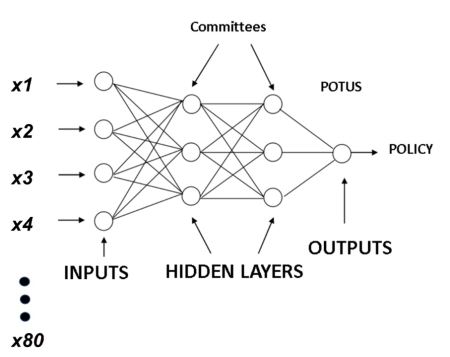
The PlanB initiative emphasizes a structured yet decentralized information flow directly from research nodes to the U.S. Senate, which then informs executive leadership, including the President. This model seeks to utilize existing regulatory frameworks insuring human research protections, while promoting a new form of information dissemination and decision-making that is driven by independent research inputs. There are many reasons why this will function effectively:
1. Independent Annual and Real-Time Reports: Each node in the decentralized network produces an independent report on its findings and activities. This method promotes transparency and accountability, ensuring that each node remains focused on its research objectives without centralized interference.
2. Senate Committee Summaries: The role of Senate Committees in synthesizing these reports is crucial. They not only consolidate findings but also assess the overall health trends and threats based on collective data from across the network. This step ensures that diverse local data are effectively integrated into national health strategies.
3. Informing the Executive: This model keeps the executive branch informed without granting it direct control over the research agenda, which helps maintain scientific independence while ensuring that the executive’s responses and policies are informed by up-to-date, comprehensive scientific data.
Read the rest here.