
by Dr. James Lyons-Weiler, PhD, Popular Rationalsim, reposted with permission

(May 29, 2023) — [See earlier parts to this series here or here (scroll down). – Ed.]
This is the fourth in a series of five Popular Rationalism Articles in the Open Society Series. The next article will be “The Wisdom of the Minority and the Value of Informed Dissent”. The previous three articles are found at the bottom of the page. Please consider supporting the fight to preserve objective science against Faucian Science with a paid subscription to Popular Rationalism.
The rise of Totalitarian Power is recognizable by its means: Controlled speech to control and restrict thought, censorship being a fundamental tool employed by oppressive regimes. This is evident in the suppression of dissident voices and independent media outlets, where state-controlled narratives dominate public discourse while alternative viewpoints are silenced.
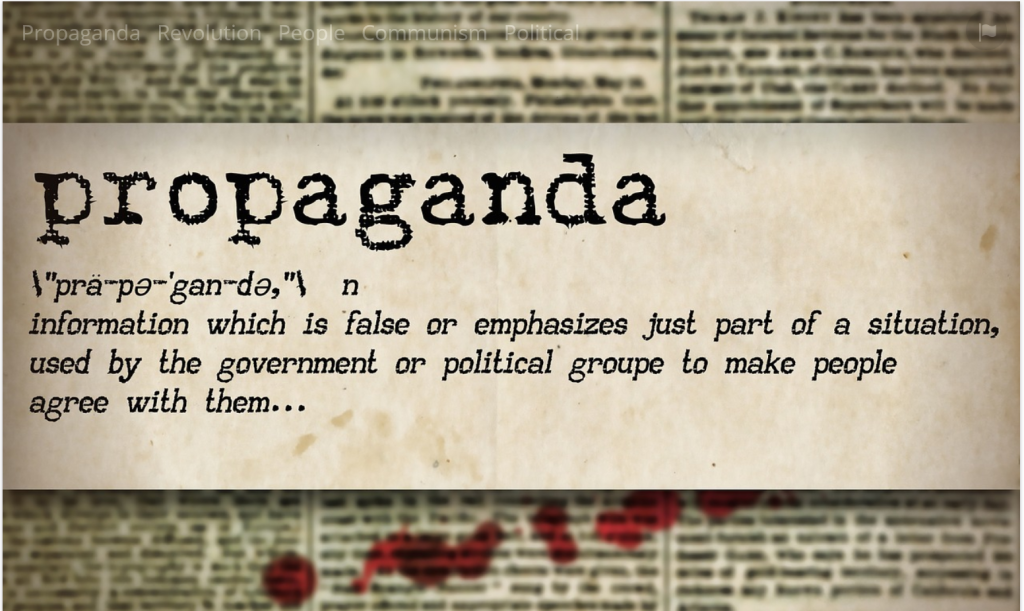
Furthermore, Totalitarian Power must also utilize propaganda and disinformation campaigns to manipulate public opinion and shape collective consciousness. This endeavor is a far cry from an earnest try-out of concepts in the marketplace of ideas. The two-step process of shutting down others while amplifying the centralized dogma can be observed in historical examples such as Nazi Germany, where the dissemination of anti-Semitic rhetoric and the demonization of targeted groups served to consolidate and maintain authoritarian control.
Totalitarianism also requires the restriction of academic freedom and the imposition of ideological conformity within educational institutions. These restrictions serve as telltale signs – hallmarks – of the encroachment of Totalitarian Power. Examples can be found in regimes like the Soviet Union, where dissenting intellectuals were persecuted, and curriculum content was carefully curated to align with the ruling ideology, suppressing critical thinking and diverse perspectives.
In the United States, corporatism has captured the federal regulatory agencies, but now the “public/private partnerships” also come with sanctions against institutions and individuals who speak out against the corporatist tendencies to manipulate the perception of risk of pharmaceutical products while exaggerating and thus exalting their efficacy. The propaganda is so complete that many people believe the only means to acquire immunity to infectious disease is through vaccination – but few know that solid evidence holds that many vaccines do not prevent transmission – including acellular pertussis vaccines and COVID-19 mRNA jabs. Before COVID-19, evidence began to emerge that the MMR had lost its efficacy against measles and mumps, with outbreaks of mumps occurring in fully vaccinated schools, and “measles-like infections” leading to measles diagnoses in a large percentage of people diagnosed with measles in the infamous Disneyland outbreak. The fact that few people remember this is a testimony to who has control of the news cycle: it’s not objective scientists, nor people who would prefer all people to know the truth about these matters. Instead, the attention span of the public is short-circuited via myriad distractions. The antidote? Control of focus: Blow Up Your TV.
The Importance of Propaganda
Propaganda can be employed as a powerful tool to undermine democratic processes and restrict freedoms and liberties in several ways:
- Self-Censorship and Fear: Propaganda can create an atmosphere of fear and intimidation, leading individuals to engage in self-censorship. The threat of repercussions, such as social ostracism or even legal consequences, can make people hesitant to express dissenting opinions or challenge the prevailing narrative. This stifles open debate, limits the diversity of ideas, and erodes the foundations of democratic societies.
- Generating Unwitting Agents of the State: Propaganda can manipulate public opinion and shape individuals’ beliefs, turning them into the “sincerely misled”. These people are unwitting agents of the state’s agenda. Because the state controls the media, whoever controls the state controls the media. By effectively disseminating biased or false information, state propaganda can influence people’s perceptions, choices, and voting behavior, thereby undermining the authenticity of democratic processes and distorting the will of the people.
- Cultural Poverty of Uniformity of Thought: Propaganda seeks to enforce a uniformity of thought by suppressing diverse perspectives and alternative viewpoints. It creates cultural poverty where a single dominant, or at least narrow proscribed narrative dominates, restricting intellectual exploration and inhibiting critical thinking. This uniformity undermines the democratic values of tolerance, pluralism, and the free exchange of conflicting and competing ideas that are essential for a thriving democratic society.
- Manipulation of Information and Perception: Propaganda manipulates information and distorts reality to shape public perception. By controlling the narrative and selectively presenting information, propaganda can be used to manipulate public opinion, undermine trust in independent media, and erode the foundation of an informed citizenry. This manipulation erodes the democratic principles of transparency, accountability, and the right to access unbiased information.
- Erosion of Trust and Social Cohesion: Propaganda can exploit existing divisions within society, exacerbating conflicts and eroding trust among different groups. By fostering polarization and creating an “us vs. them” mentality, propaganda undermines the social cohesion necessary for a functioning democracy. It can manipulate emotions, heighten animosity, and hinder constructive dialogue, further fragmenting society and impeding collective action.
Countering the detrimental effects of propaganda requires fostering media literacy, critical thinking, and actively seeking and promoting diverse and independent sources of information. Protecting democratic processes and freedoms necessitates a vigilant and well-informed citizenry that actively questions dogma, verifies assertions, and seeks out multiple perspectives to maintain the integrity of democratic values. In other words, do your research and use skepticism as a tool for rational inquiry.
Read the rest here.