
by Tom DeWeese, American Policy Center, ©2021
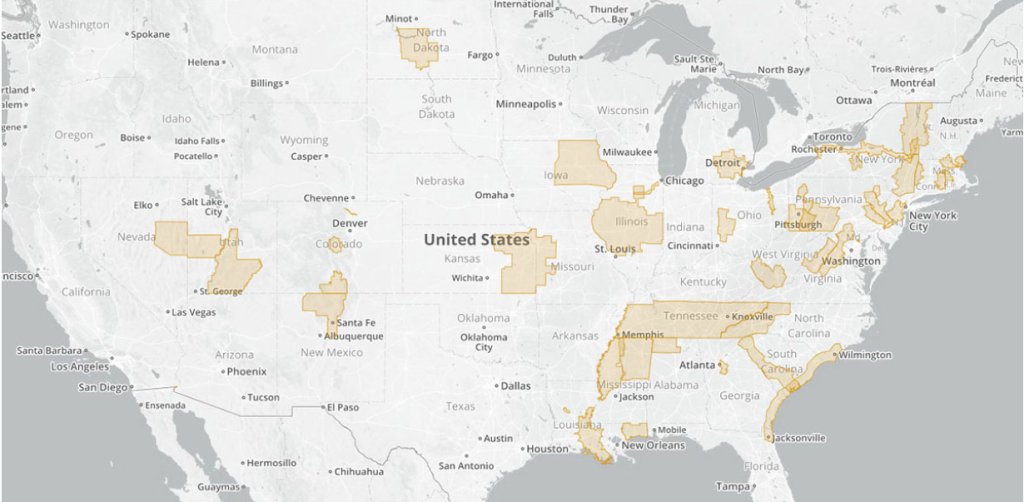
(Jul. 1, 2021) — Proposals for new National Heritage Areas (NHA) are raising their ugly, land-grabbing heads again in Congress and they must be stopped. Here’s why.
National Heritage Areas are one of the most despicable stealth land grabs in the nation. Americans love our history. We love preserving significant places that played an important role in the making of our unique nation. So, when we hear of a new plan in our area presented offering a chance to preserve some of our local heritage we are interested and even supportive.
But, in this day of massive government control over so much of our land, our economy, and our basic ability to live free lives, we must be cautious and look at the details of plans, no matter how innocent or well meaning they may seem.
National Heritage Areas are such a concern because they are sold to residents as simply a means to honor historic or cultural events that took place in a specific locale. We are told that they will preserve our culture and honor the past, that they will preserve battlefields where our forefathers fought and died for freedom, and that they will preserve birth places, homes, buildings, and hallowed grounds for posterity. Most importantly, we are assured that NHAs will help build tourism and boost local economies.
As described by property rights expert Leo Schwartz in 2007, in reality, NHAs are a massive sham, full of government pork, imposed by dishonest, anti-heritage, anti-private property elitism. Politicians, federal agencies, and private non-governmental organizations (NGOs) use the NHAs as a tool to gain votes, political power, and wealth. Moreover, these forces use the NHAs to impose politically-motivated restrictions on private land.
Wrote Schwartz, “In the 1980s, the National Park Service’s record of abusive land acquisition practices had become a political nightmare. It needed a new approach to continue expanding its power. During the mid-1970s, several national land use control studies proposed innovative methods for federal control of private property. Applying these methods, NHAs were designed as a ‘new kind of national park.’ Seen as pork-laden gravy trains, many elected officials eagerly jumped aboard and the empire building continued.”
It’s worth noting that in 1928, then-Interior Secretary Hubert Work said National Park Service policy “is to eliminate all private holdings in our national parks”. So, it is an honest question to ask, if NHAs are a new kind of national park, does that not mean that all of the private land located inside the massive federal boundaries established for the Heritage Area now federal park property?
Private organizations and planning groups are the actual recipients of most of these funds supposedly earmarked for the Heritage Area. These entities operate as the promoters of the NHA in partnership with the Park Service. Eventually they form a commission or a “managing entity” to enforce the “vision” to implement the Heritage Area.
Typically, such commissions consist of strictly ideological special interests groups. In the mix of these groups, one will find all of the usual suspects: environmental groups, planning groups, historic preservation groups — all with their own private agendas, and all working behind the scenes, creating policy. The managing entity then sets up non-elected boards and regional councils to oversee policy inside the Heritage Area that stretches over numerous communities and counties.
In many cases, these groups actually form a compact with the Interior Department to determine the guidelines that will make up a land use management plan and the boundaries of the Heritage Area itself. The management plan is their goal for how they envision the territory inside the boundary to be run. The plan will include guidelines for development goals, energy use, bike trails, undefined conservation controls, tourism, and anything else they want to control.
Now, after the boundaries are drawn and the management plan has been approved by the Park Service, the management entity and its special interest groups are given the federal funds, typically a million dollars a year, or more, and told to spend that money to get the management plan enacted at the local level.
Here’s how those special interest groups operate with those funds. They go to local county boards and city councils and announce that Congress has passed legislation designating the Heritage Area and that the community is now within those boundaries. They pull out maps and announce the properties they have identified to be significant for preservation.
However, as the managing entity, they don’t have the power to make laws, but the local elected officials do and so the partnership is born, fed by the federal money. Now the managing entity will help create tools, legislation, guidelines, and whatever regulatory procedures are needed to make the management plan come into fruition.
Read the rest here.