
by Allan Wall, Mexico News Report, ©2026

.jpg)
(Sep. 2, 2026) — The Odyssey movie, directed by Christopher Nolan, is a blockbuster film released in the summer of 2026. (See Nolan’s Odyssey Movie).
The film is a cinematic version of an approximately 3,000 year old story made into an epic poem attributed to the blind Greek poet Homer around 700 B.C. It’s one of the foundational texts of European literature and civilization.
Nolan’s Odyssey was a great production and kept my attention for almost 3 hours. It has also been widely discussed and criticized for various reasons.
Even the controversy shows the power of the ancient story, which after 3000 years continues to captivate.
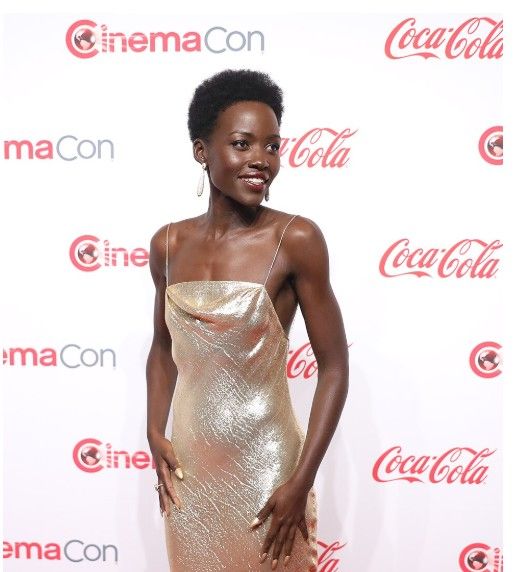
One of the controversial issues is the casting of a black actress, Mexican-born Lupita Nyong’o as Helen of Troy, a traditional white character.
Interestingly, back in 1950, famed director Orson Welles cast black American actress Eartha Kitt as Helen of Troy in his Paris and West German productions of Time Runs. (See here).
Does it matter? Directors can and do cast movies as they see fit.
But just imagine if they cast a white actress as a queen in a movie based on an African folktale? Do you think they’d even try that? Of course not. It would be called “whitewashing”.
Look at the outcry when white British actor Joseph Fiennes portrayed Michael Jackson in 2017, in an episode of the British TV series Urban Myths.
Fiennes was portraying Michael Jackson during the musical artist’s own “whitewashed” phase. Still, it sparked such outrage that the episode was never aired, only the trailer.
The Odyssey isn’t just any old story, it’s a foundational text of European civilization and literature. It’s been discussed for the past several milennia. Helen of Troy is definitely presented as a white blonde character.
It’s not that there were no black Africans in the ancient Mediterranean. There were some that traveled up from sub-Saharan Africa.
Even in the Trojan War story, of which the Odyssey poem is a part, Memnon, king of Ethiopia, brought an army to help the Trojans fight the Greeks. In the narrative, Memnon slew the Greek warrior Antilochus and Memnon was eventually slain by Achilles.
Read the rest here.
Leave a Reply