
by Cheryl Lacey, DGSJ, ©2026
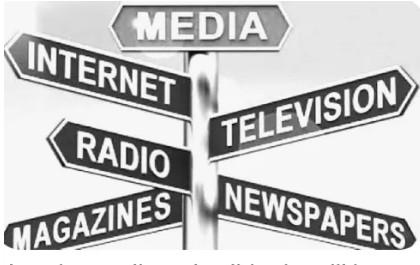
(Aug. 25, 2026) — How often have you heard the term woke ideology? It’s been part of our life for so long now it seems there is no end in sight.
Many would argue that schools are to blame. Others point to mainstream and social media.
And it’s this finger pointing that fuels these subjective talkfests.
Surely we’re bigger than this – capable of looking beyond what’s written or said, of thinking for ourselves, and of seeing woke ideology for what it is: a deliberate distraction from the truth.
Let’s start with the term.
Cambridge Dictionary defines woke with basically one word: aware.[i] Then it tacks on a qualifier – especially of social problems such as racism and inequality.
Ideology gets the same treatment. It’s defined as a set of beliefs or principles, and then the qualifier: especially one underpinning a political system, party or organisation.[ii]
Peel back the qualifiers you get: aware of a set of beliefs or principles. Nothing about politics, media, race or inequality.
Could it be that we’ve been deliberately distracted with qualifiers – pulled toward media, political systems and organisations, rather than left to seek the truth independently?
History shows us what informed public discourse can look like.
Trove[iii] – an online portal of newspapers, Government Gazettes, maps and more from Australian libraries, universities and archives – is an exemplar of this: thoughtful commentary and opinion pieces once contributed genuinely to public discourse.
Today, we have little of this. Investigative journalism that goes to the heart of issues is rare. Rarer still is mainstream media crediting the independent voices doing that work on social media.
It raises some necessary questions for us all:
- What do you believe?
- What principles do you live by?
- How are you influenced by others?
- How do you avoid blind faith in reporting from mainstream media?
- What do you investigate, to educate yourself beyond what is reported?
And lastly, what can you do to encourage respectful conversations that raise awareness of the set of beliefs or principles held by you and others?
Next time you read an article or listen to the news, consider two principles fundamental to my First Principles on Education® advisory work.
1. All knowledge begins with the senses.
2. Education begins with a shared language of agreed objective meaning.
Just as our walk through the definitions of woke and ideology showed, knowing holds little value if it’s not followed up with understanding. The dictionary gives us an objective starting point – but the qualifiers show how that objective meaning can be redirected, loudly and deliberately, on a global scale. And in that redirection something gets lost: not all of us signed up to this movement.
Political systems, parties and organisations don’t change. People do.
And with the coming of age of social media, we are all journalists and narrators of today – and of what we’re creating for the future.
Wouldn’t the world be a much safer, more prosperous and generous place if all of us were determined in our quest to be truth seekers and truth tellers?
[i] https://dictionary.cambridge.org/dictionary/english/woke
[ii] https://dictionary.cambridge.org/dictionary/english/ideology
[iii] https://trove.nla.gov.au/newspaper/article/244594988?searchTerm=Nicholas%20lacey%20auction
WHERE CURIOSITY MEETS COURAGE
BETRAYAL: Propaganda from the public service to the classroom
A Conversation with Prolific Writer Tony Thomas
If you think the curriculum is the problem, think again. Left-wing propaganda in schools is the consequence of decades of work – turning elected members into puppets, and unelected bureaucrats into middle managers for their masters. We’re all left high and dry. Unless we’re willing to get educated.
Listen and read the rest here.
Leave a Reply