

by James Lyons-Weiler, PhD, Popular Rationalism, ©2026
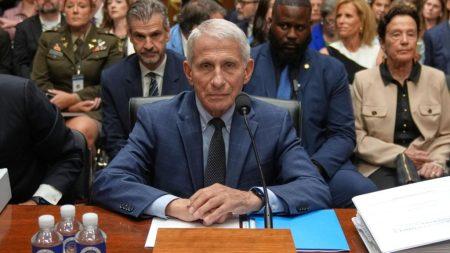
(Aug. 7, 2026) — The contempt resolution is in. The phone copy may shine light on the factual claims Fauci declined to address.
The operative provision of the Senate contempt resolution is nine lines long. It directs the President of the Senate to certify a committee report describing Dr. Anthony Fauci’s refusal to answer pertinent questions and transmit it to the U.S. attorney for the District of Columbia, so that Fauci may be “proceeded against in the manner and form provided by law.”
On Thursday morning, the Senate Homeland Security and Governmental Affairs Committee approved that resolution by an 8–5 party-line vote. The vote followed Fauci’s July 29 appearance under subpoena, during which he invoked the Fifth Amendment 111 times rather than answer questions about COVID-19’s origins, risky life-sciences research, his prior congressional testimony and his conduct as a federal official. (Axios)
The night before the vote, the Wall Street Journal reported that the Department of Health and Human Services had transferred a copy of Fauci’s government iPhone to the Senate Permanent Subcommittee on Investigations, chaired by Senator Ron Johnson. (The Wall Street Journal)
The contempt vote and the phone transfer are related, but they are not the same kind of development. The resolution advances a legal claim: that Fauci could be compelled to answer and unlawfully refused. The phone copy introduces a new potential source of evidence: contemporaneous communications and records that may answer some of the questions Fauci would not.
The first claim will be disputed in court if the Department of Justice prosecutes. The second can be tested by examining the data.
What the Resolution Actually Says
The committee’s resolution identifies the inquiry as encompassing “risky life sciences research and the origins of the COVID-19 virus.” It records that the committee issued Fauci a subpoena on June 22, revised it on July 17 and required him to appear on July 29. The accompanying instructions sought testimony about COVID-19’s origins, risky research and Fauci’s tenure as a federal employee.
Fauci appeared and delivered prepared testimony addressing his government service, his prior testimony to Congress and records released during the investigation. He then announced that he would refuse to answer the committee’s questions under the Fifth Amendment.
The resolution next sets out Chairman Rand Paul’s legal findings.
Paul ruled that Fauci’s Fifth Amendment claim was unsupported for questions concerning conduct covered by the broad federal pardon issued to him on January 19, 2025. Paul also ruled that Fauci had waived any remaining privilege concerning subjects he voluntarily addressed in his opening statement. Paul directed Fauci to answer, warned that continued refusal could produce contempt proceedings, and recorded that Fauci continued to refuse.
Those are the findings supporting the resolution. They are not findings by a court. They are the committee majority’s statement of the case it wants the Justice Department to pursue.
The pardon is central to that case. According to the resolution, it covers federal offenses Fauci may have committed or participated in between January 1, 2014, and January 19, 2025, arising from his work as NIAID director, a member of the White House coronavirus organizations or chief medical adviser to the president.
Paul’s argument follows directly from that language: a witness ordinarily cannot invoke the privilege against self-incrimination when a valid pardon has eliminated the danger of federal prosecution for the conduct under examination.
Fauci’s answer is that the pardon may not eliminate every realistic source of criminal exposure. A presidential pardon does not prevent state prosecution. It does not cover conduct occurring after January 19, 2025. Nor would it necessarily protect a witness from exposure created by statements made during the 2026 proceeding itself. The legal dispute is therefore claim-specific. The relevant questions are what Fauci was asked, what conduct an answer could disclose, which sovereign could prosecute it and whether the danger was real rather than speculative. (Reuters)
The committee nevertheless faced more than a narrow invocation concerning a few carefully identified questions. Fauci declined to answer across the hearing. That prevented the committee from obtaining his account of the evidence while allowing his prepared statement to place his preferred account into the record.
Whether that combination constituted a waiver is one of the issues Paul has placed before DOJ.
Read the rest here.