
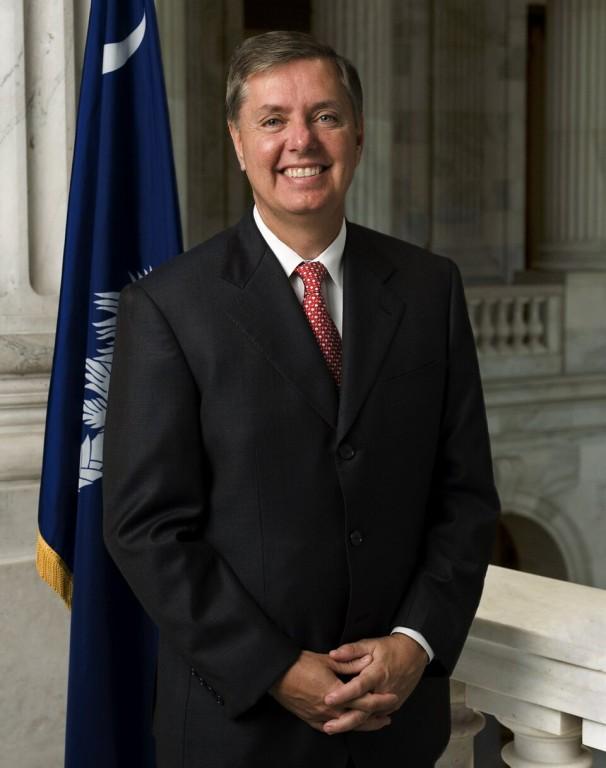
by David Shephard, ©2026


(Jul. 14, 2026) — In 2015 South Carolina Senator Lindsey Graham decided to throw his hat into the ring and run for President. It was a longshot, no doubt about it, but Graham, who served in the military (Air Force JAG officer) for 30 years, in the House of Representatives and in the Senate, was certainly qualified for the job and probably would have been a good President.
But Republican primary voters were in an angry mood that year. They wanted a political outsider, and Graham was not an outsider. He was very much aligned with the Washington GOP establishment wing of the party. He was viewed as a foreign policy hawk and a neoconservative who backed the Bush administration up to the hilt on Iraq and Afghanistan. Making him more suspect with conservatives was the fact that he was considered to be Senator John McCain’s best friend in the Senate. He also had a record of working with the Bush administration on a domestic agenda, which included many things that upset conservatives. Graham lost the race, but in the heat of the campaign he did what all candidates do, attacked the frontrunner, who in 2016 was Donald Trump. He hit him pretty hard and declared that if the Republican Party nominated Trump, then they would have gone “bat-**** crazy.” He also questioned Trump’s fitness for office.
After the election Graham chose to make friends with Trump and to try to work with him. As they say, if you can’t beat him, join him, and Graham bet on his ability to be able to influence Trump and his administration.
But this decision led many on the left and among that small and pathetic band of never- Trump Republicans to accuse him of being unprincipled or a sellout. They say that Graham went from a Never-Trumper to Trump’s biggest ally in the Senate, and somehow this feat was impossible for a principled person to do. This is unfair. For context, Graham was fighting Trump for the nomination. Primary battles can be tough, and things are said which on reflection many candidates later regret. Hyperbole is common, even required in a primary battle. I would also say that Graham was never in the “Never-Trump” camp. They may have assumed he was, but he was not.
True, Graham was from a different wing of the Republican Party, but he was a loyal Republican, and he represented a very pro-Trump state. I believe on some things, such as immigration and border security, that Graham moved closer to Trump’s position. Even if Graham were a Never-Trumper and he made his opposition to Trump clear, he would not have been able to get reelected in South Carolina and would have ended up like Liz Cheney or Adam Kinsinger – out of Congress.
But even assuming that Graham was a closet Never-Trumper, he decided not to follow the Liz Cheney career path, he stayed in Congress and left a major footprint. He, as much as anyone, got the Kavanaugh nomination through when it looked hopeless. He gave an impassioned defense of Kavanaugh against a late Democrat smear when other Republicans might have been afraid; remember “Believe all women,” and he rallied his fellow Republican senators in favor of fighting for Kavanaugh. He also helped steer other nominees through and shape the Trump agenda for six years. He helped Trump rebuild the military after years of neglect.
Graham had influence because he knew so much about policy and procedures. He traveled the world as much as any senator; world leaders respected him, and he understood them and foreign policy as much as anyone in Foggy Bottom.
Perhaps the biggest example of Graham’s influence was over foreign policy, specifically the Ukraine war. Trump came back into the Oval Office in 2025 with the idea that he would end the Russian-Ukrainian war by acting as an unbiased moderator. That is, he would move the United States to a position of neutrality. We would no longer favor Ukraine and instead push for a compromise. This was a major win for Russia, and this probably horrified Graham as much as it horrified our European allies. But Graham persisted in lobbying Trump, and Russia continued its aggression and Trump moved Graham’s way.
Trump agreed with Graham and increased sanctions on Russia, and he even agreed to give the Ukrainians the design plans for the patriot anti-missile system so they could build it to protect themselves from Russian missiles, a major development which could turn the war in Ukraine’s favor. In Ukraine, and on other issues as well, it could be argued that Lindsey Graham had more influence over Trump’s thinking than even the Vice President.
On the last day of Graham’s life, in the last couple of hours, the President of the United States called him to get his advice. Trump called to talk over issues of domestic concerns, of politics, and of war and peace with Graham. Can there be any greater evidence that Graham had influence? I think not.
David Shephard is a native and very proud Virginian. Raised in Fairfax County, David graduated from George Mason University and majored in Government and Politics. He spent decades in politics, campaign consulting, raising money and lobbying. He is also a longtime conservative blogger writing for numerous blogs. He is also the host of “The Virginia Gentleman Podcast.”
David is the author of Elections Have Consequences, A Cautionary Tale, and his latest book, Norton’s Choice: An Inside Politics Exposé.