
by James Lyons-Weiler, PhD, Popular Rationalism, ©2026


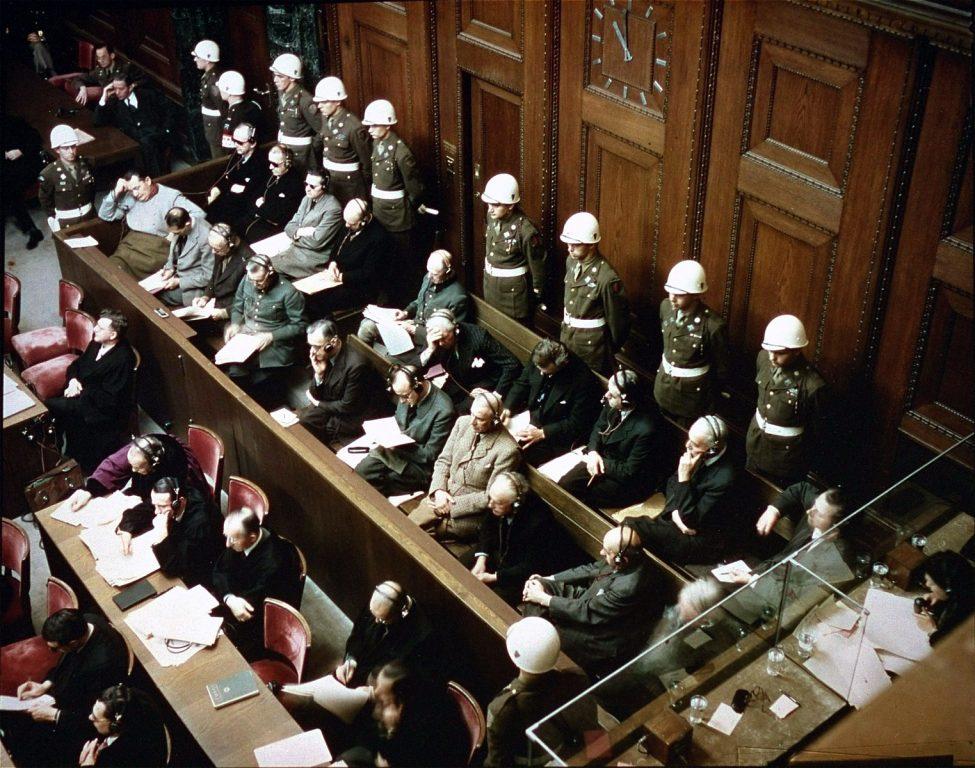
(Jun. 4, 2026) — In 1947, a panel of American judges ended a trial with a single sentence that became the conscience of modern medicine: “The voluntary consent of the human subject is absolutely essential.” That is the first principle of the Nuremberg Code, and it was not written as an aspiration. It was written as a verdict — the distilled lesson of what physicians had done to human beings who were never permitted to say no.
Here is what almost no one is taught. That principle, born from the worst thing doctors have ever done, has never been repealed, weakened, or formally narrowed in the decades since. It runs straight through the Declaration of Helsinki, through the Belmont Report, and through the consent form a nurse will slide across a counter to you or your child this week. And yet, in one of the domains where it should be most ironclad, the system has engineered consent down to a signature on a document that the issuing agency itself says is not a consent document at all.
Look at the Vaccine Information Statement — the sheet handed out before an immunization. The CDC’s own guidance is explicit that a VIS is not an informed-consent form. The United States, for a procedure it performs hundreds of millions of times a year, has no standardized informed-consent process at all. The VIS exists because of the 1986 National Childhood Vaccine Injury Act — a law written at least as much to stabilize vaccine supply and manage injury litigation as to inform the person being injected. The most-administered medical intervention in the country runs on a disclosure instrument its own author declines to call consent. That is not an accident of paperwork. It is what happens when a principle survives in name while quietly dying in practice.
“No One Told Us”: The doctrine was always written in the aftermath
The uncomfortable thing about the history is its rhythm. We do not strengthen consent because we reason our way to it in calm rooms. We strengthen it after we are caught.
In 1914, Justice Benjamin Cardozo wrote that “every human being of adult years and sound mind has a right to determine what shall be done with his own body.” That sentence is now the bedrock of American medical consent — and it came out of a lawsuit over a surgery performed on a woman who had explicitly refused it. Nuremberg came after the camps. The Declaration of Helsinki, in 1964, came as researchers kept treating patients as means rather than ends. The Belmont Report, in 1979, came after the Tuskegee syphilis study — four decades in which the U.S. Public Health Service watched men die of a treatable disease, on purpose, without telling them — was finally exposed in the press in 1972.
Every pillar of the consent doctrine is a tombstone. Each one marks the place where the principle had already failed once before anyone bothered to write it down. Which raises the question this history forces but rarely asks aloud: if the doctrine only ever advances after a betrayal, what is being done to it right now, in the gaps where no one is looking?
If you read Popular Rationalism, you already know that official explanations rarely survive first contact with the primary sources. This is one of those cases where the gap between what we say we believe and what we actually practice is not hidden. It is sitting on the counter, printed on a half-page handout, in plain sight. Or handed out in a tablet with fine print too small to read and zero opportunity to question.
Read the rest here.