
by Lonnie Orfitelli, By Green Pastures, ©2026

(Apr. 2, 2026) — The following was prompted by the excellent blog entry of Dennis Gladden published on April 1, 2026.
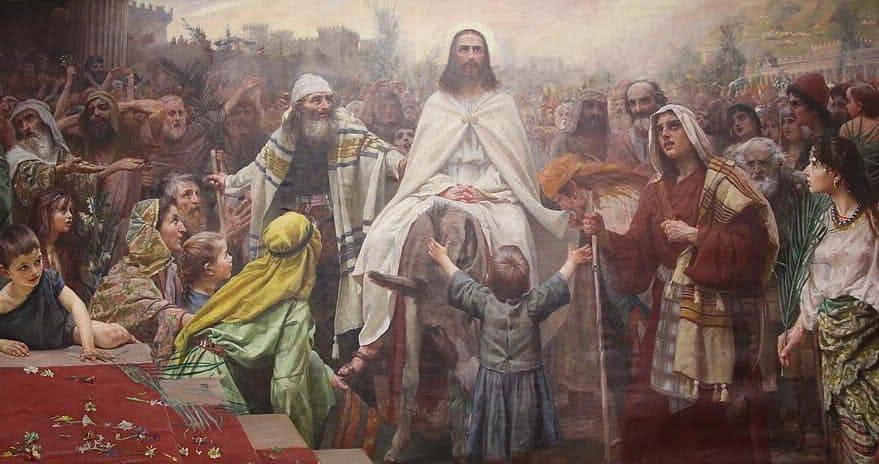
The week before the crucifixion, we are given a picture of what is traditionally called the “triumphant entry” of Jesus into Jerusalem.
This expression of the crowd indicated just how widespread the knowledge of Jesus had become as it saturated the national conscience. This crowd clearly expected that Jesus was coming to provide the same kind of miracle and deliverance that had occurred with that first Passover in Egypt.
Jesus submitted to this public show because He knew that this entry into Jerusalem was, in fact, part of the fulfillment of hundreds of prophecies and foreshadowing found in the collected scriptures of the nation of Israel.
All this might of our world, with all of its complete unfairness, could not change a single trait of this, our Messiah.
But it would not work out the way the crowd assumed. We know from the subsequent accounts that this same crowd reacted with their angry rejection of Jesus, shouting, “Crucify, Crucify Him” when confronted by Pilate just a few days later. In addition, they wanted a criminal, Barabbas, released to them for the Passover.
In this, the crowd played out the foreshadowing events around Isaac’s blessing of Jacob. Isaac thought his “manly” hunter son, Esau, would be a better inheritor of the promise of God and ruler of the family than Jacob, the quiet mother’s boy. He attempted to do this, rejecting the prophecy about Rachel’s twins, where the elder would serve the younger.
The crowd in Jesus’ time demonstrated they felt that a violent Barabbas would be a better candidate to throw off the control of Rome and establish the superior nation they thought they wanted. By this expression, they rejected the idea that a quiet, innocent man could have the strength to manage a ruling kingdom.
But they were wrong.
Jesus had said to His disciples at the Last Supper,
“These things I have spoken unto you, that in me ye might have peace. In this world ye shall have tribulation: but be of good cheer; I have overcome the world” (John 16:33).
This statement comes immediately after He told them:
“… ye shall be scattered, every man to his own, and shall leave me alone …” (John 16:32).
What then is the “triumph” we celebrate on Palm Sunday? It is this simple statement of the fact that Jesus has “overcome the world.” And He did it despite the rejection of the crowd.
Mostly, we look at this statement in the context of 2,000 years of church history and the truths that Jesus taught; the profound confirmation of the resurrection; and the impact of the coming Holy Spirit.
However, I want to consider a much more personal recognition.
The entire might of the world was arrayed against Him. The leading religious community rejected Him. The mightiest world empire had abandoned Him. He was physically abused and then condemned to the worst possible execution available at the time. In addition to its physical attributes, it forced complete public exposure and humiliation. And He was alone; even God turned away.
But what was revealed by all of this? What is the glory we celebrate as His triumph?
They still couldn’t touch Him. All this might of our world, with all of its complete unfairness, could not change a single attribute of this, our Messiah.
He still continued the work of His calling.
- First, by warning Israel on the way to the cross that they should be more afraid for themselves than for Him.
- Second, demonstrating such personal peace and lack of fear when crowned with thorns and nailed to the cross that the centurion in charge of the execution was forced to confess He was a righteous man.
- Third, continuing the work of salvation and the manifestation of God’s authority, He accepted the petition of the thief next to Him, acknowledging that they would enter paradise together.
- And finally (at least on this list), He demonstrated His pity and concern even for His rejectors and tormenters, asking God to forgive them because of their ignorance.
So, in the end, Jesus demonstrated the strength He would impart to His followers. Not the strength to destroy, but the strength to be unchanged by all the pressures the world can bring to bear.
We need no longer be slaves to sin (and self) but can actually live by His example and have peace. We will see the fulfillment of “the meek inheriting the earth.”