

by Dennis Gladden, By Green Pastures, ©2026

(Mar. 18, 2026) — The critics of Jesus couldn’t fathom that He was obeying God.
Their God—the God of Abraham, Isaac, and Jacob—had commissioned Solomon to build the Temple and centuries later recalled a remnant of the Israelites from exile to rebuild it.
But just the day before, Jesus had upended the temple’s ritual. He drove away the pilgrims who came to buy sacrifices for the impending Passover and flung aside the change-laden tables.
They remembered He had even talked about destroying the temple.
“By what authority are You doing these things?” they demanded.
Jesus didn’t answer directly, but told a parable.
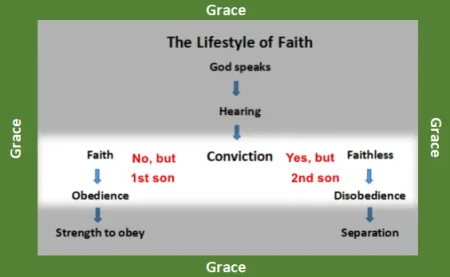
A man had two sons, and he came to the first and said, ‘Son, go, work today in my vineyard.’
He answered and said, ‘I will not,’ but afterward he regretted it and went.
Then he came to the second and said likewise. And he answered and said, ‘I go, sir,’ but he did not go.
Which of the two did the will of his father? (Matthew 21:28–31).
They conceded it was the first son, even though he initially refused.
Jesus clinched His point with a comparison.
Tax collectors and harlots enter the kingdom of God before you. For John came to you in the way of righteousness, and you did not believe him; but tax collectors and harlots believed him; and when you saw it, you did not afterward relent and believe him (Matthew 21:31–32).
This parable presents two sides of obedience and implies a third.
One is the son who delayed obedience. He rejected his father’s order, entertained second thoughts, and ultimately complied.
He represented the sinners whom the religious elite despised. They had strayed from God’s ways but confessed their sins and were baptized when John the Baptist proclaimed, “Repent, for the kingdom of heaven is at hand!” (Matthew 3:5–6)
Then, there was the feigned obedience of the son who agreed immediately, but didn’t follow through.
He represented the religious elite who consented to God’s commands. Like Cain, they served God as they thought best and spurned His admonition. By their own admission, they evaluated John’s ministry and couldn’t determine whether he was God-sent or just a man on a mission (Matthew 21:25–26).
They were “yes” men who never complied.
Read the rest here.