

by James Lyons-Weiler, PhD, Popular Rationalism, ©2026
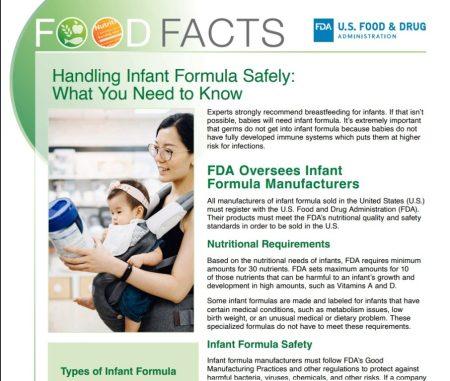
(Feb. 20, 2026) — From the moment the Human Foods Program was reorganized and the MAHA framework articulated its structural objectives, infant formula stood out as the inevitable next front. The regulatory lag was measurable. The contaminant discourse was already active. The nutrient standards were anchored in 1998-era science. The supply-chain fragility of 2022 remained fresh in institutional memory. Those closest to reform strategy knew that formula would move once upstream food chemical initiatives cleared the runway.
Now it has.
Operation Stork Speed, announced March 18, 2025, defined scope: strengthened safety testing, expanded contaminant screening, labeling modernization, international benchmarking, and NIH collaboration to close gaps in long-term formula-feeding outcomes.
On May 13, 2025, FDA formally initiated the statutory review of infant formula nutrient requirements—the first comprehensive review since 1998. That 27-year interval is scientifically untenable in a domain where lipid metabolism research, micronutrient bioavailability data, and developmental neurobiology have advanced continuously.
And recently, on February 10, 2026 Human Foods Program 2026 Priority Deliverables codified what was already evident: infant formula modernization is embedded inside MAHA implementation. Exposure data releases for lead, arsenic, cadmium, mercury, and PFAS are scheduled under Operation Stork Speed. Nutrient reevaluation is underway.
The FY2026 HHS Budget in Brief assigns $15 million toward modernization of formula oversight and surveillance. Budgets reveal priorities more clearly than speeches.
This progression was expected.
Infant formula is a unique regulatory category. Approximately three-quarters of U.S. infants receive formula within the first six months of life, and roughly 40% rely on it as their sole nutrition source during that period.
Unlike conventional foods, formula functions as complete nutrition during a phase of peak neurogenesis, synaptogenesis, and myelination. During the first year of life, brain volume doubles. The infant blood-brain barrier remains developmentally dynamic. Renal clearance capacity differs from adult physiology. Trace element exposures that are inconsequential in adults can accumulate differently in infants due to immature excretory mechanisms and higher intake per body weight.
The current regulatory baseline requires 30 specified nutrients with minimum concentrations and maximum limits for ten. Those parameters were designed using data that predate modern research on:
• Long-chain polyunsaturated fatty acids (LCPUFAs) and the ratio-dependent roles of DHA and arachidonic acid (ARA) in cortical development.
• The importance of structured triglycerides and positional palmitate (sn-2 palmitate) in fat and calcium absorption.
• Choline’s role in hippocampal development and epigenetic methylation pathways.
• Lutein and zeaxanthin in retinal and neural tissue deposition.
• The gut–brain axis and the influence of oligosaccharides, prebiotics, and microbial colonization patterns on immune programming.
None of these domains were fully integrated into 1998 standards.
The contaminant dimension is equally overdue.
Unacceptable heavy metals enter formula through multiple pathways: raw ingredient contamination, soil uptake in plant-derived components, processing equipment, packaging migration, and water inputs. Arsenic contamination in rice-derived ingredients reflects known soil persistence and groundwater mobilization. Cadmium accumulates in certain grains and cacao derivatives. Lead persists in environmental dust and can enter supply chains via agricultural or manufacturing pathways. Mercury, though less common in formula matrices than in fish products, can appear via environmental deposition. PFAS contamination can originate from packaging materials, industrial water sources, or environmental persistence.
Exposure assessment must consider:
• Concentration per kilogram of product.
• Reconstitution water quality.
• Average daily intake in grams per kilogram body weight.
• Bioavailability and speciation (for example, inorganic arsenic versus organic forms).
• Infant renal clearance rates and body-weight–normalized intake.
Read the rest here.