
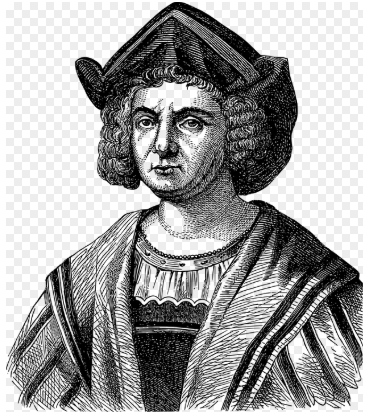
by John Bernard, ©2025
(Oct. 13, 2025) — Part of the problem lies in assumptions about Indigenous Peoples worldwide and even the definition of Indigenous. While Anthropologists and Geneticists disagree on a point of human origin, they do agree that humanity did in fact originate at one point on the earth with consequent population dispersion being a product of intentional migration due to disagreements, food shortages, overpopulation, natural disasters, etc.
It is equally important to remember that every single piece of land and even most waterways have changed hands several times and most through warfare, so much so that Indigenous loses its meaning as original or even rightful owner of.
How the largely nomadic, Indigenous tribes in North America got here is entirely incidental. Some have speculated they crossed a now dissipated land bridge from Russia to Alaska, while others believe the Phoenicians took their reed boats across to South America and eventually traveled through Latin America and Mexico to North America, having seeded the populations of the Aztecs, Mayans and other tribes during that time.
Indigenous at best means “there before us” and not planted here like the flora and fauna and so in no way suggests rightful ownership being as the entirety of human history is filled with warfare and its offspring: victors, losers, displacement, assimilation, starvation, extinction, eradication and new Hope. In truth, all we have any claim to is that which we are willing to fight for and are capable of holding.
The argument that Columbus (1492) didn’t discover anything negates the history preceding his voyage as well as prevailing beliefs and lost history in his time. Many were still struggling to accept that the earth wasn’t flat, having wafted in and out of the knowledge of a spherical earth since the Greek Mathematician Pythagoras (born 570 BC) and even before.
They had just cleared the Dark Ages, fought eight crusades, instigated by the 500-year-long Moslem siege starting in Medina in 622, lasting until 1095 when Pope Urban II requested the launch of the first Crusade largely to liberate the Holy Land and ensure safe passage for those making a pilgrimage to the Holy Land, culminating in the fall of Constantinople in 1453 and the battle for Granada (1492).
The Moslem onslaught saw the fall of the entirety of the Mediterranean basin; North Africa, the Middle East, incursions into Spain, France and England; Italy and Greece endangered, and the fall of the Byzantine Empire, giving way to the rise of the Ottoman Empire. There was so much uncertainty and lack of knowledge sewn into every aspect of human life that truly, anything found to be lying beyond the horizon in the “Great Western Ocean” would be seen as Discovery – and Hope – regardless of who might be occupying those lands.
Columbus is more than the incredibly stilted view of those crying foul for the occupants he encountered. He is the embodiment of the explorer’s desire to seek out what is not known, to fill in the blanks, to gain knowledge about something that was not known or even lost to time. Post-Medieval history, Columbus’s voyage and consequent discoveries opened the door for future exploration and settlement, which came at a cost for some including the indigenous peoples. But to declare that cost as unusual or unique in the annals of history or anthropology belies an astounding lack of knowledge of both.
The call to change Columbus Day to Indigenous People’s Day has almost nothing to do with setting a record straight. If that were the goal, there are 364 days from which the Deconstructionists could have chosen to honor the Indigenous Tribes Columbus first encountered, but that was not the goal. As in every single endeavor of mankind to build anything, there is a knee-jerk desire by some to tear it apart. The axiom that a little knowledge is bad is true here as well. Looking at something or someone and characterizing it as good or evil by a single act or an aspect of character is to negate the entirety of knowledge accumulated, all written history and the seeking of any further advancement or exploration or enhancement of the human condition because at the very genesis of an idea or quest is an ailing, sinful, mistake-laden, self-serving human being.
There are no Altruists, only altruistic aspirations guiding deeply flawed people.
The Deconstructionists delude themselves into believing they are somehow modern, altruistic, sinless Warrior Monks, dispensing a long overdue justice for those uniquely wronged while conveniently missing their own culpability in the sin department. They don’t want restitution, justice or inclusiveness. They want a total cleansing of established history, a razing of edifices and buildings; erasing art and literature to replace it all with monuments to their vision of the future, which is ironic considering the expansionism they decry was in part to seek a place where the explorers could live their vision and lives.
Columbus was simply one of the first in the modern era.
Semper Fidelis
John Bernard