

by James Lyons-Weiler, PhD, Popular Rationalism, ©2025
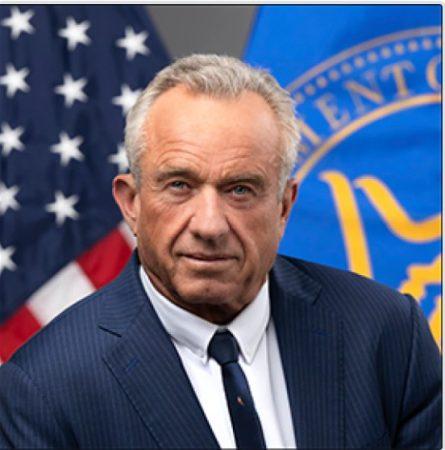
(Jun. 11, 2025) — When Robert F. Kennedy Jr. assumed his role as Secretary of the U.S. Department of Health and Human Services, he did so with a singular, burning question: Are we doing everything we can to protect our children? The answer he found was unacceptable.
This week, he made one of the most controversial and consequential decisions of his tenure—he dismissed all 17 members of the Advisory Committee on Immunization Practices (ACIP), the group responsible for recommending which vaccines are added to the CDC’s childhood immunization schedule. But this wasn’t a political move, and it wasn’t a vendetta. It was a reckoning.
Kennedy has listened to too many grieving parents. He and his team have read too many trial reports that obscure rather than reveal. He knows that our children are not data points. They’re lives.
This was a move made not in anger, but in sorrow. In resolve. And in love.
CNN’s Gotcha Backfires: A Closer Look at Kennedy’s Demolition
CNN recently claimed that Kennedy’s assertion—that no injected routine childhood vaccine was licensed based on an inert placebo-controlled safety trial—was false. According to CNN, they had found 257 placebo-controlled studies that refuted Kennedy’s claim.
But Kennedy, ever the litigator of facts, responded not with rhetoric, but with a meticulous breakdown of CNN’s own evidence. And the result? CNN’s attempt to discredit him inadvertently confirmed his point.
Kennedy’s Breakdown of the 257 Trials
Of the 257 studies cited:
236 did not use inert placebos at all. Instead, they used
- Aluminum adjuvants
- Antibiotics
- Other vaccines or full vaccine minus the antigen
21 remaining studies were examined in detail. Of these, Kennedy schooled CNN that:
9 used active ingredients in the so-called placebo (e.g., neomycin, aluminum, thimerosal, formalin, stabilizers), and
12 used what may have been inert substances, but none of those were
- Used to license any vaccine currently on the U.S. childhood schedule
- Conducted prior to FDA approval (i.e., they were post-licensure)
- For vaccines ever licensed in the United States
Kennedy’s key point: not one of the studies cited by CNN was used to support the licensure of an injected childhood vaccine with an inert comparator prior to FDA approval.
Some examples he provided:
- RCT 84 and 97 (HPV trials): used aluminum as placebo.
- RCT 55 (PedvaxHIB): used aluminum, lactose, and thimerosal.
- RCT 168 (Dow’s MMR): used the full vaccine minus virus—including preservatives and buffers.
- RCT 124 (Fluzone IIV3): found more hospitalizations in the vaccine group than placebo.
- RCT 122 (Chinese flu shot): found severe adverse events in 0.6% of vaccine recipients vs. 0.1% in placebo.
- RCT 136: found the vaccine ineffective.
Even the oral rotavirus and intranasal flu vaccine trials cited included active compounds like polysorbate 80, fetal bovine serum, and sucrose-phosphate-glutamate solutions—not saline.
In trying to refute Kennedy, CNN demonstrated his point. The standard of safety testing required for vaccines differs sharply from that for other pharmaceuticals. No wonder parents feel gaslit.
This week, Popular Rationalism provided an independent assessment of the 257 trials listed in haste on the web and cited by CNN only to find that about 40% of them were not sufficiently powered to detect a serious adverse event if it occurred in 1% of vaccine recipients.
What the Public Deserves to Know
For decades, the ACIP has recommended vaccine after vaccine for children without ever insisting on safety data from true (inert) placebo-controlled trials. Since the passage of the 1986 National Childhood Vaccine Injury Act, vaccine manufacturers have been shielded from liability. The result? An explosion in the number of shots: from 11 doses in 1986 to as many as 92 by 2025 (depending on formulation and brand).
Meanwhile, childhood autoimmune and neurodevelopmental disorders have skyrocketed. While correlation does not prove causation, the absence of high-quality inert-controlled safety trials precludes ruling vaccines out as contributors to the rise in autoimmune and neurodevelopmental disorders.
We must care as much about the child harmed by a vaccine as we do about the child harmed by a disease. Both are real. Both matter.
What Comes Next: The Rebuilding of ACIP
Kennedy will now appoint new ACIP members: not ideologues, but physicians, scientists, and public health professionals committed to transparency and ethics. Not one of them will be an “anti-vaxxer.” Some may, and should be, vaccine-risk aware.
These will be people who ask questions, demand evidence, and respect the public’s right to full information. Kennedy is building an ACIP that will no longer rubber-stamp industry submissions but instead scrutinizes them with the same care we expect of any life-saving intervention.
The Deeper Truth: A Reform Rooted in Love
Beneath the headlines and hashtags, this is not a war on vaccines. It’s a call for integrity.
It’s about a father who lost too many friends to chronic illness. A lawyer who saw too many sealed court documents. A citizen who decided he could no longer stand by while systems designed to protect children instead protected profits.
Robert F. Kennedy Jr. has made his choice to stand by families. He wrote:
“Our infants and children deserve the best safety trials possible to keep them safe. We should care as much about every child who could be injured by one of these products as we do every child who could be injured by an infectious disease. We must protect all children.”
Now it’s time for the rest of us to choose too.
Will we demand better? Will we protect the children who cannot protect themselves? Will we restore trust, not with spin, but with truth?
This week, truth won a rare and essential round with what many are saying is the single most important post to social media ever made by any cabinet member. If this is a taste of the reality CNN and the rest of the legacy media have to contend with, I have news for them:
They are in for a reality buffet.
And it started with one man refusing to be silent.