

by Robert Kalebra, ©2025

(Feb. 12, 2025) — The terms “republic” and “democracy” are often used interchangeably, especially in modern political discourse, but their meanings and implications differ significantly. Understanding the historical evolution of these concepts, as well as how they relate to political parties like the Republicans and Democrats in the United States, can shed light on their respective ideologies and the structure of American government. While both forms of government seek to represent the will of the people, they approach it in different ways. This article will explore the history and theoretical differences between a republican government and a democracy, as well as the ways in which these ideas have been adopted, interpreted, and applied by the two major political parties in the United States: the Republicans and the Democrats.
The Concept of a Republic
The term “republic” originates from the Latin phrase res publica, which means “public thing” or “public matter.” In essence, a republic is a form of government in which power rests with the people and their elected representatives, and the country is considered a “public matter” rather than the private concern of rulers. The key distinguishing feature of a republic is that it operates under a system of elected representatives rather than a direct form of rule by the people themselves.
The idea of the republic can be traced back to ancient Greece and Rome, with Plato and Aristotle discussing the merits of a republic in their works. However, it was during the Roman Republic (509 BCE – 27 BCE) that the concept of elected officials, as fiduciaries, acting in the best interests of the people, was solidified. Over time, the republican model evolved, particularly in Europe, and found a new expression in the American Revolution.
The framers of the U.S. Constitution, influenced by Enlightenment thinkers such as Montesquieu and John Locke, deliberately designed the United States government as a republic. This was a conscious decision to avoid the excesses of direct democracy and to prevent the concentration of power in the hands of a monarch or a mob. They sought to establish a system of checks and balances, separation of powers, and a representative democracy to ensure that the government remained accountable to the people without succumbing to the risks of mob rule.


The Concept of a Democracy
Democracy, derived from the Greek words demos (people) and kratos (power or rule), is a system of government where the people hold the ultimate authority. In its purest form, democracy is direct, meaning that citizens themselves vote on laws and policies, and the majority’s will directly dictates government actions.
The origins of democracy are often traced to ancient Athens, where citizens (though excluding women, slaves, and foreigners) directly voted on legislation and executive decisions. While the concept of democracy has existed for thousands of years, the modern understanding of democracy as a system of representative government was largely shaped during the Age of Enlightenment, culminating in the French and American Revolutions. These revolutions advocated for the idea that governments should be based on the consent of the governed and that citizens should have a say in their political structure.
In the context of the United States, “democracy” is not synonymous with direct rule by the people but refers to the processes by which the people elect representatives who will make decisions on their behalf. The United States is often described as a “democratic republic,” reflecting its dual commitment to democratic values (elections, participation, popular sovereignty) and the republican structure of elected representatives and checks and balances.
Differences Between a Republic and a Democracy
While both a republic and a democracy are forms of government that place sovereignty in the hands of the people, they differ significantly in the mechanisms through which this power is exercised.
- Representation vs. Direct Rule: In a republic, the people elect representatives who make decisions on their behalf. In a pure democracy, the people themselves directly make decisions about laws and policies.
- Protection from Tyranny of the Majority: In a republic, there are often safeguards like a constitution, an independent judiciary, and a bicameral legislature designed to protect minority rights and prevent the tyranny of the majority. In a direct democracy, the majority’s will prevails, which can sometimes lead to the marginalization of minority interests.
- Structure and Stability: A republic tends to have a more structured and stable form of government with clearly defined roles and responsibilities for elected officials. A democracy, particularly in its direct form, can be more volatile, as laws and policies are subject to frequent change depending on the preferences of the majority at any given time.
The Application of Republican and Democratic Ideals in the U.S. Political System
In the context of American politics, the terms “Republican” and “Democrat” take on more specific meanings, aligning with distinct ideologies regarding government structure and the role of the people.
- Republicans: The Republican Party generally adheres to the principles of a republic, with an emphasis on limited government, individual liberties, and the protection of states’ rights. The party advocates for a republican form of government where elected representatives make key decisions, and the government has checks and balances to limit its reach. Republicans are often wary of too much government intervention in citizens’ lives, reflecting their commitment to a constitutional republic where power is decentralized and the government remains accountable to the people.
- Democrats: The Democratic Party, while also operating within the framework of a republic, tends to emphasize the democratic aspects of governance, particularly the idea of promoting social welfare, ensuring equal rights for all, and expanding participation in the political process. Democrats advocate for a more active role of government in addressing social issues such as healthcare, education, and economic inequality, often through legislation passed by elected representatives. They view the democratic principles of popular sovereignty and representation as critical to ensuring that the needs of all citizens are addressed.
Despite both parties functioning within the republican structure of government, their interpretations of what is best for the people often differ. Republicans tend to stress individualism, limited government, and personal responsibility, while Democrats emphasize collective action, social justice, and government intervention to correct societal imbalances.
FINAL WORD
In the United States, the debate between a government “republican in form” and a democracy is not just about the role of the people but more about the extent to which government intervention should be allowed and how constitutional limits should be applied. The United States is meant to function as a democratic republic, a system designed with both democratic ideals and republican checks and balances. The Republican Party, in particular, stresses the importance of adhering to the Constitution’s limitations, advocating for limited government, individual liberties, and the decentralization of power. This perspective ensures that government remains within the bounds set by the Constitution, protecting the rights of individuals from overreach.
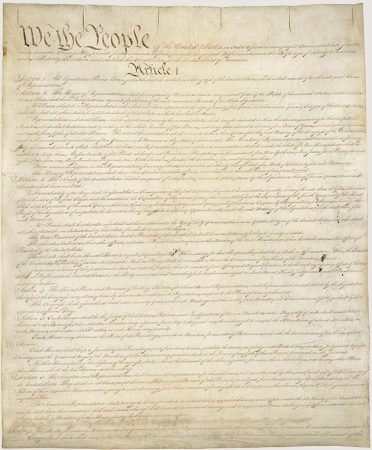
In contrast, the Democratic Party has, over time, sought to erode these constitutional boundaries by advocating for an expanded role of government, often at the expense of the limitations and restrictions the Constitution imposes. By pushing for greater government intervention in areas like healthcare, education, and economic regulation, the Democratic Party often favors policies that increase federal power, which can diminish the authority of states and localities. Additionally, Democrats frequently support the expansion of government powers through regulatory bodies and executive orders, circumventing the system of checks and balances that the Constitution is meant to protect. These actions tend to undermine the principles of limited government and individual liberty embedded in the Constitution, leading to a concentration of power in the hands of the federal government rather than adhering to the constitutional framework that restricts such centralization.
While both parties claim to serve the people, the Democratic Party’s interpretation of government and its role often challenges the very structure designed to limit power, thus undermining the Constitution’s intended checks on government authority and its protection of individual freedoms.