

by Robert Kalebra, ©2025
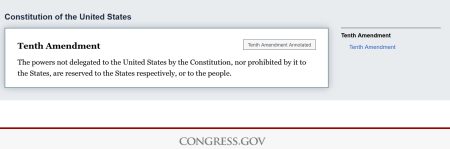
(Jan. 25, 2025) — “The powers not delegated to the United States by the Constitution, nor prohibited by it to the States, are reserved to the States respectively, or to the people.” – Tenth Amendment
The U.S. Constitution, particularly through the Tenth Amendment, sets clear boundaries on the role of the federal government, leaving many responsibilities to the states. This framework provides not only a constitutional understanding of federalism but also presents a compelling case for reducing wasteful federal spending. The Constitution’s prohibition on the federal government exercising powers not delegated to it opens a door for significant cuts in unnecessary federal expenditures, potentially saving billions and reducing the national debt. By adhering to the principles of the Tenth Amendment, the federal government can refocus its spending on areas where it is constitutionally required, while giving states greater control over issues traditionally managed at the local level.
The Constitutional Case for Cutting Federal Spending
At its core, the Tenth Amendment of the U.S. Constitution reserves powers not specifically granted to the federal government to the states or the people. This amendment is a direct limitation on federal overreach, ensuring that the federal government cannot usurp state responsibilities. This is important for fiscal responsibility—by curbing the federal government’s involvement in areas outside its constitutional remit, we can reduce unnecessary spending and allow states to handle their own affairs. Implementing these changes can not only reduce wasteful spending but also reduce the national debt significantly.
A. Disaster Relief: A State Responsibility
- Disaster relief is an area where federal spending could be dramatically reduced by adhering to the Tenth Amendment. While federal programs like the Stafford Act provide financial assistance to states in the wake of natural disasters, such assistance is not constitutionally required. The Tenth Amendment allows states to manage their own disaster preparedness and response efforts without federal intervention.
- The federal government could phase out its role in disaster funding, making it clear that states must allocate their own resources for disaster relief. States could be encouraged to establish dedicated emergency response funds, bolstered by insurance programs, or even create regional disaster relief partnerships with neighboring states.
- Federal agencies like FEMA could be reorganized to act as coordination bodies or offer technical assistance, rather than providing direct financial aid. This could save billions in federal disaster relief spending and shift the financial responsibility to states, where it constitutionally belongs.
- States could incentivize citizens to purchase disaster insurance, which would allow for quicker response times and reduce reliance on federal funding. This approach mirrors the systems used in other countries with lower federal involvement.
- By giving states greater autonomy, federal waste in disaster relief could be cut, and funds could be more effectively allocated at the local level, where emergency management is most relevant.
B. Entitlement Programs: The Expanding Federal Burden
- Social Security, Medicare, and Medicaid are entitlement programs that have expanded the reach of the federal government far beyond what is required by the Constitution. While these programs were created through acts of Congress, they are not constitutionally mandated. The power to regulate health and welfare lies primarily with the states, as per the Tenth Amendment.
- Instead of the federal government directly overseeing these entitlement programs, it could provide block grants to states to manage them. Under this model, states would receive funding to administer programs like Medicaid, but they would have the flexibility to design their own systems according to their specific needs. States with more efficient or innovative systems could potentially reduce costs and improve services, while the federal government’s burden would be significantly reduced.
- The federal government could offer states the option to administer Social Security and Medicare funds. This would allow for a more localized approach that could account for state demographics and economic conditions. For instance, states could negotiate healthcare pricing directly with providers, potentially lowering costs.
- A major overhaul could involve the federal government allowing states to privatize or create state-run alternatives to programs like Social Security and Medicare, providing greater control and reducing wasteful overhead costs. States could implement more tailored programs that better reflect the needs of their populations.
- By transitioning entitlement programs to state control, the federal government could save substantial amounts of money, reduce administrative waste, and lower the national debt while allowing for more locally responsive programs.
C. Prisons: A Local Matter
- The operation and funding of prisons, particularly those at the state level, is another area where the federal government oversteps its constitutional authority. The Constitution provides no directive for the federal government to fund or manage state prisons, yet significant federal resources are allocated to corrections programs through the Department of Justice and related initiatives.
- Federal spending on prisons could be curtailed by ending federal grants to state prison systems for non-federal prisoners. States should bear the full responsibility for funding and managing their own correctional systems. This could also incentivize states to reform their criminal justice systems to focus more on rehabilitation and alternative sentencing, which might reduce overall incarceration rates and spending.
- By reducing the number of individuals incarcerated for non-violent offenses, particularly those incarcerated for federal crimes that could be managed at the state level, the federal government could reduce its expenditures. The federal government could encourage the decriminalization of certain offenses and rely more on state-level enforcement and sentencing.
- The federal government could shift funding for rehabilitation and reentry programs to the states. These programs are often more effective when tailored to local needs and communities, reducing recidivism rates and long-term costs.
- Reducing federal involvement in state prison systems would free up billions that could be better spent elsewhere, potentially leading to a more efficient and localized corrections system.
D. State and Local Law Enforcement: Local Control, Local Funding
- The role of law enforcement also falls outside the constitutional duties of the federal government. Policing is traditionally a state and local responsibility, and while federal agencies like the FBI handle national security and federal crimes, routine law enforcement and local crime prevention should not be funded by the federal government.
- Federal funding for local law enforcement agencies could be drastically reduced, with states and municipalities taking on more responsibility for their police forces. While the federal government can still provide specific resources for national security or federal crimes, most policing activities should be state- and locally funded.
- The federal government could redirect funds currently used for local police to block grants that states can use to fund their own law enforcement initiatives. This would allow for more flexibility and better-tailored solutions to crime prevention, where local knowledge and conditions matter most.
- States could explore alternative models, such as expanding the use of private security firms for non-critical functions or emphasizing community policing, which tends to reduce overall costs by building stronger relationships between law enforcement and the community.
- This approach would limit federal spending on law enforcement and reduce wasteful duplication of state and local responsibilities. It would also help streamline operations at the local level and allow for more effective crime prevention.
The Constitutional Duty to Aid States in Need
While the Tenth Amendment limits federal power in many areas, there are still instances in which the federal government does have a duty to intervene when states request help. This duty is rooted in the Constitution’s broader commitment to ensure the well-being and security of the nation. However, this intervention does not extend to financing state programs or services; rather, it is focused on providing specific services in times of crisis or emergency.
A. Federal Duty to Provide Assistance in Emergencies
- The Constitution does not obligate the federal government to provide ongoing financial support for state programs, but it does allow the federal government to provide aid when necessary to preserve the security and stability of the nation. For example, during major natural disasters, the President may request a federal disaster declaration, and the federal government can then provide essential resources, such as military assistance or emergency medical services, to the affected state. This is not a routine funding mechanism for state services, but rather an emergency response to a state’s specific needs at a moment of crisis.
- In instances of disaster or national emergency, the federal government can provide funding for temporary needs, such as search-and-rescue operations, food, and shelter for displaced persons, or military support for civil unrest. However, these interventions are specifically targeted to address immediate crisis situations, not ongoing state obligations.
- The federal government could develop clearer guidelines to ensure that any assistance provided is strictly limited to addressing short-term, critical needs, without extending into long-term funding for state programs. This would ensure that federal intervention remains focused on emergencies and does not become a permanent financial crutch for state governments.
B. Supporting Civil Rights and Upholding the Constitution
- The federal government also has a constitutional duty to intervene when a state violates the civil rights of its citizens. The 14th Amendment, for instance, grants the federal government the authority to intervene in cases where a state fails to protect individual rights, particularly in issues of racial discrimination, voting rights, or other constitutional protections.
- The federal government can take action to ensure that state laws and practices comply with the U.S. Constitution, particularly in cases where states attempt to disenfranchise voters, restrict civil liberties, or violate due process. However, this intervention is focused on ensuring that individual rights are protected, rather than providing funding for general state operations.
- When necessary, the federal government can investigate and take legal action against states that engage in unconstitutional practices, ensuring that citizens’ rights are upheld. Again, this federal intervention is not a permanent financial support mechanism but a safeguard for individual rights.
The Economic Benefits of Cutting Federal Spending
Adhering to the Tenth Amendment and cutting federal spending in areas not constitutionally required would not only reduce the national debt but could also have a positive effect on the economy. By transferring more power and responsibility to states, we can foster a more competitive, entrepreneurial environment that promotes growth, job creation, and innovation.
A. Increased Commerce and Economic Growth
- When the federal government reduces its involvement in areas like disaster relief, entitlement programs, and local law enforcement, it allows businesses to thrive in a more predictable and less regulated environment. States can create more business-friendly policies that reflect the unique needs and strengths of their local economies.
- States with greater control over their own economies can experiment with policies that better suit their industries, encouraging innovation and attracting private investment. This, in turn, could lead to job creation and increased economic activity.
- With fewer federal mandates, businesses can operate with lower compliance costs and face fewer barriers to expansion. The result would be an increase in private-sector growth, driving up employment rates and improving economic conditions across the country.
B. Job Creation and Increased Freedom for States and People
- Reducing the scope of federal government spending frees up resources that can be directed toward more productive ventures. States, now more in control of their budgets, would be able to allocate funds where they are most needed, whether in education, infrastructure, or economic development.
- With less federal interference, states can develop tailored economic policies that align with their unique strengths. For example, a state with a strong technology sector can invest more heavily in innovation, while another with a focus on agriculture can prioritize rural development.
- The decentralization of power would empower individuals and communities to take a more active role in shaping their own futures, creating an environment where people are freer to pursue their own economic interests. This, in turn, would foster a society with more opportunities for upward mobility and wealth creation.
A Path to Fiscal Responsibility
The Tenth Amendment offers a constitutional framework that encourages the federal government to limit its involvement in areas traditionally managed by states. By recognizing and respecting these boundaries, the federal government has an enormous opportunity to reduce wasteful spending in disaster relief, entitlement programs, prisons, and local law enforcement. Furthermore, the Constitution provides for specific instances where the federal government must intervene to assist states in crisis or to uphold civil rights, but these duties do not extend to funding state programs on an ongoing basis.
This approach not only aligns with the Constitution’s original intent but also offers a practical solution to the nation’s growing debt problem. If the federal government curtails its involvement in these areas, it could save billions, easing the financial burden on taxpayers and significantly lowering the national debt. Furthermore, reducing federal control over these areas would lead to greater economic freedom, increased job creation, and a more vibrant and competitive economy, as states become more empowered to meet the unique needs of their citizens. The Constitution’s clear limitation on federal powers is not just a legal principle—it is an opportunity to restore fiscal discipline, foster economic growth, and ensure that government spending is aligned with its constitutional duties.
Comments
One response to “The Tenth Amendment: One Path to Cut the National Debt”
This was submitted to the Editor a day before President Trump mentioned it in his visit to California. The Editor of The Post & Email can verify this.