
by Robert Kalebra, ©2025
(Jan. 22, 2025) — In a striking move, newly re-elected President Donald Trump has publicly advocated for companies to disregard a recent Supreme Court ruling that upheld a ban on the popular social media platform TikTok which is owned by the communìst Chinese company, ByteDance. This act of defiance against a constitutional decision raises serious concerns not only about the future of the nation’s legal and political framework, but also about the respect for the separation of powers that lies at the core of the United States’ system of government.
The law passed by Congress and signed by former President Joe Biden in April grants a 90-day extension if progress had been made toward a sale before the law’s effective date. No progress occurred and January 19th has passed. Now in effect as of Sunday, the law also imposes fines of up to $5,000 per U.S. TikTok user on major app stores—such as those run by Apple and Google—and internet hosting services like Oracle, if they continue to distribute TikTok to U.S. users after the deadline for ByteDance’s divestment.
The Oath of Office and Trump’s Responsibility
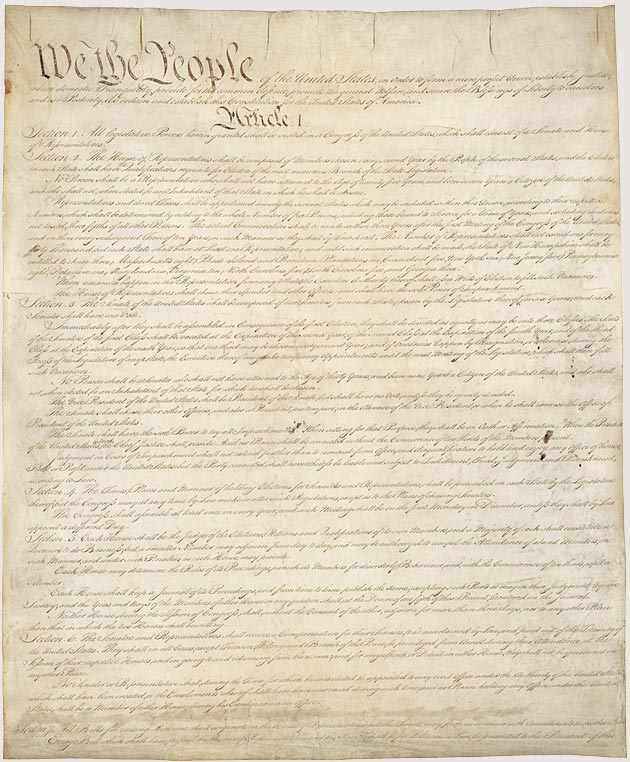
When President Trump took the oath of office, he swore to “preserve, protect and defend the Constitution of the United States.” This solemn promise is not just ceremonial—it is a binding commitment to uphold the Constitution, including its separation of powers and the authority of the judicial branch. The Supreme Court, as the highest judicial authority in the country, has the final say on legal matters, including the constitutionality of actions taken by Congress and the Executive. By advocating for companies to ignore the Court’s decision, Trump is actively encouraging a disregard for this fundamental principle of judicial review.
A Direct Challenge to Judicial Authority
The separation of powers between the legislative, executive, and judicial branches is designed to prevent any one branch from becoming too powerful. When President Trump calls for defiance against the Supreme Court, he is undermining this delicate balance. The Court is not merely an advisory body but the ultimate interpreter of the law. Any effort by the Executive branch to directly challenge or dismiss its rulings threatens the rule of law and weakens the constitutional framework that binds the nation together.
Trump’s comments also risk setting a dangerous precedent for future administrations. If a president can openly advocate for non-compliance with a Court ruling, it could lead to further erosion of public trust in judicial independence. Citizens rely on the judicial system to fairly and impartially adjudicate disputes, and when political leaders openly flout these decisions, it creates a climate of uncertainty and distrust.
Constitutional Ramifications and Damage to the Rule of Law
This situation presents a grave challenge to the Constitution itself. At its heart, the Constitution ensures a government of laws, not men. By attempting to subvert the authority of the judicial branch, President Trump is undermining the legal system’s ability to function effectively. If the executive branch disregards judicial decisions, it not only threatens the independence of the courts, but also opens the door for arbitrary rule based on political whims rather than legal principles.
Furthermore, such behavior sets a dangerous precedent for future executive overreach. If one president can disregard the Court’s rulings, it could embolden future leaders to take similar actions when they disagree with judicial decisions. This could ultimately lead to a system where the rule of law is replaced by the whims of those in power, severely damaging the Constitution’s guarantee of a government that respects the rights and freedoms of all citizens.
Congress’s Duty to Uphold the Constitution
Congress plays a crucial role in maintaining the checks and balances that define American governance. If President Trump continues to defy the Supreme Court’s ruling, it is the duty of Congress to act as a guardian of the Constitution. The legislative branch has several tools at its disposal to hold the executive accountable, including the power to seek judicial remedies, censure, and even impeachment.
One potential action Congress could take is to seek an injunction or legal remedy to prevent the President’s subversion of the Court’s authority. The legislative branch could file suit to challenge the President’s actions, seeking a court order to restrain any further attempts to undermine the Court’s ruling. This would help reinforce the power of the judiciary and reaffirm the principle that no one, including the President, is above the law.
Additionally, Congress has the power to issue a formal censure. A censure is a powerful rebuke that would send a strong message that the President’s actions are incompatible with the Constitution and the rule of law. By formally censuring the President, Congress would place on record its disapproval of the subversion of judicial authority and its commitment to uphold the constitutional order.
The most severe course of action, however, is impeachment. If the President’s conduct is deemed to constitute an abuse of power or obstruction of justice, impeachment may be warranted. Encouraging companies to ignore a Supreme
Court ruling may be seen as a deliberate attempt to subvert the Constitution and disrupt the separation of powers. Impeachment proceedings would not only hold Trump accountable but also reaffirm the vital role of checks and balances in maintaining the integrity of the American system.
Legal Consequences and Potential Accountability
While the President enjoys certain constitutional powers and immunities, his actions are not above the law. Should President Trump’s subversion of the Supreme Court’s decision continue, he could face significant legal consequences. The act of encouraging defiance against the judiciary may constitute an abuse of power or an attempt to obstruct justice. This could lead to impeachment proceedings or even criminal charges, depending on the scale and intent behind the actions. Furthermore, companies or individuals who follow the President’s advice and refuse to comply with judicial decisions could also face legal repercussions, as failure to uphold the rule of law is a punishable offense.
In addition to legal consequences, Trump’s actions could lead to severe political consequences. His undermining of the judicial branch could alienate large segments of the public who view the Supreme Court as an essential pillar of American democracy. Trust in democratic institutions is crucial to the functioning of a stable society, and when those in power attempt to erode that trust, it damages the very fabric of the nation.
A Threat to the Constitution and the Republic:
The Constitution of the United States was designed with the intention of creating a durable and resilient system of government. Its framers understood that, in order to maintain liberty, the power of the government must be checked and balanced. The judiciary, as an independent branch, serves as a safeguard against executive and legislative overreach. By challenging the authority of the Supreme Court, President Trump is not only subverting a specific ruling, but also threatening the broader structure that sustains American democracy.
The consequences of such actions cannot be overstated. If the President continues to disregard the separation of powers, it could ultimately weaken the nation’s system of government, leaving it vulnerable to authoritarian tendencies. The future of the republic depends on a commitment to constitutional principles, including respect for the rule of law and the authority of the courts.
President Trump’s call for companies to defy a Supreme Court ruling is a direct violation of his oath of office and a threat to the constitutional framework that upholds the rule of law in the United States. His actions risk eroding the separation of powers, undermining public trust in the judiciary, and setting a dangerous precedent for future leaders. Congress has a duty to step in and ensure that checks and balances are respected, whether through seeking legal remedies such as a permanent injunction, issuing censure, or pursuing impeachment. The ramifications of this conduct are severe, and it is critical that the American people and their institutions take steps to reaffirm the importance of the Constitution and its commitment to checks and balances.
Author’s opinion:
The Constitution is the “supreme law” of the United States, not any individual, including Trump. The phrase “Don’t tread on me” comes to mind, highlighting the importance of safeguarding the principles of our nation. However, the growing calls for Trump to bypass constitutional limits threaten to undermine these founding principles, potentially opening the door for adversarial powers, like communist China, to influence American society. This is driven by a culture of narcissism and a pervasive desire for attention and approval.
Instead, we should focus on “Making the Constitution Great Again,” because the path to truly “Making America Great Again” lies in adhering to the constitutional restrictions placed on government power. This can only be achieved if we hold public officials accountable for violating their oaths of office, with clear and enforceable consequences, both criminal and civil, for such breaches. The Constitution was written and ratified to restrict governmental authority. And in the current state of affairs at hand, America needs to get back to the basic fundamental principles our nation was founded upon, not subvert them.
“In the case of a republic, the foundation of government is laid, not in the vices or the opinions of men, but in the immutable principles of nature, and of the law of God. The country is governed by laws, and not by the will of any one man.” – John Adams in “A Defence of the Constitutions of Government of the United States of America” (1787-1788)
This quote emphasizes the core idea that a republic is grounded in natural law and divine principles rather than the personal desires or whims of a single individual. It asserts that laws, not any one ruler, should govern a country, ensuring fairness and consistency. The emphasis is on the permanence and unchanging nature of these principles, contrasting them with the variability of human opinions and vices. This reflects a vision of government rooted in justice and morality, rather than personal power.
Comments
3 responses to ““A Nation of Laws and not of Men”: Trump’s Subversion of Supreme Court Decision Violates Oath of Office and Threatens Constitutional Integrity”
Mr. Kalebra:
Where are your writings about protecting the U.S. Constitution, our Nation of Laws, and pointing out alleged subversion of the Oath of Office by the President in enforcing laws, old and/or new laws passed by Congress, that were not being enforced over many years during the last four years living under the Biden-Harris administration?
CDR Charles Kerchner (Ret)
http://www.ProtectOurLiberty.org
Uh, what? There is no non-compliance.
Well said. There is no compliance. Because they have written themselves out of accountability. And the vast majority of Americans are apathetic to the going ons of government thinking, “There’s nothing I can do.” When, in fact, there most certainly is. People hold to the principle that the government should be obeyed when, in fact, the Constitution was written so that the government is required to obey us. The North did not free the slaves of the South. The precept that they did is a blatant lie. The North did not free the slaves. They merely took over the slave trade and enslaved all.