
by Robert Kalebra, ©2025

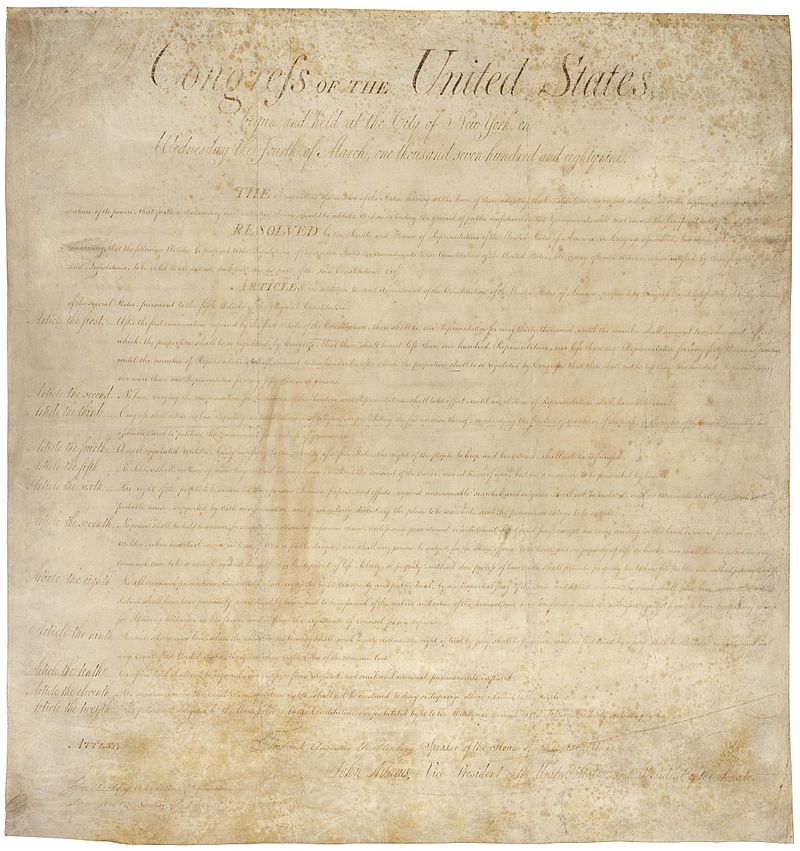
(Jan. 6, 2025) — The right to keep and bear arms is a cornerstone of American liberty, explicitly enshrined in the United States Constitution. The Second Amendment reads: “the right of the people to keep and bear Arms, shall not be infringed.” This simple but profound statement has been the subject of intense scrutiny and interpretation over the years, particularly as lawmakers and courts debate the extent of government control over gun ownership and possession. At its core, however, the Second Amendment establishes an unequivocal guarantee: the government may not infringe upon this fundamental right.
To understand the full weight of this guarantee, it is essential to examine the meaning of “infringe,” explore key legal precedents that underscore the supremacy of the Constitution, and recognize how gun control laws that contravene this constitutional provision are inherently unconstitutional. By understanding the Second Amendment’s role in the broader legal framework, it becomes clear that any encroachment on the right to keep and bear arms is not just a policy failure—it is a violation of the supreme law of the land.
What Does “Infringe” Mean?
To fully grasp the implications of the Second Amendment’s directive, we must first understand the term infringe. According to Merriam-Webster, “infringe” is defined as: “to encroach upon in a way that violates law or the rights of another.” This definition suggests that infringement is not a trivial matter, but rather a direct and unlawful interference with another’s rights. Synonyms such as breach, break, contravene, offend, transgress, and violate all reinforce the concept that infringement is an act of serious legal consequence.
To further clarify:
- Trespass refers to an unlawful intrusion into another’s domain or rights.
- Encroach suggests a gradual, often stealthy, encroachment on someone’s rights or property.
- Infringe indicates a direct violation of rights or a prerogative.
- Invade suggests a hostile, aggressive, and damaging entry into someone’s territory or domain.
In the context of the Second Amendment, any law, policy, or regulation that interferes with an individual’s right to keep and bear arms constitutes an infringement. Whether the interference is direct, subtle, or gradual, it still violates the constitutional guarantee, and thus is unlawful under the framework of the U.S. Constitution.
The Constitution as the Supreme Law

The United States Constitution stands as the supreme law of the land. As the foundation of the American legal system, it provides the ultimate standard against which all laws must be judged. This principle was reinforced in Sparf v. United States, 156 U.S. 51 (1895), a landmark Supreme Court case in which the Court affirmed that the Constitution is not just a framework for governance but a binding legal mandate. The ruling underscored the importance of the Constitution as a binding source of law, particularly for lawmakers, who must conform their actions to its provisions. It is the law of the land, and any law that conflicts with it is inherently unconstitutional.
Similarly, in Lance v. Board of Education of Roane County, 170 S.E.2d 783 (1969), the West Virginia Supreme Court reaffirmed that the Constitution holds supremacy over all other laws. The court emphasized that no statute, law, or executive action, whether at the federal or state level, can supersede or override the provisions of the Constitution. This principle, reaffirmed by courts across the nation, means that any government action that contradicts the Constitution—such as laws infringing upon the right to keep and bear arms—must be invalidated.
The Role of Judges in Interpreting the Law
The interpretation of the Constitution and its provisions is the fundamental responsibility of judges. The role of the judiciary is not to legislate or create new laws but to ensure that existing laws comply with the Constitution’s clear mandates. This responsibility is central to maintaining the rule of law and protecting individual rights.
In Tanzin v. Tanvir, 592 U.S. 43 (2020), the U.S. Supreme Court clarified the role of judges in interpreting the law. The Court ruled that a judge’s task is to interpret the law as an ordinary person would—based on common sense and straightforward reasoning. The interpretation of the law should not be clouded by complex legal arguments or abstract interpretations. The law, including the Constitution, is meant to be understood by all citizens, not just legal professionals. In the case of the Second Amendment, its language is plain and unambiguous: “the right of the people to keep and bear Arms, shall not be infringed.” It is a guarantee, not a suggestion.
Gun Control Laws: A Violation of the Second Amendment
Gun control laws, at both the state and federal levels, by their nature, infringe upon the Second Amendment’s guarantee of the right to keep and bear arms. These laws impose restrictions, limitations, and prohibitions on the ownership or possession of firearms. Whether they involve bans on certain types of firearms, mandatory registration, or other regulations, they directly violate the constitutional right protected by the Second Amendment.
As the Supreme Court established in Marbury v. Madison, 5 U.S. (2 Cranch) 137 (1803), any law that is inconsistent with the Constitution is void. In this landmark case, Chief Justice John Marshall outlined the principle of judicial review, which gives courts the authority to declare laws unconstitutional and void. Marshall famously stated: “A law repugnant to the Constitution is void.” This ruling affirms that any law that violates the clear language of the Constitution must be disregarded by the courts.
Thus, any law that limits or restricts the right to keep and bear arms is, by definition, unconstitutional. Gun control laws that infringe upon this right are not just bad policy—they are illegal and must be struck down by the courts. The doctrine established in Marbury v. Madison provides the legal basis for this principle, and it applies to all aspects of constitutional law, including the Second Amendment.
The Doctrine of Judicial Review and Void Laws
The decision in Marbury v. Madison is the foundation for the doctrine of judicial review. This doctrine allows the courts to examine the constitutionality of laws and, if necessary, strike them down. A law that contradicts the Constitution is considered void, meaning it has no legal effect. The Marbury decision made it clear that judges have the authority—and the duty—to invalidate any law that is repugnant to the Constitution.
The principle of judicial review is crucial for maintaining the integrity of the Constitution. It ensures that laws enacted by the government do not violate the fundamental rights guaranteed by the Constitution. Gun control laws that infringe upon the right to keep and bear arms are a clear violation of the Second Amendment and, as such, must be deemed void. This principle has been reaffirmed time and again by the courts and remains an essential safeguard against unconstitutional laws.
Article VI, Clause 2: The Supremacy Clause
The supremacy of the Constitution is further reinforced by Article VI, Clause 2 of the U.S. Constitution, also known as the Supremacy Clause. This clause declares that the Constitution is the supreme law of the land and that judges in every state are bound by it. It affirms that no state or local law can override the protections provided by the Constitution. As the clause states: “This Constitution, and the Laws of the United States which shall be made in Pursuance thereof; and all Treaties made, or which shall be made, under the Authority of the United States, shall be the supreme Law of the Land; and the Judges in every State shall be bound thereby, any Thing in the Constitution or Laws of any State to the Contrary notwithstanding.”
This clause reinforces the idea that the Second Amendment, as part of the Constitution, takes precedence over any state or federal law that seeks to infringe upon the right to keep and bear arms. Gun control laws that restrict or regulate firearms are therefore unconstitutional and must be struck down, regardless of the jurisdiction in which they are enacted.
The Judicial Obligation to Protect the Second Amendment
As established in Marbury v. Madison and reaffirmed by the Supremacy Clause, judges have an obligation to protect the Constitution from unconstitutional laws. This responsibility is particularly important when it comes to the Second Amendment. The right to keep and bear arms is one of the most fundamental rights protected by the Constitution, and any attempt to restrict or infringe upon it must be scrutinized carefully.
Gun control laws that seek to limit the availability of firearms or impose burdensome regulations violate this right. The Second Amendment guarantees that the right of the people to keep and bear arms “shall not be infringed.” Therefore, any law that interferes with this right is, by definition, unconstitutional. Judges are bound by their oath to uphold the Constitution and must ensure that no law infringes upon this fundamental right.
Conclusion: Upholding the Second Amendment
The Second Amendment guarantees a fundamental right to all Americans—the right to keep and bear arms. This right is clear and unambiguous, and it cannot be infringed by any law, policy, or government action. Gun control laws that limit or restrict this right violate the Constitution and are therefore unconstitutional and void. As established in Marbury v. Madison, Sparf v. United States, and Lance v. Board of Education of Roane County, the Constitution is the supreme law of the land, and all laws must conform to its provisions.
It is the duty of judges to interpret the law as ordinary citizens would understand it, and in doing so, they must ensure that the Second Amendment’s protection of the right to bear arms is fully upheld. Gun control laws that violate this right are not just bad policy—they are a direct infringement of constitutional guarantees and must be struck down. The Second Amendment is not negotiable, and it is the responsibility of all public officials, including judges and lawmakers, to protect and defend it.
The right to keep and bear arms is not only a vital aspect of individual liberty but also a necessary safeguard against government overreach. It is the duty of every citizen to understand, protect, and defend this right. The Constitution protects it, and the courts must ensure that no law infringes upon it. In the end, the right to keep and bear arms is an essential freedom that must remain free from unlawful infringement.
Yes, the U.S. Constitution must be enforced. And a very important national security part of it was not enforced regarding Barack Hussein Obama.
Chief Justice of the U.S. Supreme Court John Marshall in 1821 tells the federal courts how the U.S. Supreme Court must not evade difficult issues when they approach terms in the U.S. Constitution. And yet the John Roberts led U.S. Supreme Court did just that per statements by Justice Thomas when it came to Barack Hussein Obama’s constitutional eligibility issues. See: https://www.youtube.com/watch?v=Eu6OiTiua08
Read Chief Justice Marshall’s words from back in 1821 as quoted in this newspaper advertorial from back in 2009 regarding the Article II constitutional eligibility issues surrounding the legally challenges to the eligibility status of Barack Hussein Obama: http://www.kerchner.com/documents/advertorials/2009-10-19-issue-WTNW-pg-20.pdf or in context via: http://www.kerchner.com/images/protectourliberty/chiefjusticemarshallwordsontreasontoconstitution.jpg
Our progressive movement intimidated John Roberts led U.S. Supreme Court has gone totally astray and were political cowards when it came to the cases “approaching the Constitution” involving the many first impression cases bringing to the attention of the federal courts the need to decide and answer, and not evading the questions and merits of the issues, using tactics of standing and political question and others to avoid taking jurisdiction, as to what the Article II constitutional term “natural born Citizen” (“nbC”) meant to the founders and framers when they selected that restrictive term in the presidential eligibility clause for future Presidents and Commanders in Chief once the founding generation was gone, and whether Barack Hussein Obama was an nbC or not.
See http://www.ProtectOurLiberty.org for more information about the challenges to the constitutional eligibility of Barack Hussein Obama and others seeking the highest office in our nation, that of President and Commander in Chief of our military.
Mr. Kalebra, the Dems impeached Donald Trump for the second time, with that time being after his left office after his first term. Do you agree with the Dems impeaching Trump after he left office? Do you believe that the Repubs should now impeach Barack Hussein Obama, now out of office, for the various charges leveled against him while he was in office during his two terms?
Also, do you believe that Barack Hussein Obama was Article II, Section 1, Clause 5 constitutionally eligible to serve as the President and Commander in Chief? Do you believe that for VP Kamala Harris, under the last line of the 12th Amendment regarding the eligibility requirements for the office of the Vice President, that Kamala Harris was constitutionally eligible for the office she was allowed to serve in?
And in addition, you as an editorial writer who is new to this forum, and a strongly vocal writer about the Rule of Law and the U.S. Constitution, I would like to know your constitutional position on key subjects often discussed in this forum, i.e., the “natural born Citizen” term in our U.S. Constitution and the “birthright Citizenship” issue. What do those terms mean to you legally?
Have you read the writings of Joseph DeMaio in this forum about those two citizen kind terms? What do you think of his writings. If you haven’t read them, use the search glass in the site header and search using the DeMaio name to find a good selection of his writings over many years here.
Please answer the questions I asked above about post-term impeachment and also share with us your constitutional position whether either one or both of Obama or Harris, did or did not, meet the required constitutional eligibility requirements for their respective offices, based on the facts and circumstances of their birth.
Not a whimper about “God” nor “natural” in this article.
The Second Amendment consists of one sentence.
“A well regulated Militia, being necessary to the security of a free State, the right of the people to keep and bear Arms, shall not be infringed.”
Three things are legalized by that single sentence.
All arms laws – federal, 50 states, and Washington DC – are unconstitutional. The Second Amendment IS (hat tip to Bill Clinton) the binding legal authority to indict all those who would INFRINGE on the natural right to keep and bear any and all arms.
God was omitted from the article because no one can be forced to believe in Him. And you are correct in that ALL gun control laws are unconstitutional and I believe the artcile leads the reader to reach that conclusion on their own. That’s how you get people to understand. Attempting to force any belief on another will only result in that other to further resist. And acceptance is the end goal.
#2A4LifeLibertyandProperty