

by James Lyons-Weiler, PhD, Popular Rationalism, ©2024
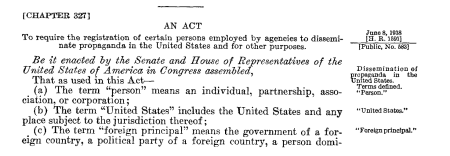
(Oct. 21, 2024) — See: The Foreign Agents Registration Act (FARA) (22 U.S.C. § 611 et seq.)
U.S.-Funded Research in China – A Deep Dive into GOF and Collaboration
The intricate collaboration between U.S. public health administrators, researchers, and the Wuhan Institute of Virology (WIV) has raised serious concerns about the role U.S. officials may have played in facilitating dangerous experiments that could have contributed to the COVID-19 pandemic. As evidence has emerged over time, it suggests that decisions made by U.S. public health authorities were not merely administrative but deeply entangled with controversial gain-of-function (GOF) research. We will examine how these relationships evolved, and certain key events transpired before and during the pandemic.
In 2017, Dr. Anthony Fauci and Dr. Francis Collins overturned the U.S. moratorium on GOF research. This moratorium had been in place since 2014 due to fears about the potential dangers of artificially enhancing the pathogenicity or transmissibility of viruses. Their decision to lift the ban opened the door for U.S. funding to resume supporting high-risk experiments in UNC’s Ralph Baric’s domestic labs and foreign institutions such as the WIV. This decision proved consequential as the pandemic unfolded, implicating the very research that these officials had greenlighted.
In 2018, Peter Daszak, Shi Zhengli, Ralph Baric, and others submitted a grant proposal that has since come to be viewed as a potential blueprint for the eventual creation or accidental release of SARS-CoV-2. The grant, titled “Understanding the Risk of Bat Coronavirus Emergence,” outlined plans for conducting GOF research on bat coronaviruses to understand better their potential to jump from animals to humans. This research was funded by the National Institutes of Health (NIH) and the National Institute of Allergy and Infectious Diseases (NIAID) under Fauci’s direction. The experiments outlined in this grant bear striking similarities to what is now known about SARS-CoV-2, shedding further light on the role of this research role in the pandemic’s origins.
By 2019, the authors of this grant—Daszak, Baric, and Shi—participated in an NIAID-organized conference call to discuss research related to SARS-like coronaviruses (SARSr-CoVs). The timing of this meeting, occurring mere months before the first known cases of COVID-19 emerged in Wuhan, has raised questions about whether these researchers were aware of the imminent danger of the virus or its potential to escape from laboratory containment. Notably, this was one of the last significant discussions about the specific research before the pandemic began to spread globally.
In early 2020, as COVID-19 began its global spread, Kristian Andersen, a virologist reviewing the virus’s genomic data, wrote to Edward Holmes expressing concerns that SARS-CoV-2 might have originated in a lab. In this communication, Andersen informed Fauci of his suspicions. This admission led to a rapid response from Fauci, who instructed his deputy, Hugh Auchincloss, to answer his phone immediately, attaching one of Baric’s papers on GOF research and alluding to important work ahead. The urgency and reference to Baric’s work in this exchange indicate that Fauci was fully aware of the potential link between the research funded under his watch and the unfolding pandemic.
Shortly after these communications, Fauci convened a call with prominent GOF research advocates to discuss Andersen’s thesis. During this call, Eddie Holmes cryptically remarked, “Big Ask!”—likely referring to the political and scientific implications of acknowledging a lab origin for the virus. Andersen’s response, “Destroy the world with sequence data, yay or nay?” suggests the high stakes involved in the decision to pursue or dismiss this line of investigation. Following this meeting, Andersen, Holmes, and other virologists began ghostwriting a paper claiming that a laboratory origin of SARS-CoV-2 was implausible. This paper, which dismissed the possibility of a lab leak, was edited and supported by individuals with vested interests, including Fauci and Collins through NIH and NIAID and Jeremy Farrar through Wellcome Trust.
Privately, however, the authors expressed doubts about their public conclusions. Internal communications reveal that they mocked Daszak, implying he was ill-equipped to predict a virus originating from his lab, and confessed that a lab origin was “so friggin likely.” These revelations point to a coordinated effort to manage public perception of the pandemic’s origins despite personal misgivings about the official narrative.
Amid these developments, Fauci met with Ralph Baric to discuss Baric’s GOF work on coronaviruses, conducted with Shi Zhengli’s team at the WIV. This meeting further reinforces Fauci’s intimate knowledge of the GOF research taking place and its potential role in the pandemic’s outbreak. However, this context was not disclosed publicly when Andersen’s paper was published. Instead, Fauci used his platform as NIAID director to promote the paper on international television, briefing the American public about COVID-19 without mentioning his involvement or that of Baric, Daszak, and other key players.
Meanwhile, Farrar, Daszak, and other researchers collaborated to write another paper denouncing lab-origin theories as “conspiracy theories.” These efforts included conspiring to prevent Baric and other principal investigators (PIs) from signing the paper, though Daszak did sign it without disclosing his conflicts of interest. Despite growing evidence and internal doubts, the continued suppression of lab-origin theories suggests a coordinated effort to protect institutional reputations and international partnerships, particularly with China.
Fauci’s role in this narrative became even more suspect when he testified under oath that he had no knowledge of GOF research in Wuhan and denied any association with Ralph Baric. However, FOIA requests later revealed that Fauci had, in reality, been in direct communication with Baric and was well aware of the GOF research being conducted at the WIV. These documents exposed Fauci’s dishonesty about his involvement and knowledge, raising the possibility that he sought to distance himself from the controversial research once it became clear that a lab origin was a serious consideration.
Further complicating the picture, NIAID’s FOIA officer, Marge Moore, actively obstructed information requests throughout the pandemic. Fauci’s deputy, David Morens, privately admitted that Moore could “make emails disappear,” implicating a broader effort within NIAID to control the narrative and limit transparency. Morens, who was close friends with Daszak, also violated the federal Records Act by conducting official business through his private Gmail account, further obfuscating the paper trail of communications during this critical period.
The mounting evidence reveals a complex web of decisions, communications, and strategies to shape public perception of the pandemic’s origins while shielding key figures and institutions from scrutiny. While no direct evidence has yet proven that SARS-CoV-2 was deliberately engineered or released, the actions of U.S. public health administrators, particularly Fauci and Collins, raise serious questions about whether they were working in the best interest of the American public—or, at times, on behalf of other nations or scientific agendas.
Andrew Huff’s Allegations and the Role of U.S. Public Health Administrators in Potential Foreign Collusion
The core question we seek to address is whether U.S. public health administrators acted in ways that benefited foreign nations, specifically China, during the COVID-19 pandemic. Central to this inquiry are the allegations made by Andrew Huff, a former vice president at EcoHealth Alliance, whose book The Truth About Wuhan (Skyhorse) claims that key figures in U.S.-funded research may have been working on behalf of both U.S. intelligence and the Chinese Communist Party (CCP). Huff’s claims, though contentious, highlight troubling dynamics that suggest U.S. public health administrators and researchers may have taken actions that align more with protecting China’s interests than serving the American public.
Andrew Huff’s book reveals his version of the inner workings of EcoHealth Alliance and the network of virologists funded by U.S. taxpayer money, including Ralph Baric of the University of North Carolina and Shi Zhengli at the Wuhan Institute of Virology (WIV). Huff alleges that Baric, one of the world’s foremost experts in coronaviruses and GOF research, told him he had acted as an agent for both U.S. intelligence and Chinese interests. Specifically, Huff raises the possibility that Baric’s collaboration with Shi Zhengli and the WIV placed him in a dual role, navigating competing priorities between U.S. national security and Chinese scientific and political interests.
Huff’s allegations gain relevance in light of the actions taken by U.S. public health administrators, particularly Dr. Anthony Fauci, who oversaw much of the funding that supported GOF research at the WIV. In 2017, Fauci and Dr. Francis Collins lifted the U.S. moratorium on GOF research, which had been in place due to concerns about the risks of enhancing pathogens to make them more transmissible or deadly. This decision paved the way for continued collaboration between U.S. researchers like Baric and Chinese virologists. By 2018, a grant proposal authored by Baric, Daszak, and Shi Zhengli outlined research that bears a striking resemblance to the eventual emergence of SARS-CoV-2, further fueling concerns about potential conflicts of interest.
In his book, Huff suggests that Baric’s position as a leading researcher gave him unique access to sensitive information that could have been shared with Chinese collaborators, either directly or through broader networks of scientific exchange. Huff’s revelation reveals the possibility that Baric’s work, which was heavily funded by U.S. government grants, may have been conducted in a manner designed to benefit Chinese biotechnological and strategic global interests. Huff points out that Baric’s close work with Shi Zhengli and his alleged connections to U.S. intelligence raise questions about whether U.S. officials fully understood the implications of their collaboration with China, particularly in the context of viral research with pandemic potential.
While Huff’s claims in The Truth About Wuhan are yet to be fully substantiated, they align with broader concerns about the lack of transparency surrounding U.S. funding of the WIV. In 2019, just months before the COVID-19 outbreak, Baric, Daszak, and Shi were involved in an NIAID-led conference call to discuss SARS-like coronaviruses (SARSr-CoVs). The timing of this discussion, coupled with the fact that many of the researchers involved never wrote another paper on the subject, raises red flags about the nature of the research being conducted. Furthermore, the call has been scrutinized for its potential role in shaping the early response to the virus and downplaying the risks associated with GOF research at the WIV.
The public narrative around SARS-CoV-2’s origins was further shaped by actions taken in early 2020. In internal communications, Kristian Andersen expressed concerns to Edward Holmes, writing that the virus’s genetic structure suggested it may have been engineered in a lab. These concerns were shared with Fauci, who quickly took steps to manage the narrative. Fauci instructed his deputy, Hugh Auchincloss, to be on high alert, attaching one of Baric’s papers on GOF research. This exchange, revealed through Freedom of Information Act (FOIA) requests, suggests that Fauci was acutely aware of the potential connection between the pandemic and the research conducted by Baric and his Chinese collaborators.
In response to Andersen’s concerns, Fauci convened a group of prominent GOF research advocates, including Andersen and Eddie Holmes, to discuss handling the growing speculation about the virus’s origins. During this meeting, Holmes cryptically remarked, “Big Ask!”—a reference to the enormity of the task at hand: dismissing the possibility of a lab origin for SARS-CoV-2 without concrete evidence. Andersen followed with, “Destroy the world with sequence data, yay or nay?”—a clear indication of the stakes involved in revealing or suppressing the sequence data that could potentially point to a lab leak. Following this discussion, Andersen, Holmes, and other researchers began drafting a paper that ultimately dismissed the lab-leak theory as “implausible,” a position that Fauci and Collins quickly promoted.
What makes these actions even more concerning is that the paper, which was later published and became a cornerstone of the public argument against a lab origin, was supported and edited by Peter Daszak—one of the primary figures responsible for directing U.S. funds to the WIV. Daszak’s conflicts of interest were never disclosed, and internal communications reveal that many of the authors involved in the paper privately admitted that a lab origin was “so friggin likely.” Yet, they continued to push the zoonotic narrative, mocking Daszak’s inability to predict a virus emerging from his own lab while publicly supporting his position.
Fauci’s involvement in this narrative management extended beyond scientific papers. He publicly promoted Andersen’s paper, using his role as NIAID director to shape the discourse surrounding the virus’s origins without disclosing his involvement in its creation. Fauci’s actions show he actively guided the narrative away from the lab-leak hypothesis, which would have implicated the WIV and the U.S. institutions that funded its research.
This coordinated effort to suppress the lab-leak theory was not limited to scientific discourse. Jeremy Farrar, another prominent figure in global health, collaborated with Daszak and others to write a paper that labeled lab leak theories as “conspiracy theories.” Baric and Linfa Wang were encouraged not to sign the paper, though Daszak did so without revealing his conflicts of interest. This strategic approach to managing the pandemic narrative, which aligned closely with China’s early efforts to dismiss lab-origin claims, raises serious questions about whether U.S. public health administrators were acting independently or whether they were influenced by foreign interests seeking to downplay the role of the WIV in the pandemic.
In testimony before Congress, Fauci falsely denied knowledge of GOF research in Wuhan and downplayed his connections with Baric. However, FOIA-obtained documents reveal that Fauci was in close communication with Baric and was well aware of the nature of the research conducted at the WIV. This discrepancy between Fauci’s public statements and private knowledge suggests that he may have sought to distance himself from the research once it became clear that a lab origin was a severe possibility.
Adding to the opacity surrounding these decisions is the role of Marge Moore, the NIAID’s FOIA officer, who reportedly obstructed information requests related to the pandemic. Fauci’s deputy, David Morens, admitted in private communications that Moore could “make emails disappear,” further limiting the transparency of key communications during the pandemic. Morens, who appears to have violated federal records laws by using private email accounts for official business, and his close ties to Daszak raise further questions about whether efforts to protect U.S. and Chinese institutions from scrutiny were part of a coordinated cover-up.
Read the rest here.
I scanned more than read this article. But it has a ton of important information in it. It is the start of a definitive volume on the subject. Two things which I think may have needed more commentary included discussion of the events around the sequence data for Covid-SARS19. That includes the events around the sequence data that started in January 2020. It touches on all the stuff around the furin cleavage and it feeds into the basis for the testing which was used to perpetuate the Covid scam. The other part is the PCR scam. This has still not been fully explained. It is a difficult subject, but once understood, you will appreciate the astonishing and depraved depths to which the government, the health care industry and the news media created a network of lies to fool everyone.
The ‘injections’ or the “test” killed my husband. My husband was fully vaccinated, 3 times by the”VA” then the “free test”. He took the test and it said positive, he passed out in his bathroom and was transported to a hospital, put on a “ventilator” and died 10 days later. His family was not allowed to visit him except for the last 10-15 minutes of his misery.
The Post & Email is very sorry to hear it and extends its deepest condolences on your loss.