

by James Lyons-Weiler, PhD, Popular Rationalism, ©2024

(Oct. 3, 2024) — The Next Phase of mRNA Vaccines: Risks and Uncertainty
The rapid advancement of mRNA technology, first lauded during the COVID-19 pandemic, is entering a new phase—one marketed as innovative potential, but rendering international concerns. The introduction of self-amplifying mRNA (saRNA) vaccines, also known as replicon vaccines, represents a significant leap in biotechnology. These vaccines take the core concept of traditional mRNA technology and extend it by allowing the mRNA to replicate within the body, continuously producing viral antigens to provoke an immune response.
The very idea gives me the creeps. The potential consequences are obvious: unknown amounts of antigen (uncontrolled replication), mutation (potentially pathogenic variants), transmission… “shedding” of a self-replicating mRNA vaccine seems like the making of a sci/fi horror film.
In Japan, the world’s first self-replicating mRNA vaccine, ARCT-154, has been approved, sparking public anxiety and protests. See this press release (11/29/2023).
Clinical trials report 55% efficacy in preventing transmission, but it’s a two-dose regime, so it’s likely the Lyons-Weiler/Fenton effect will be in play exaggerating this efficacy.
“Data provided by Vinbiocare show that, in an analysis of COVID-19 cases accrued between 7 days and 56 days after completion of a two-dose vaccination series, two 5-mcg doses of ARCT-154 demonstrated 55% vaccine efficacy for protection against COVID-19.” (Source)
Yes, it is an artefact.
Similarly, they report 95% efficacy in preventing severe COVID-19 (Source). This, too, will be biased by the Lyons-Weiler/Fenton effect.
This Second Most Important COVID19 Studies Bias, the Lyons-Weiler/Fenton/Neil Bias, is Confirmed as “Case-Counting Window Bias”
May 14
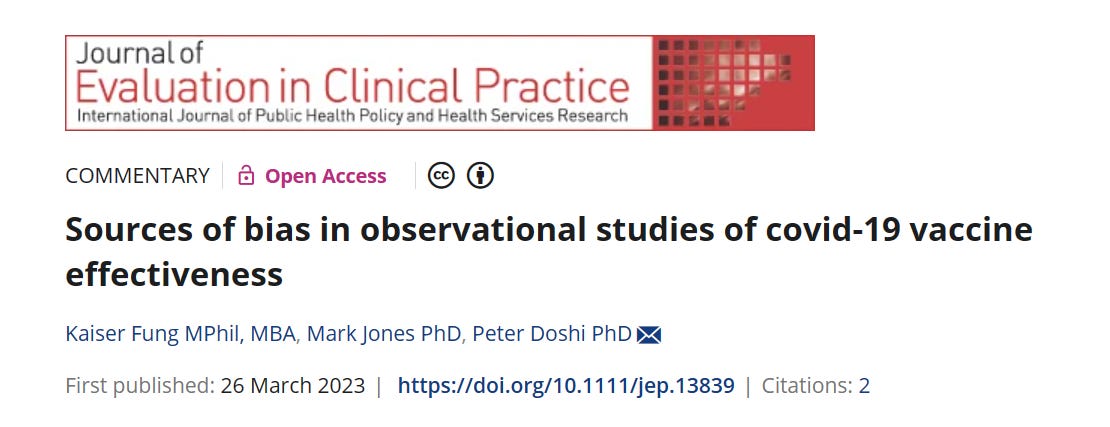
I was surprised to see this from Vinay Prasad last night:
While the idea of using smaller doses sounds appealing, the technology’s self-sustaining replication raises serious concerns. Due to the unpredictable nature of RNA replication, this process could overstimulate the immune system or lead to unintended side effects if not carefully regulated.
This is a matter of public safety, and the stakes are high.
Uncharted Territory: Replication and Mutation Fears
Unlike conventional mRNA vaccines that degrade after a short time, saRNA vaccines persist in the body through their ability to replicate using viral-like mechanisms. This prolonged activity is intended to improve the immune response but has raised fears about potential mutations or overactive immune responses. These risks have fueled the protests in Japan, where citizens are wary of yet another experimental vaccine that operates on a largely untested platform.
The fear of mutations isn’t entirely unfounded. Any system that enables genetic replication inherently carries risks. Even with careful engineering, unintended consequences emerge. Scientists have acknowledged that one of the key challenges with these vaccines is controlling overstimulation of the immune system, which could negate the vaccine’s benefits or cause adverse effects. Japan’s cautious public, already skeptical of rapid vaccine rollouts, is not ready to embrace this technology without extensive long-term data.
Read the rest here.
Comments
One response to “Think Stabilized Spike is Bad? Meet Replicon mRNA Vaccines. They are So Bad, We Predict FDA Will Posture for Public Trust on These.”
mRNA technology = clot-shots from hell.
New World disOrder plot to depopulate earthly human species.