

by Cheryl Lacey, DSJ, Take The Lead On Education™, ©2024
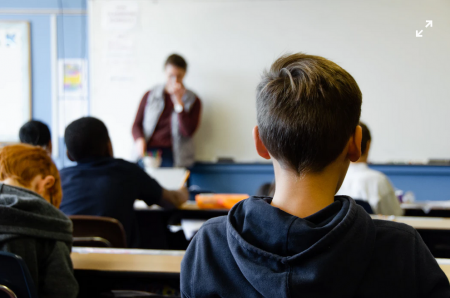
(Aug. 6, 2024) — It’s always about people: Individuals or Tribes?
1600 teachers in Victoria are under investigation with the states registration body – Victorian Institute of Teaching.
(That’s at June 2023)
In actual figures that’s 1600 out of 52,399 full time equivalent teachers – 3% of Victorian teachers.
( https://lnkd.in/geg-V-np )
176 students in Victorian schools were expelled in 2022. (2023 figures aren’t yet available)
In actual figures that’s 176 of 1,049,889 full time equivalent students – or .016% of Victorian students (of which 60 were in Year 9).
( https://lnkd.in/gR8QDzMK )
What are you thinking as you read these figures?
It doesn’t paint the full picture, and it doesn’t match other pictures being painted.
Take this for example:
A La Trobe study found that nearly 60% of respondents had at least one experience of parent-led bullying. And over 70% had experienced student-led bullying.
( https://lnkd.in/eb9m5TZ2 )
How many teachers were involved in this study; the name of the study or its author isn’t stated.
Your children, in attending school are part of a complex system, that’s true.
Don’t confuse stories and stats with what’s really going at your children’s school.
Ask questions. Start conversations and gather parents around the table to support each other in taking the lead on your children’s school education.
Stories and stats abound. The truth is what matters.
And the truth is, they’re your children!
I Discriminate: So Should You
We’re getting discrimination wrong! Very wrong.
Discrimination – the capacity to recognise a distinction or to differentiate – is a remarkable innate trait without which we could not survive.
Babies are hard-wired to discriminate – to identify their mothers’ features among those of other women.
We discriminate between edible plants and toxic species to avoid poisoning.
We also discriminate between the features, traits, and behaviours of prospective partners to find love.
Despite its value, discrimination has come to be considered a modern taboo.
In what amounts to a contempt for our personal beliefs and qualities – and those we share – the ‘anti-discrimination – pro-woke’ movement has successfully created war among us.
It demands that everything be inclusive and the same.
No one is safe from its attacks; its ultimate targets are your children.
For example, Christianity and Islam are monotheistic religions, but they are not the same.
Consider the following statements.
Can you discriminate between those that are true, those that are false (incorrect), and those that represent belief or opinion?
1. There is only one god.
2. All Christians believe the Eucharist contains Christ’s body, blood, soul and divinity.
3. Identifying as Indigenous is superior to all other identities.
4. All women are pure.
5. Boys can be girls, and girls can be boys.
6. Queen Elizabeth I established the Church of England.
7. Marriage can include more than one wife.
8. The purpose of Islam is to reign supreme across the globe.
9. A money-based market economy replaced the Feudal Society.
10. Plastics and pollution have no relevance in the climate debate.
11. All men of the cloth are paedophiles.
12. Principals’ and guardians’ rights take precedence over parents.
Schools actively teach discrimination using a strategy known as ‘comparing and contrasting’ – for instance, comparing and contrasting two, to and too, or comparing and contrasting a character’s traits at the beginning of a novel with those at the end.
But do schools themselves discriminate between materials in recommended texts and print media, top-down policies or the views of many in a debate to enable the accurate teaching of religious, historical and other content?
Can they effectively distinguish between truth and fabrication?
Students must be taught how to discriminate with absolute accuracy,
Christianity and Islam are both religions, yet they are certainly not the same.
Girls and boys are born to one man and one woman, yet they are certainly not the same.
Children learn for the future, yet their prior knowledge and background are certainly not the same.
God forbid our children would walk through any school gate into a world that cannot discriminate.
Share this post with parents, grandparents, teachers, and school leaders.
Discrimination isn’t a dirty word.
(adapted from an article of mine first posted in July 2018)
If You’re Not Sure: Ask!
Understanding assessments in schools should be a no-brainer for everyone involved.
Background knowledge about assessment equips you to have valuable discussions about your children’s progress.
Your aim is to know what is happening with your children’s learning and how you can support them.
In fact, what and how questions are really useful when having conversations with your children and their teachers.
Here’s an example of a question you might ask a teacher:
What was the purpose of the assessment and how did you assess my child?
Here’s a possible response:
My aim was to ensure your child had understood Chapter 7 before moving on to Chapter 8. It was a formative assessment, made using our standard rubric.
Let’s examine this response.
– You learned that your child needed to understand part of the book being read before moving on.
– You also learned that a rubric was being used.
Does this help? Need more?
Knowing how an assessment works and what is being assessed is critical in making use of the information gathered.
If any information or answer isnt’ clear, ask!