
by Allan Wall, Mexico News Report, ©2024

(May 29, 2024) — Mexico has a presidential election every six years. The U.S.A. has a presidential election every four years.
Therefore, every 12 years, Mexico and the U.S. have elections the same year. This year, 2024, is one of those years.
Election Day in the U.S.A. is scheduled for November 5th. The two major candidates are Joe Biden and Donald Trump, in a rematch from four years ago.
Election Day in Mexico is scheduled for June 2nd. The two major candidates are Claudia Sheinbaum and Xochitl Galvez. (Click here for background information on the candidates).
Since both Mexico and the U.S. have a presidential election this year, it is interesting to compare and contrast elections in the two countries.
The remainder of this article is an updated version of an article I wrote for Mexconnect.com 12 years ago, in 2012, the previous year the two countries had elections the same year. The article was entitled Elections in Mexico and the US: Comparisons and contrasts.
SIMILARITIES
In both countries, candidates appeal to the voters. They campaign publicly across the country with personal appearances, campaign signs, and radio and TV ads. They make promises, they dispute with their opponents, and take part in debates. There are opinion polls, and pundits in the media discuss the election.
On Election Day, voters go to the polls and choose the president by secret ballot. In both countries, elections for Congress are simultaneously held, plus gubernatorial and legislative elections in various states.
DIFFERENCES

Elections in the U.S. are held on Tuesdays, elections in Mexico on Sundays.
In the U.S., a president can be elected to two presidential terms, for a total of eight years. In Mexico, the president is barred from reelection, so he serves for six years and then can’t run again.
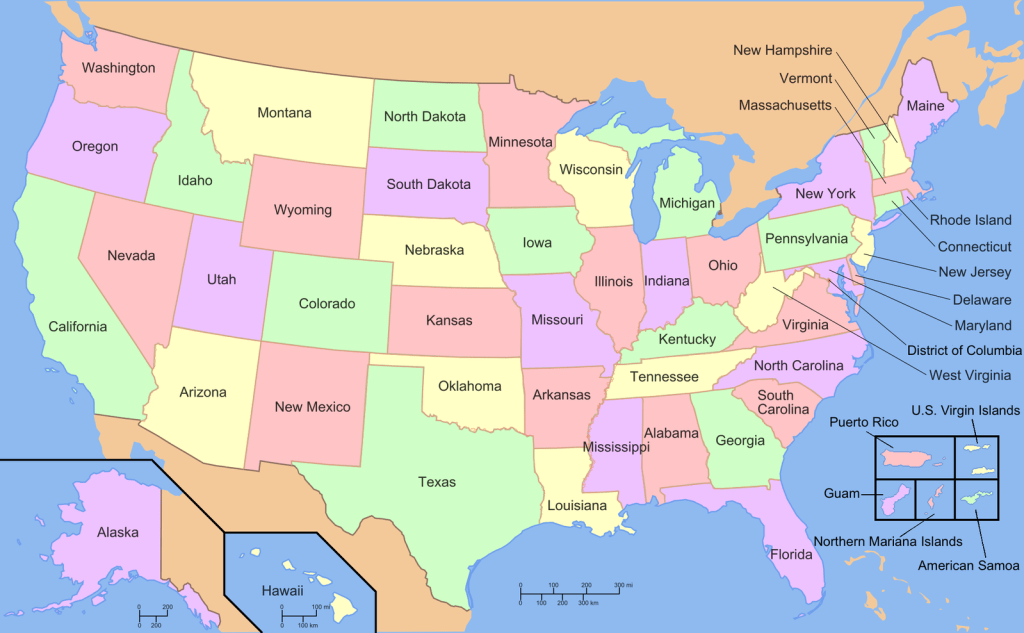
The United States has an Electoral College system, which apportions votes to states, depending upon their respective populations. That’s why election reports, maps and state-by-state reports are so critical.
In Mexico the winner is chosen nationally, by plurality. Whichever candidate has a plurality of the votes — not necessarily a majority — is the winner.
Due to the existence of the Electoral College in the US, elections are handled at the state level. It’s as if there are 51 simultaneous elections taking place in the 50 states and District of Columbia. There is a Federal Election Commission, but it oversees campaign finance.
In Mexico, the election is truly a unitary national election, overseen by INE, the Instituto Nacional Electoral. There is also a special electoral court system, the TEPJF (Tribunal Electoral del Poder Judicial de la Federación).
Read the rest here.