
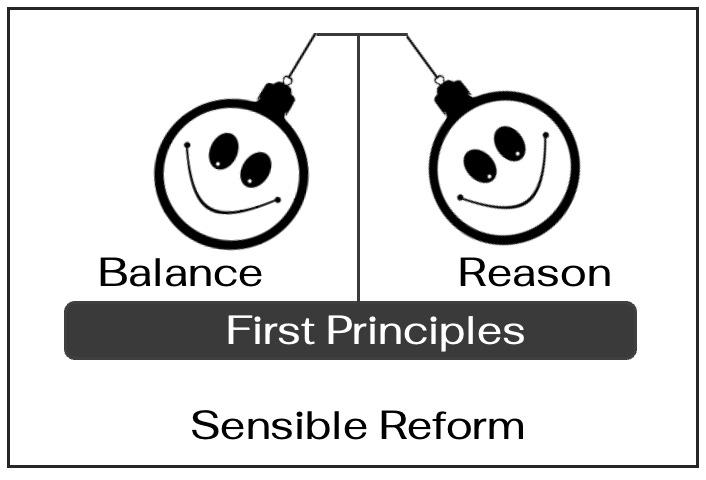
by Cheryl Lacey, DSJ, Take The Lead On Education™, ©2024

(Apr. 24, 2024) — Parents, by and large, are educated. Funding for schools continues to grow. One can assume there is community support for schools and schooling.
It should be of no surprise then that demand for school accountability – particularly the measure of value – should follow.
The truth is, growing discontent has stalled what we value about schools and how we actually know the value they bring.
We’ve become fixed on perceived problems. We repeat previous attempts to resolve them.
Take spending for instance. Schooling in Australia doesn’t come cheap. Australian governments now claim to spend $100bn on education. This increases every year. Primary and secondary schooling receives about 75%. Early childhood, pre-school, further and higher education receive the balance.
Suggestions are this covers the average cost of $17,992 per full time equivalent student every year.
But, if we add parent and community contributions, funding from other portfolios, donations and government contributions to the tune of $190 billion going 60,000 charities – largely focussed on education – actual spending is an unknown figure. It isn’t accurately measured.
Nor is the cost to us all for relying on money as a solution.
A single focus on money kills critical thought. It also kills rich debate. We remain suspended in a sea of narrow vantage points that blind us to bias and keep us from applying sensible solutions and new ideas.
School reform swings like a pendulum. At one end is the desire for devolution and responsibility. At the other a demand for rights and entitlement. It seems an ever increasing wave of relinquishment, with the help of the pendulum, has washed over us.
Surely we value school education enough to ensure everyone benefits.
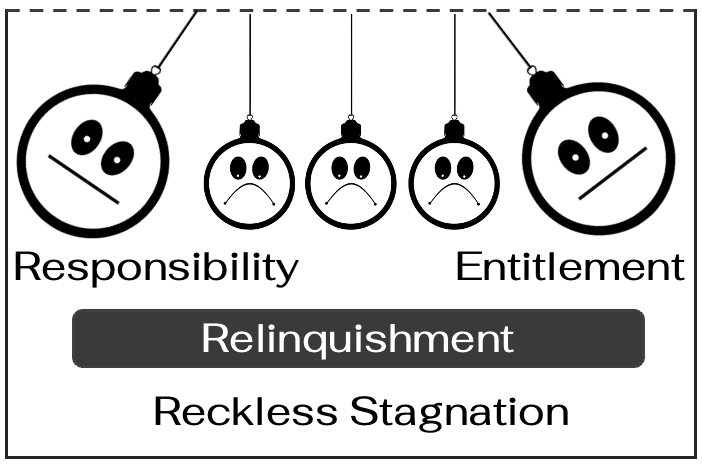
A logical beginning is asking ourselves two questions:
When value is diminished or absent, what needs to change?
How can we change to ensure that we understand, agree with, and receive value?
The solutions lie in focusing on solutions.
It means taking school reform seriously. This includes an education and training system that grows our skills base, supports a knowledge economy and leads to responsible citizenship. It maximizes the help businesses give to our national wealth.
So, what might sensible reform look like?
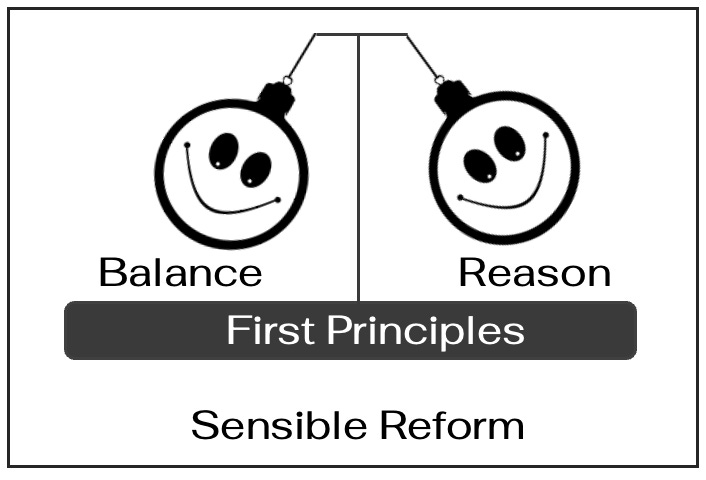
It is rock solid with a foundation of First Principles – shared values and beliefs – followed by a logical strategic focus:
Stability: We must NOT remove or replace what is working well.
Reduction: We must remove unproductive behaviour and actions. This includes wasteful spending.
Adjustment: We must learn to make adjustments.
Expansion: We must have evidence and buy in before expanding what is working or introducing anything new.
A focus on solutions encourages personal responsibility. With this comes personal gain.
That’s how school education began in the first place. The value of personal responsibility and personal gain meant boosting the health of families and the communities in which they lived.
The same is possible today.
Whether working at home, on the shop floor, in the outdoors, law courts, or even as an eductor at school – parents, by and large, are educated.
Solutions to sensible education reform will require us all to become better educated.
That’s not a bad investment in being able to measure a school’s value.
[1] https://research.acer.edu.au/cgi/viewcontent.cgi?article=1029&context=policy_analysis_misc
[2] https://business.nab.com.au/2023-federal-budget-what-it-means-for-education-59651/
[3] https://business.nab.com.au/2023-federal-budget-what-it-means-for-education-59651/
[5] https://www.acnc.gov.au/tools/reports/australian-charities-report-9th-edition
Read the rest here.