
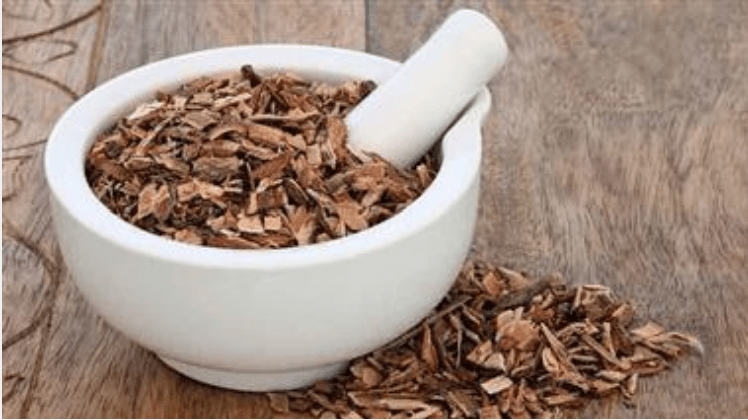

(Dec. 26, 2023) — Willow bark is perhaps most widely known as aspirin’s forerunner, but it appears to have powerful antiviral effects1 as well. Willow bark contains salicylates, including salicylic acid — the acetylated form of which is now the active ingredient in aspirin — and its derivative salicin. But willow bark deserves accolades even apart from this contribution.
Used for medicinal purposes for more than 3,500 years,2 willow bark was revered in ancient Egypt, South America, Greece and China. Hippocrates used willow bark for pain and inflammation in the 4th century B.C., while the ancient Egyptians relied on willow bark as a painkiller and antipyretic, or fever reducer.
1763 marked the year the first clinical study involving willow bark was performed, which confirmed its effectiveness as an antipyretic. To this day, much of the research surrounding this natural compound centers on its anti-inflammatory and pain-relieving effects, but willow bark’s antiviral effects are receiving increasing attention.
Willow Bark Extract Inhibits Viruses
Researchers in Finland set out to investigate the antiviral properties of willow (Salix spp.) bark extract against coronaviruses and enteroviruses. Broad-spectrum antiviral effects were noted, with the team revealing willow bark is effective against both enveloped and non-enveloped viruses. Further, it stopped the viruses in different ways.
When viewing viruses treated with willow bark extract under a microscope, the viruses clustered together rather than spreading apart. Willow bark then worked to break down the enveloped coronaviruses, while the non-enveloped enteroviruses were “locked down,” meaning their genome wasn’t released and they couldn’t reproduce.3
Speaking with Phys.org, study author Varpu Marjomäki with the University of Jyväskylä explained, “The extracts acted through distinct mechanisms against different viruses. But the extracts were equally effective in inhibiting the enveloped as well as nonenveloped viruses.”4
Interestingly, when several commercial reference compounds, including salicin and salicylic acid, were tested against OC43, a strain of coronavirus responsible for 15% to 30% of mild upper respiratory tract infections in humans, and CVA9, a strain of coxsackievirus, none was effective, which means willow bark compounds may act synergistically. According to the study:5
“This suggests that any of the commercial reference compounds do not individually contain high enough antiviral activity. This became more evident after fractionation of the bark extract when we observed that all fractions except fraction number 1 contained very high virucidal activities.
Those active fractions contained various interesting chemical groups, of which many are known to contain biological activities. The bioactive properties of these bark extracts and broad-spectrum antiviral activity are thus likely to be due to the synergistic effects of the different detected flavonoids, hydroxycinnamic acid derivatives, and procyanidins.”
What Else Is Willow Bark Good For?
Willow bark extract is often used as a remedy for pain and inflammation, including that related to low back pain, osteoarthritis, tendinitis, bursitis and headaches. One meta-analysis of randomized controlled trials found willow bark was more effective than placebo in relieving pain and improving physical status in people with arthritis. The willow bark was also safe, as no differences in adverse events were found.6
White willow bark (Salix alba) may also work better than placebo for short-term pain relief in people with low back pain.7 Further, willow bark at a daily dose of 240 milligrams reduced pain as well as a daily dose of the now-banned nonsteroidal anti-inflammatory drug (NSAID) Vioxx.8
Willow bark is also known to down regulate inflammatory factors, is useful for sports performance, and often is added to weight loss products.9 Material derived from willow bark also has antibacterial and antibiofilm properties, making it potentially useful for treatment of infected chronic wounds.10
“Traditional folklore claims that willow bark provides a major defense against surrounding pathogens,” researchers wrote in the Journal of Agricultural and Food Chemistry.11 Indeed, lignin, a major component in willow bark, is effective against multiple food-borne and pathogenic microorganisms. Again, willow bark appears to relieve pain and inflammation via multiple mechanisms that work together to offer health benefits. As noted in Phytotherapy Research:12
“Although willow bark extracts are generally standardized to salicin, other ingredients in the extracts including other salicylates as well as polyphenols, and flavonoids may also play prominent roles in the therapeutic actions. Adverse effects appear to be minimal as compared to non-steroidal anti-inflammatory drugs including aspirin.”

Download this Article Before it Disappears
Could Aspirin Fight COVID?
Aspirin is derived from willow bark compounds, so it stands to reason that it, too, may offer benefits against infection. According to Thrombosis Research:13
“The therapy of rheumatism began thousands of years ago with the use of decoctions or extracts of herbs or plants such as willow bark or leaves, most of which turned out to contain salicylates. Following the advent of synthetic salicylate, Felix Hoffman, working at the Bayer company in Germany, made the acetylated form of salicylic acid in 1897. This drug was named “Aspirin” and became the most widely used medicine of all time.”
Aspirin is a staple medicine that is frequently recommended as a remedy to control inflammation and prevent blood clots. There’s also evidence it could have helped limit the COVID-19 pandemic death toll, had it not been downplayed and ignored.
According to research published in April 2021, aspirin reduced COVID-19 patients’ need for mechanical ventilation by 44%, ICU admission by 43% and mortality by 47%.14 Based on this research, it appears COVID-19-related hospital deaths could have been cut nearly in half had aspirin been routinely used. Study author Dr. Jonathan Chow commented on the results, stating:15
“The results of the study do not really surprise us because we know that COVID causes excess clot formation and we know that aspirin is a very potent blood thinner. So, when you have a disease that causes clots and a medication that thins your blood, that may lead to the protective effects that we found.”
Read the rest here for a limited time.