
by James Lyons-Weiler and Diana Lutfi, Popular Rationalism, ©2023
(Dec. 1, 2023) — Manufacturers, distributors, shops, hospitals, and medical providers are not able to evade liability for harms resulting from their products. Pharmaceutical companies are also liable for harm from their drugs. The legal process ultimately encourages these products to be safer – often with only a few lawsuits and some math demonstrating that the total cost would be too much if the products are not pulled from the market and made safer. Why should this process not apply in the context of vaccines?
-GRAB A COFFEE OR TEA AND GET READY. THIS IS ONE TO SEND TO YOUR REPRESENTATIVES – jlw
In the realm of public discourse, particularly concerning vaccine policy and litigation, it is crucial to approach the conversation with a balanced perspective that weighs the benefits of costs of alternative viewpoints. A Health Affairs Forefront article, “Vaccines in the Courts: A COVID-19-Induced Litigation Influx,” presents us with an opportunity to examine the assumptions and representations that influence the understanding of issues in vaccine-related legislation. It also allows us to consider the presumption of public health authority as an obvious necessity that is so essential that individual rights can – and as implied by the article authors, should be – tread upon with hardly a second thought.
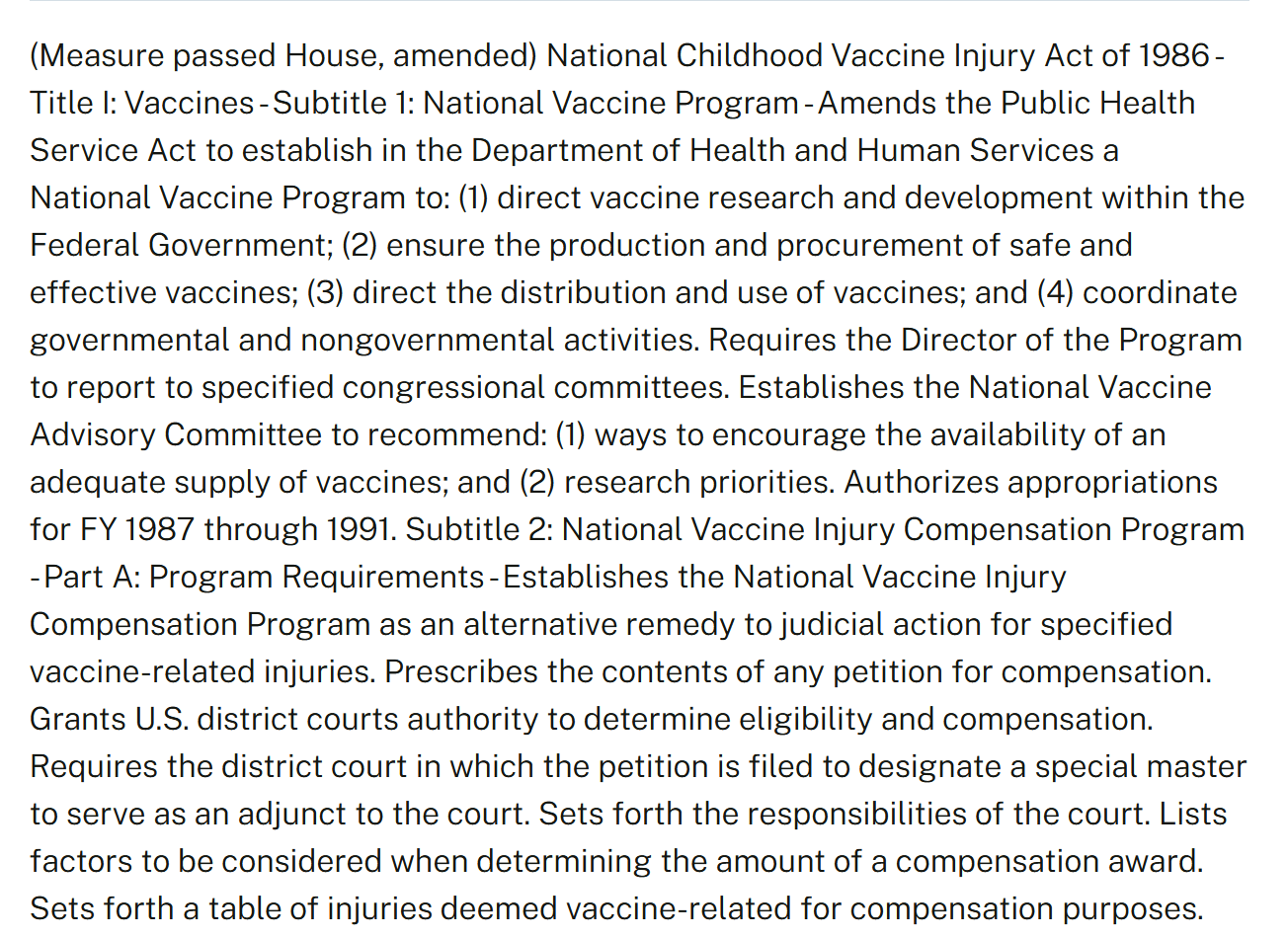
In this article, we examine these issues, and indeed whether The National Vaccine Injury Compensation Program (NVICP) and the Countermeasures Injury Compensation Program (CICP), both administered by the US Department of Health and Human Services (HHS), should exist at all.
Revisiting the Premise of Vaccine-Related Bills
The authors of the Health Affairs Forefront article assert that recent state legislature bills before the COVID-19 pandemic were designed to undermine public confidence in vaccines. This bold assertion warrants a critical examination. Contrary to this claim, a closer look reveals that many of these bills were, in fact, aimed at preserving individual rights to make informed choices regarding vaccinations in response to bills aimed at stripping those rights away.
These legislative efforts sought to uphold and reinforce the freedom to accept or decline vaccines based on valid medical, religious, or philosophical reasons, rather than to impede access or erode public confidence. I know this first-hand because in 2017-2019 I traveled to many states to testify on the balance of the science on vaccine safety to legislative bodies contemplating bills designed to strip away rights people granted themselves for protection of body, mind, and soul against the effects of vaccination.
The Language of Legislation and Public Perception
The language used to describe vaccine-related bills is of paramount importance. Labeling bills that protect the right to informed vaccine choice as “anti-vaccine” is a distorted misrepresentation that carries significant emotional weight and is an attempt to skew public perception.
The article title itself is misleading: “Vaccines in the Courts: A COVID-19-Induced Litigation Influx” should be “Vaccines in the Courts: A COVID-19-VACCINE Induced Litigation Influx”.
The article’s very first sentence also contains the falsehood:
“Every year, in the decades before the COVID-19 pandemic, tens of bills were introduced in states legislatures aimed at undermining public confidence in and access to vaccines…”
Their language misrepresents the intent of the bills.
The bills are not “aimed at” limiting access of others to get vaccines, nor is their aim to “undermine public confidence in vaccines.” The bills are, actually, aimed at ensuring the right of individuals to have free choice over what is injected into their bodies, specifying valid medical, religious, or philosophical reasons to disagree with government recommendations.
A bill protecting consumer rights to know about Toyota’s previous failed brake issues and choose what car to purchase (or to avoid cars altogether) would not ever be misrepresented as “undermining public confidence in automobiles.” Bills passed to improve the safety of infant car seats would never have been represented as “anti-car seat”; they are, instead pro-child safety.
Read the rest here.