
by Dr. James Lyons-Weiler, PhD, Popular Rationalism, reposted with permission

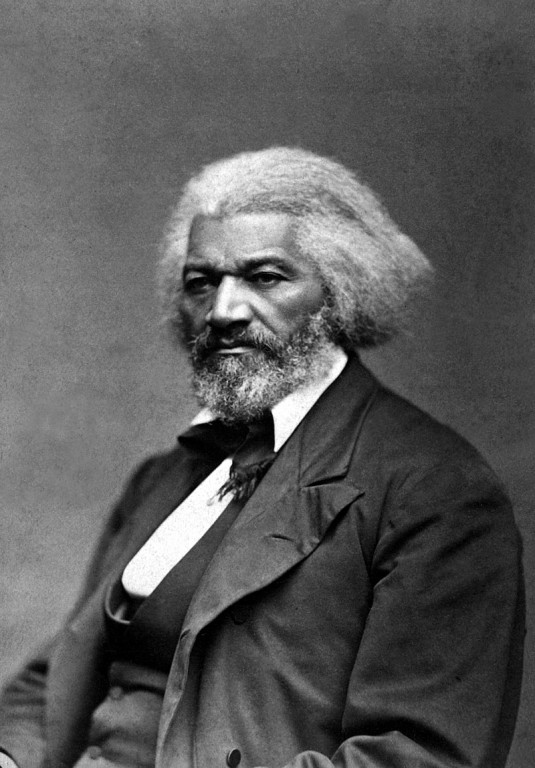
(May 30, 2023) — “There are times in the experience of almost every community, when even the humblest member thereof may properly presume to teach — when the wise and great ones, the appointed leaders of the people, exert their powers of mind to complicate, mystify, entangle and obscure the simple truth — when they exert the noblest gifts which heaven has vouchsafed to man to mislead the popular mind, and to corrupt the public heart, — then the humblest may stand forth and be excused for opposing even his weakness to the torrent of evil.” – Frederick Douglass
In the earnest and sincere pursuit of knowledge and progress toward understanding, the value of opposing viewpoints cannot be overstated. It is through the clash of ideas, the confrontation of differing perspectives, and the robust exchange of opinions that society is able to grow and evolve.
Diversity of thought is recognized as a fundamental driver of innovation and critical thinking. By engaging with viewpoints that challenge our own, we are compelled to question our assumptions, reevaluate our beliefs, and strengthen our arguments. The presence of dissenting voices fosters intellectual rigor, encourages broader perspectives, and ultimately leads to more informed decision-making. Throughout history, Greek and Roman philosophers have emphasized the importance of open discourse and the practice of disagreement, recognizing that it is through the crucible of debate that the best-backed position can emerge.
The utility of debate was particularly cherished in the ancient Roman Senate, where the practice of argument for the sake of argument thrived. Prominent Greek and Roman writers such as Cicero, a renowned Roman statesman and philosopher, and Plato, the influential Greek philosopher, were advocates of this approach. Cicero, in his work “De Oratore,” emphasized the value of differing viewpoints, arguing that through discussion and contention, the most accurate and persuasive arguments could be discerned. Plato, in his renowned dialogue “The Republic,” portrayed Socrates engaging in rigorous debates to arrive at the truth, emphasizing that open discourse allows for the discovery of superior ideas. The Roman Senate, inspired by such teachings, embraced the culture of debate, welcoming dissenting voices and encouraging senators to present contrasting opinions in pursuit of the best course of action. This tradition of intellectual clash and dialogue in the Senate not only fortified the decision-making process but also exemplified the importance of respectful disagreement in a democratic society, where diverse perspectives are valued, and the strength of ideas is tested through rigorous debate.
Conflict is Not Always War – And Traditions Used Games as Ritualized Violence
Unresolved differences, can, of course, lead to violence when one or both parties see no pathway toward a mutually acceptable solution. The ancient Greeks and Romans did not hold a monopoly on the value of managed conflict to seek resolutions. Conferences held by various North American tribes were integral to their social and political fabric, serving as platforms for discourse and dispute resolution. These conferences aimed to bring together opposing parties to engage in open dialogue and negotiation, with the ultimate goal of achieving peaceful resolutions. The tribes recognized and taught their young by example and by approval and trust of their participation the value of such gatherings. They understood and taught that by bringing opponents together, they could foster understanding, build relationships, and seek mutually beneficial solutions, or at least the best worst solution.
Warriors from opposing factions would gather in a controlled setting, often under the watchful eyes of respected leaders and ceremonial protocols, to engage in ritualized combat or competitive games. These violent means were intended to release tensions and assert dominance while minimizing casualties. The underlying objective remained the same – to bring adversaries together in a structured environment where grievances could be aired and addressed.
Despite the potential for violence, the emphasis in tribal conferences was always on finding peaceful resolutions. The tribes recognized that bringing opponents together in a respectful and structured setting allowed for grievances to be heard, perspectives to be shared, and compromises to be reached. These conferences played a significant role in maintaining social cohesion, fostering intertribal relationships, and preserving peace within and between communities. They exemplified the value these tribes placed on open discourse as a means to resolve conflicts and build stronger, more harmonious societies and relationships among tribes.
The Romance and the Duty of Opposition
The wisdom of the minority has been a recurring theme in American writings from the 19th century to the present, with numerous authors exploring the significance of dissenting voices and the power of minority viewpoints. These writings highlight the importance of hearing and considering perspectives that deviate from the majority, recognizing the potential for wisdom, insight, and progress that can emerge from such minority positions.
In the 19th century, authors like Ralph Waldo Emerson and Henry David Thoreau expressed admiration for individuals who dared to stand apart from prevailing opinions. Emerson, in his essay “Self-Reliance,” championed the individual’s ability to think independently and urged people to trust their own judgment, even if it meant dissenting from popular beliefs. Thoreau, in his work “Civil Disobedience,” advocated for nonconformity and peaceful resistance to unjust laws, asserting that one’s conscience and principles should not be compromised by majority rule.
Søren Kierkegaard, an amazing Danish mind, who was one of the most prolific writers of philosophy, was nearly completely rejected in his time by his peers, focused on the concepts of free will and self-expression. Believing that anxiety and despair were essential to the human experience, he held that everyone must make choices based on free will despite their anxiety. He understood all too well that at times, the madness of the mob can hold sway:
“Truth always rests with the minority,” Kierkegaard wrote in his journal in 1850, “because the minority is generally formed by those who really have an opinion, while the strength of a majority is illusory, formed by the gangs who have no opinion.”
Moving into the 20th century, authors like Mark Twain and Martin Luther King Jr. continued to emphasize the wisdom inherent in minority perspectives. Twain, known for his satirical and critical writings, often highlighted the follies of popular opinion and emphasized the value of questioning prevailing norms. In his essay “Corn-pone Opinions,” he explored the influence of social conformity on individual beliefs, cautioning against blindly accepting majority views.
In the Civil Rights era, Martin Luther King Jr., wrote his famous “Letter from Birmingham Jail,” emphasizing the moral authority and the transformative power of minority dissent. He argued that the voices of those fighting for justice and equality should not be stifled by the majority, urging society to pay attention to the grievances and aspirations of marginalized communities.
The value of dissent has, in the past, risen in value sufficiently to be admired as heroic and emblematic of self-realization. In his essay “Self-Reliance,” Ralph Waldo Emerson discusses the importance of individuality and the value of trusting one’s judgment, even if it contradicts popular opinion. Emerson’s writings emphasize the significance of dissent and independent thinking.
Additionally, Henry David Thoreau’s essay “Civil Disobedience” promotes the idea of individual conscience and nonconformity to unjust laws, highlighting the potential wisdom that can emerge from minority positions. Thoreau’s work encourages individuals to question authority and the prevailing majority views, asserting the importance of moral integrity and personal conviction.
In contemporary times, authors and thinkers continue to explore the wisdom of the minority. Rebecca Solnit, in her book “Hope in the Dark,” examines the significance of grassroots movements and marginalized voices in effecting social change. She emphasizes the transformative potential that lies within the voices often ignored or silenced by the majority.
She captures the current apparent political extremism well:
“As the Republicans move from what might be conventionally thought of as right-wing to something a little more totalitarian, as the New Labour administration finds a low point in the middle for what used to be the party of the left, there are dissenters on both sides. There have been strange moments before animal-rights activists pursuing anti-environmental goals; feminists supporting restrictions on the free speech of abortion protesters and pornographers; all these suggest that there are far more than two political positions, and the old terminology only blinds us.”
Solnit, Rebecca. Hope in the Dark: Untold Histories, Wild Possibilities (p. 84). Haymarket Books. Kindle Edition.”
Overall, American writings from 1800 to the present highlight the profound wisdom and potential for progress that can be found within the minority. These authors celebrate the courage to dissent, challenge prevailing opinions, and advocate for justice. They remind us of the importance of listening to diverse perspectives, as it is through hearing out of minority viewpoints – including, as outdated as the idea might seem to many these days – ideas that are anathema to us and “go against everything we stand for”. It is only through these processes, not tribalism, that a more enlightened society can be achieved. To abandon humanity in favor of your tribe is to break a long-standing sacred trust of society itself.
Read the rest here.