

by ProfDave, ©2021
(Sep. 16, 2021) — In the 9/2/21 edition of Breakpoint John Stonestreet and Kasey Leander tell of a young Evangelical who lost his faith because he could have the same experience at a Coldplay concert that he had “worshiping” at his church. He concluded that his religious experience was “just another man-made phenomenon.” Is the faith of millennial Evangelicals fixed on the sizzle and not on the steak? There certainly was plenty of sizzle in all four holiness camp meetings I visited this summer – and in the Celebrate Recovery Summit, too. But was it real? The music was loud, the emotions were high and so were our hands – especially the young folks – but were we really worshiping Jesus? Which is the real thing, the Jesus festival or the rock festival? “Bring back the glory” was the theme at Smith Mills (MA). There was plenty of “glory” at all four camps. Was it really the presence of the Lord we felt or just a form of mass hysteria? Was it all sizzle?
An authentic worship experience should involve the whole person, body, mind, and emotions all fixed on God. Worship, by the way, is not the same as music. It is the offering of the whole being to the Almighty. As the old timers used to say, “I don’t care how high you jump so long as you walk straight when you come down.” Life becomes worship, but its culmination and celebration is social – in the body of Christ worshiping together. Yes, aesthetics and emotional resonance can mimic the experience, but for those who really love Jesus, have experienced his transforming power, and catch a glimpse of the wonder of the gospel – for them The Presence becomes very real. The Glory. The critical issue is what happens when we come down from the mountain. Does the “living sacrifice” crawl off the altar or do we live lives of worship? When we leave the sizzle, do we still have the steak?
What is worship? Simply, it is honoring someone (or something) of transcendent worth. It is more than music. You can sing and dance in your church without worshiping at all, and you can worship without making a sound or moving a muscle. Worship is admiration, it is love, it is gratitude, and it is fear. It is praise and it is sacrifice – a living sacrifice of self. Worship involves intellectual, emotional, volitional (will) and often physical elements. I choose to honor God, my mind responds to the wonder of His being and His works, then my emotions kick in. I am filled with love, and I find myself singing and perhaps moving something. God responds. I might even do something about it – like writing to you! All of life can be worship.
What is worship? We can worship individually, as a family, as a small group, or corporately – as a community of common faith. In all cases it can be confused with religious routine, aesthetics or emotion. The gentle discipline of liturgy or daily habit can be useful because it puts us regularly in the right place for worship to happen, but you have to be paying attention. God is not in the habit. The aesthetics of a beautiful sanctuary (or scenery) and beautiful music certainly contribute to the worship experience. I am particularly responsive to rich harmony. But God is not in the sight and sound. An auditorium full of fervent worshipers lifts the soul beyond its ordinary capacity. But God is not in the crowd or the feelings. Worship leaders can skillfully stage an event that sweeps us off our feet. God is not in the staging. He is in the still small voice that cannot be manufactured. When all the fantastic has gone away and we go back to our humdrum lives and our humdrum churches it is that voice, that Presence, that makes the experience transformational. A genuine encounter with God works changes in us that we could not make in ourselves, and we find that the God of the mountain is still God in the valley.
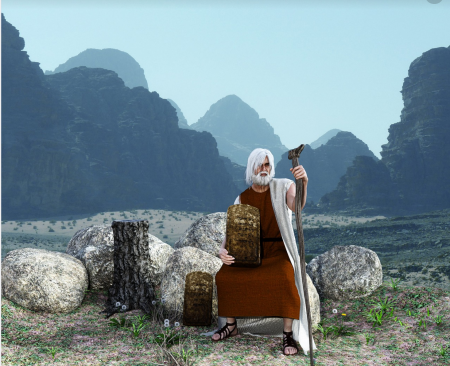
Phineas F. Bresee, founder of the Church of the Nazarene in the early 20th century, used to say, “keep the glory down.” What does that mean? The glory is God’s response to our worship. When Moses consecrated the Tabernacle in the wilderness and Solomon the Temple in Jerusalem, in both case the Lord responded to worship by filling the place with his shekinah, like a cloud of supernatural light, so that the priests could not enter to do their duties. It was a terrifying thing, in a positive way. I have never seen that, but I have felt the Presence in corporate worship so intensely that I almost expected to levitate. At other times, alone (and at this moment) the world around me seems to glow with His smile. “Bring back the glory?” The glory never left, but we are usually too dull and distracted to perceive it.
But is “the glory” real? In the first place, worship is not about us. It is what we give, not what we get. It is an offering, a sacrifice. We give God the glory and feel the backwash. How much of what we call “the glory” is actually our own enthusiasm? Beware of substitutes and imitations. Working up and maintaining an emotional high, no matter how religious, is not giving glory to God or receiving glory from Him. There is nothing wrong with enthusiasm but beware of worshiping the process instead of the Divine Object. God may be worshiped through the scene, the band and the building; or the scene, the band and the building can be worshiped for themselves – which is idolatry. The Creator may be worshiped in the mountain, the lake and the meadow. The Creator may be worshiped in the butterfly, the bird, and the fawn; or the creature may be worshiped in itself – which is idolatry. Enthusiasm is a good thing when it is focused on the person and work of God. Then we sense His presence among us – more than just the sizzle.
The glory was at Douglas Camp Meeting (MA) in July. The Sky Family evangelistic team sang exclusively psalms and songs of praise formally and informally two services a day and 7 am prayer meeting time, too. If you want the glory to be genuine, you need to make the sacrifice of praise. “God inhabits the praise of his people.” The glory was at Ithiel Falls Camp Meeting (VT) in the passion of the young people worshiping. The glory was in the Celebrate Recovery Summit – I saw it on zoom – in the host of forever brothers and sisters redeemed from the chains of addiction and celebrating the wonder of what Christ had done. The glory was in Portsmouth Camp Meeting (RI) in August in the early morning prayer times. If you want the glory to be genuine, you need to make the sacrifice of prayer. And yes, the glory was at Smith Mills Camp (MA), in the youth and the children, too. I felt it 50 feet away from the tabernacle.
How do you “bring back the glory?” You can’t. There is no manipulating God. He is God, after all – if He is real at all – and you are not. Experiencing the glory of God begins with the saints gathered in prayer. No movement of God happens without it. There is no glory without prayer. Second, experiencing the glory of God requires repentance – agreeing with God, that He is right and you are wrong, whatever the question. Our sin, our alienation from God is the veil Jesus tore in half by his sacrifice. We dare not enter. When we repent, the barrier is gone. Third, an attitude and atmosphere of praise puts you in position to see/experience the glory of God. There is no glory without praise. He alone is worthy. But beware of imitations.
David W. Heughins (“ProfDave”) is Adjunct Professor of History at Nazarene Bible College. He holds a BA from Eastern Nazarene College and a PhD in history from the University of Minnesota. He is the author of Holiness in 12 Steps (2020). He is a Vietnam veteran and is retired, living with his daughter and three grandchildren in Connecticut.