

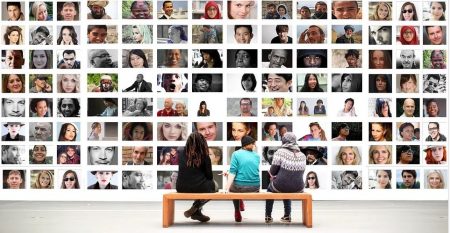
by ProfDave, ©2021
(Mar. 9, 2021) — In the Judeo-Christian worldview, human dignity rests on four things: God’s creation, God’s image, God’s plan and God’s love. Christians believe in a deity that “made heaven and earth” and everything in them. What He has made, then, commands proper respect – but not worship. Most still eat meat and swat mosquitoes. We thank God for our hamburger and respectfully ask healing from the diseases mosquitoes carry in this world that is in rebellion against Him. What He has made obviously belongs to Him, too, and the value He gives to humanity is what humanity is really worth. Even allowing for the bias of an unbelieving world, the Bible shows that God places immense value on humanity.
Secondly, it has been revealed to us that mankind – both sexes – is made in God’s image (Genesis 1:27). Since He stands outside of the physical cosmos, as its originator, we agree with Scripture that He is Spirit – not material – and regard anthropomorphic references to divine body-parts as metaphoric. Hence the image of God cannot be the human face or body plan, but a non-material spiritual identity. Mankind is both physical and spiritual. One does not become less human by losing a leg or a kidney, nor by being born without either. Or by losing brain function – like my wife. It isn’t a physical thing. The breath of God makes mankind “a living soul.” Either you are human or you aren’t. Christians believe that when the body dies, the spirit part of man goes on – to be resurrected with an immortalized body.
Thirdly, the Scriptures reveal that God knows and controls – at least passively – all He has made: the orbits of the galaxies and of the electrons and your genetic code, half-way between in order of magnitude. It was revealed to several Biblical individuals that they had been chosen and formed by God before birth. Many of us believe and reasonably assume this means us, too – you, too. Sure, you get your DNA from your father and your mother, but God was the author of both and it is from him that your spiritual identity – and your mission, should you choose to accept it – comes.
Finally, in the New Testament, God comes down from heaven to be one of us and die a horrible death to reconcile us to himself. A greater demonstration both of Divine love and of human value to God cannot be imagined. And how do we return that love and esteem? Jesus said, “as much as you do it to the least of these, you do it to me.” We express our love of God by loving and serving others – especially those who cannot return the favor. There is no firmer foundation for human dignity than this.
Do Christian individuals or “Christian” nations always respect the human dignity and worth of others? Not at all. Both Christians and Jews believe that humanity is flawed by a universal tendency toward selfishness and rebellion against God. And we illustrate it. The Bible is full of it. History is full of it. It is a fallacy to affix a Christian label on people whose behavior is anything but Christian. Was Stalin Greek Orthodox? Was Hitler Roman Catholic? Both were born and baptized into those respective communions but rejected Christ in their youth. It is easy to condemn the Crusades without mentioning the Islamic conquest and forced conversion of the Christian and Jewish heartland that preceded it. But I digress.
Does a Christian worldview make a difference? Why was it that the first hospitals in India were Christian? Though some tried to justify slavery and prejudice using the Bible, who were most of the leaders of the movement to end slavery and discrimination? Why was it that most of the aid going to Moslem Indonesia in the wake of the tsunami was Christian? Who provides most of the hospice care to AIDS sufferers in this country? The most effective AIDS prevention programs in Africa? An Albanian nun saw Jesus in stinking, filthy, dying, Hindu street people – “Untouchables” on the sidewalks of Calcutta! In late pagan Rome, the father would inspect each newborn. If it did not please him – perhaps it was ugly or a girl – he would put it out on the roadside or in the garbage dump to die. It was called “exposing” them. Early Christians, often themselves the poorest of the poor because of persecution would rescue these infants and attempt to nurse them to health and raise them as their own. My friend, David Greenier, does essentially the same thing today, adopting medically challenged and seriously handicapped children whose parents cannot care for them.
Why? Because the sick, the handicapped, and female (unwanted by gender) infants are made in the image of God, are precious to Him, and in loving them we love Him who first loved us. Because human value is based on Divine fiat, not on strength, beauty, achievement, or potential usefulness to us. In the light of this principle freedom, “liberty and justice for all,” for you as well as for me, makes sense. Hmm.
David W. Heughins (“ProfDave”) is Adjunct Professor of History at Nazarene Bible College. He holds a BA from Eastern Nazarene College and a PhD in history from the University of Minnesota. He is the author of Holiness in 12 Steps (2020). He is a Vietnam veteran and is retired, living with his daughter and three grandchildren in Connecticut.