
CLAIM: “THE GOOD STUFF” TO BE FOUND IN PERSONAL EMAIL ACCOUNTS
by Sharon Rondeau
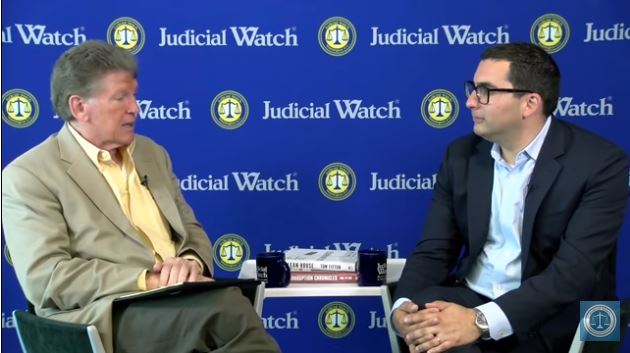
 (Jul. 20, 2018) — An attorney for the government-watchdog group Judicial Watch, Michael Bekesha, told JW colleague Carter Clews in an interview on Thursday that through a Freedom of Information Act (FOIA) lawsuit, he learned that “13,000 pages” of emails, texts and instant messages were exchanged between former FBI counsel Lisa Page and former FBI counterintelligence deputy director Peter Strzok.
The video of the interview can be viewed here: https://www.judicialwatch.org/video-update/inside-judicial-watch-new-strzok-page-emails-reveal-couples-hatred-for-fbi/?utm_source=deployer&utm_medium=email&utm_campaign=action+alert&utm_term=members&utm_content=20180720160901
Page and Strzok, who were reportedly romantically involved for a time, were identified in a Justice Department’s Inspector General’s report released last month as having been referred to the FBI’s Office of Professional Responsibility (OPR) for further scrutiny of their conduct while they worked on the Hillary Clinton private server probe and the still-ongoing Trump-Russia “collusion” investigation.
A non-profit corporation, JW is funded by private donations and specializes in invoking FOIA to obtain government documents often withheld from the public and Congress. It describes itself as “a conservative, non-partisan educational foundation, promotes transparency, accountability and integrity in government, politics and the law. Through its educational endeavors, Judicial Watch advocates high standards of ethics and morality in our nation’s public life and seeks to ensure that political and judicial officials do not abuse the powers entrusted to them by the American people. Judicial Watch fulfills its educational mission through litigation, investigations, and public outreach.”
On July 13, JW reported that as a result of the Bekesha lawsuit, it received the first 87 pages of requested “records from the Department of Justice revealing former top FBI official Peter Strzok and FBI attorney Lisa Page’s profanity-laced disdain for FBI hierarchy and policies.” The press release additionally said that “The DOJ, meanwhile, is resisting Judicial Watch’s request for a court order to preserve all responsive Page-Strzok communications.”
At 11:48 in the interview, Bekesha told Clews that when Congress threatens consequences for individuals’ or government agencies’ flouting of its subpoenas, “they don’t use their jail that they could lock somebody up; they could send it to the Justice Department to enforce it; [the] Justice Department usually doesn’t take action, so it’s all political theater.”
“When you want oversight, when you want accountability, when you want to know the facts, you come to Judicial Watch,” he added.
The specific lawsuit was filed in January and requested:
- All records of communications, including but not limited to, emails, text messages and instant chats, between FBI official Peter Strzok and FBI attorney Lisa Page;
- All travel requests, travel authorizations, travel vouchers and expense reports of Peter Strzok;
- All travel requests, travel authorizations, travel vouchers and expense reports of Lisa Page.
Clews opined that Strzok’s testimony of last Thursday to the House Judiciary and Oversight Committees over a ten-hour time frame was “one of the most egregiously arrogant and disrespectful acts” he said he has ever witnessed. In response, Bekesha said, “We didn’t really learn anything,” repeating that Strzok’s responses constituted “political theater.”
He noted, however, that in two days of testimony Friday and Monday, Page was said by several lawmakers to have been more forthcoming and “credible.”
“That’s why we need the records,” he contended. “Because that’s going to tell you the whole story…It’s not going to be in testimony after the fact when the individuals are trying to defend themselves.”
As for Strzok and Page’s texts which have become available, Bekesha said that their “emotions go the best of them” during the course of their work on the investigations. At issue is what Strzok meant when he texted Page to say, “We’ll stop it” at the prospect of a Trump presidency.
Bekesha decried public servants who use personal email accounts to conduct government business, including former FBI James Comey and Clinton. As of this writing, Strzok, and presumably Page, have not turned over emails discussing government business generated from their respective personal email accounts.
When asked last Thursday about who made the decision about turning over his personal emails to the inspector general, Strzok said he was the sole arbiter.
Referencing a motion in a separate lawsuit asking the DOJ and FBI to order the “preservation” of all of Strzok and Page’s communications, Bekesha said that the government’s response was, “These are former senior-level officials; you can trust them; they’re going to do the right thing,” eliciting a guffaw from Clews.
“In response we said, ‘These two individuals – no,’” Bekesha continued. “‘They don’t get the benefit of the doubt.’ It’s time for the Justice Department, for the FBI to go make sure, to take whatever steps are necessary, to ensure that they are not deleting emails and text messages about the investigation that they did on their private phones, in their personal email accounts, because that’s where the good stuff is going to be.”