
WHITE-PAPER REPORT; A-03-002 (W); The Russian Renaissance
by John Wayne Sitterley, ©2011
(Sep. 25, 2011) — The following report was submitted to the U.S. Congress on September 22, 2011. The author reports that Sen. John McCain is “very happy with the report.” Mr. Sitterley stated that “I think your readers would be interested in knowing that communism is a greater threat here in the US (and a few other places) than it is in Russia nowadays.”
———————–
To: Members of the 112th US Congress, State Congresses and the American People.
From: American Republic Research Center (ARRC) Think Tank
Ref: The Russian Renaissance, Threat Assessment
Date: September 2011
The Full Report: 10 Pages Congressional Copy (Classified Material); USA
Introduction; Aside from the ‘Arab-Winter’ and the spread of Sharia Law into the free-world from radical Islam…There is some good news, and it is about the rebirth of Russia. I am not advocating communism, but the Communist Party is probably larger, or at least more effective, in America now (basing their operations revealed in the book “The Naked Communist”, 1958 Cleon Skousen) than it is presently being used or existing or sought for in Russia today.
Russia is in a very interesting position now and I would go so far to say that we may will be witnessing a “Russian Renaissance.” Though there are some problems by all the global players in drugs, human trafficking and coercion or even disagreements in foreign policy that are being addressed, refusing to acknowledge the progress from Russia would be a mistake. Most importantly, and I cannot emphasize this enough; Put your finger on a map and keep in mind that Russia is the body of the European peninsula…Without both together, they fail separately.
After reviewing many of the policies of the European Union (EU), the European Commission (EC) and their respective Think Tanks from both sides of the isle, the culminating effect of making Europe like the United State via the Lisbon Treaty (and other treaties preceding it) with unelected officials tends towards making it more of a collectivist union, which is also aided by the precepts of the Keynesian economic system, established in 1945, as well as the Bretton Woods Agreement in the same year. However, in all the EU has been running down this road for sometime and is not likely to abruptly change directions anytime soon or at least willingly. Economically may be a different story if austerity measures fail or are abandoned.
With that said, the best one can hope for at this point is a ‘nudge’ by policy towards a common defense and addressing immigration concerns about China and Radical Islam respectively. It has only been until this year (2011) that these concerns are finally being considered and with immigration, already implemented with the help of the EPP based in Belgium.
In this report I will show you that, though there may be disagreements on occasion between Russia and the United States, the expansionism of Radical Islam and Communist China show more signs of a threat to the free world than the Russian Federation today.
Background Notes on Russia
It should be realized that when the USSR (United Soviet Socialist Republic) failed in 1990, nobody started civil war in Russia to defend communism. Russia today is experiencing their version of the Tea-Party by drawing from such reformers as Russian Count Mikhail Mikhailovich Speransky (1772 – 1839), sometimes called the father of Russian liberalism, and Nikolai Mikhailovich Karamzin (1766 – 1826), best remembered for his 12 volume set on the History of the Russian State and his conservative approach towards reform. These two men were probably the greatest of Russian reformers during the reign of Tsar Alexander I and Tsar Nicholas I of Russia. In addition to Count Speransky writing the first constitution, he put together all Russian laws – 45 volumes – for the first time making Russia law-based society. He also founded Russian intelligence service and accomplished a feat no other intelligence service could match – recruited Napoleon’s foreign minister Talleyrand as Russian spy. After meeting Speransky, Napoleon offered Alexander I half of Germany in exchange for him.
In the Arts and Literature there was Fyodor Mikhaylovich Dostoyevsky (1821–1881) is best known for his novels Crime and Punishment and considered by many as a founder or precursor of 20th-century existentialism. Dostoyevsky wrote, with the embittered voice of the anonymous “underground man”, and is often acknowledged by critics as one of the greatest and most prominent psychologists in world literature. In the darker pages of history, there was Marxist Leon Trotsky (1879–1940), born Lev Davidovich Bronshtein, was a Russian Marxist revolutionary and theorist, Soviet politician, and the founder and first leader of the Red Army.
However, what Russia is mostly known for are their composers like Igor Fyodorovich Stravinsky (1882–1971). He is widely acknowledged as one of the most important and influential composers of 20th century music with such works as The Rite of Spring (1913). Petrovich Mussorgsky (1839–1881) was also a Russian composer, known as ‘The Five’. He was an innovator of Russian music in the romantic period. He strove to achieve a uniquely Russian musical identity, often in deliberate defiance of the established conventions of Western music. Many of his works were inspired by Russian history, Russian folklore, and other nationalist themes. Such works include the opera Boris Godunov, the orchestral tone poem Night on Bald Mountain, and the piano suite Pictures at an Exhibition. And then of course there is Pyotr Ilyich Tchaikovsky (1840–1893). A Russian composer of the Romantic era with his wide-ranging output includes symphonies, operas, ballets, instrumental, chamber music and songs. He wrote some of the most popular concert and theatrical music in the classical repertoire, including the ballets Swan Lake, The Sleeping Beauty and the 1812 Overture. As for literature, Lev (Leo) Nikolayevich Tolstoy (1828 –1910) was a Russian writer who primarily wrote novels and short stories. Later in life, he also wrote plays and essays. His two most famous works, the novels War and Peace and Anna Karenina, are acknowledged as two of the greatest novels of all time and a pinnacle of realist fiction. Many consider Tolstoy to have been one of the world’s greatest novelists.
In the earlier years of Russian history Dr. Alex Crandall states; “The Baltic Crusades were undertaken by the Christian kings of Denmark and Sweden, the German Livonian orders, and their allies. It should be remembered that during Alexander Nevsky time Estonia, Latvia, Lithuania and Prussia were being turned from pagans into ‘good Catholics’ by the ‘friendly breeze’ coming from Europe.” Trade from the Baltics and Moscow to the Black Sea and Caspian Sea via the Volga River and other water ways since 942 has been a very important part of Russian History. If you do not think of the water ways, the orthodoxy and winter at the same time you think of Russia, you know not Russia. They are as intertwined as the soil and the crop and as the earth and the sky.
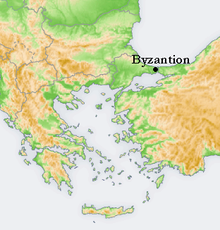
The Birth of Europa
With regard to the growth of Europe after the Hellenic Period, the Roman Republics and Empires and the birth of Islam in 622, there was a massive Mongol invasion that lasted from 1207-1300 that expanded their dominance into Siberia, Kiev, Eastern Europe, Southeast Asia and China on into the Middle-East. In the West there was the Byzantium Empire which enjoyed the height of their power under Justinian from 533 to 570. Their slow decline came from a variety of sources and campaigns. Along with an earthquake, the disenfranchised peoples living in the countryside began to take its toll on the city Constantinople. Other factions and quarters of discontents also battered the walls in countless campaigns. Over-taxation was probably the root cause that prompted her neighboring citizens to revolt. By 1202 the Forth Crusades had left Constantinople so severely weaken that they could not repeal the invading Horde for long. The city eventually fell in 1453 with the rise of the Ottoman Empire. The Crusaders in 1202 removed all the wealth from the Byzantine Empire before it could fall into the hands of the Mongols and the Hashassasins of Bagdad of which the Mongols and Muslims controlled.
That acquisition of the world’s wealth from the Byzantium Empire, along with a slight warming of global temperature by 4 degrees increasing the crops of wheat, oat, barley and rye, is what helped Europe prosper. This treasure was taken to Venice, Italy. The Orthodoxy of Byzantium Era also influenced Kievan Rus and the Balkans immensely and is why you see the ‘onion domes’ on the Kremlin and other orthodox buildings in their architecture. This wealth was held by the kings, knights, clergy, merchantmen, scholars and bankers of their day. By 1300, the “mini-ice age” descended on the northern hemisphere and lasted up to 1800. By then trade routes were will established to provide sustenance, and “great coats” were the style.
Since the introduction and expansion of Christianity into northern Europe around 440ad with Pope Leo I, Charles (the Hammer) Martel (688-741), Charlemagne (742-814), and the Viking conquests (789-1085) did we see Europe by the 1200’s enter into a new Renaissance. In Russia, the Byzantine Orthodox was adopted in 988 and religion was taking hold along with the great knowledge brought forth from the Greek Hellenic period exemplified by the Italian Renaissance following Europe’s arduous Medieval Period. This Neo-Classic age of the Italian Renaissance (1400-1600) was born in Florence, Italy and is best known for the renewed interest in the culture of classical antiquity. The Age of Enlightenment (1650-1800), also known as the Age of Reason, soon followed. By the early 1800’s the Romantic Period known as an emotionally expressive period or anti-reason, came into being and ‘doing what I want’ became the norm from ‘doing what is right’. Still, great progress in communications, transportation and the arts and sciences literally transformed the world in ways never seen before. Yet today, the Age of Emotion coexists with the Age of Reason 200 years later. Could it be that the self centered interest of modern corruption of power which started with Napoleon that nearly destroyed France, could have run its course and usher in a new era of peace and reason for the 21st century?
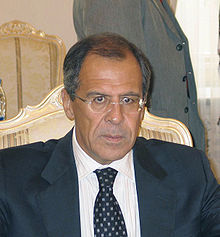
Russia Today; The Assessment:
In today’s Russia, the Medvedev and Putin team are making diplomatic and economic overtures with “a friendly breeze” to the west, and while Germany and France is engaging on expanding their free-market this year, it would be wise for the west and particularly the United States to do the same and not let this opportunity slip by based on past fears and misconceptions. The renowned Foreign Minister Sergey Lavrov also addressed the EC (European Commission) on April 2010 which outlines the intent of the Russian Federation; “We have no secrets. We only want to show the truth and tell no more lies or revise any more history.”
Not only has Russia implemented the Eurasian Economic Union (EEU) to work in conjunction with the EU and open trade in and invest in their CIS (Commonwealth Independent States), Russia is also a member of the WTO (World Trade Organization) and the Customs Union. The Ukraine, though facing challenges and being the largest country in the EU, is also in more of a unique position and can also choose to enter both, the Free Trade Agreement with the EU, and the Customs Union among Russia, Belarus, and Kazakhstan.
Economy: GDP (2010): $1.477 trillion. Growth rate (2010): 3.8%. Natural resources: Petroleum, natural gas, timber, furs, precious and nonferrous metals. Agriculture: Products–Grain, sugar beets, sunflower seeds, meat, dairy products. Industry: Types–Complete range of manufactures: automobiles, trucks, trains, agricultural equipment, advanced aircraft, aerospace, machine and equipment products; mining and extractive industry; medical and scientific instruments; construction equipment. Trade (2010): Exports–$376.7 billion: petroleum and petroleum products, natural gas, woods and wood products, metals, chemicals. Major markets–EU, CIS, China, Japan. Imports–$191.8 billion: machinery and equipment, chemicals, consumer goods, medicines, meat, sugar, semi-finished metal products. Major partners–EU, CIS, Japan, China, U.S. U.S. exports–$6.0 billion. Principal U.S. exports (2010)–oil/gas equipment, meat, motor vehicles and parts, aircraft, electrical machinery, automatic data processing machines and parts, medical equipment, plastics, cosmetics, and chemicals. U.S. imports–$25.7 billion. Principal U.S. imports (2010)–oil, chemicals (including fertilizer), radioactive materials, iron/steel, precious stones, nickel, aluminum, fish and crustaceans, alcoholic beverages, and base metals. (US Dept. of State)
Also, in February this year, the Russian Ministry of Industry and Trade and the Ministry of Economic Development further strengthened Decree 166 (originally introduced in 2005) and, whilst the new conditions didn’t abolish existing agreements, they offered a more seductive regime to OEMs (original equipment manufacturer and similar to VAR, value-added reseller) incentivizing them to further increase production and the development of modern industry in Russia. These reforms like Decree 166 helps on localization in the Russian and CIS markets and other investor’s world wide that are investing in the Federation and other CIS counties like Belarus.
Concerning Asia, Russia and Chia are presently strengthening their economic base to grab their share of rare earth metals in Central Asia, and Russia is catching up quickly. Most of the worlds Titanium comes from a mine in a northern Siberian coast while oil comes from the south. Will domestic and foreign policy cease being dictated by oil and gas needs, and switch to cobalt, lithium and niobium? Russia and China are both racing to grab their share of the rare earth metals which puts them at a more adversarial position than they usually are, but may prove to pay greater dividends to the future of their respective countries in the long run.
The underlying adversarial position between Russia and China does not stop there. Most of the Russian Battle-Order is set in the east along the border between the two countries. Not all is as well and prosperous as one might think in the Russia frontiers since the formation of the Russian Federation in 1993. Recently, Defense Minister Igor Sergeyev issued an order to all military officers to “look for additional sources [of sustenance for the winter] and assume personal control.” The Defense Ministry announced that trips would be organized for all soldiers and officers to take to the fields to harvest mushrooms, berries, and other sources of food for the winter. In the Far East region of Khabarovsk, the territorial administration has reportedly stopped providing bread to Far East military units, due to non-payment of debts. Yet most of Russia’s nuclear warheads are housed in Siberia. There are also a number of power stations that have non-weapons grade reactive material bad enough for a dirty bomb should push come to shove with their southern neighbor. While there is a defense, Russia can always rely on her closest ally against foreign aggressors…Winter.
The nukes were the reason Chinese gave up the idea of military confrontation. Even though Chinese generals found estimated 100 million Chinese casualties acceptable, rendering territory uninhabitable by using nukes defeated the purpose. The rail-road would be the method of transportation for logistical supply, but the changing of the rail-cars wheels at the border would be time consuming. The difference in the gage of track of their respective rail-lines would also impede a Chinese advance into Siberia. Decision was made to try peaceful takeover. Hundreds of thousands of unarmed peasants were pushed across frozen Amur by Chinese army.
In a brilliant response, the Russian military literally blew them back with dozens of helicopter gunships hanging low over the ice, and after that kept breaking the ice with mortars.
Today peaceful takeover is being tried again backed up by economic might. Massive oil and gas pipeline is only the first of massive projects giving them an excuse to bring millions of Chinese workers to Siberia. Once there, the Chinese will never leave. The next project introduced will be hydroelectric, and then they are planning a reversal of flow of the great Siberian Rivers to Chinese deserts, water pipeline to pump out Lake Baikal.
The Recommendations; U.S.-Russo Alliance:
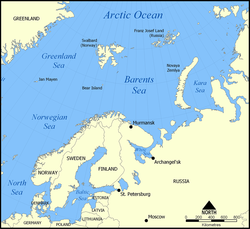
Barents Sea Tunnel: Seeking and American alliance, Russia has proposed projects like a 64-mile long tunnel under the Bering Strait that would connect Siberia and Alaska at the cost of $65 billion, would repay construction costs by stimulating up to 100 million tons of freight traffic each year, as well as supplying oil, gas and electricity from Siberia to the US and Canada. The Bering Strait tunnel would be also is used for a high-speed railway line and to house a fiber-optic cable network between the countries. A tunnel between the two countries could save the US and Russia $20 billion per year in electric costs, says supporters of the project, but it would require the US government to build railway lines from Canada to the Bering Strait to connect the tunnel with the rest of North America.
NORAD: Also, there are presently joint operations between America and Russia to combat terrorism with the co-operation partnered with Russia and NORAD in conducting an exercise called Vigilant Eagle 2011 with formations of F-15s and four Russian SU-27s [Alaskan NORAD Region Public Affairs]. Within minutes after takeoff, the Russian Federation Air Force and the North American Aerospace Defense Command (NORAD) can intercept hijacked aircraft transiting across the Bering Sea. “This exercise provides the opportunity for Russia, Canada and the United States to enhance our coordination and partnership to cooperatively identify, intercept and follow a suspect aircraft as it proceeds across international boundaries, thus reducing the threat of air terrorism,” said Canadian Air Force Col. Todd Balfe, Deputy Commander, Alaskan NORAD Region. “These are the first live-flying events between Russia and the United States since the Second World War.” Also, an exercise simulated a U.S. flagged carrier, under the call sign of Fencing 1220, on an international flight which had been seized by terrorists. The aircraft did not respond to communications and the Federal Aviation Administration and Transportation Security Agency notified NORAD, who diverted Airborne Warning and Control and fighter aircraft to monitor and intercept Fencing 1220. As the aircraft continued east, the FAA notified the Russian Federal Air Navigational Service, and the Russian Federation Air Force launched an Airborne Warning and Control aircraft and fighters to intercept as well. A key component of the exercise was the communication link between the U.S. E-3 AWACS and the Russian A-50 Mainstay, as well as between the air operation centers at Joint Base Elmendorf-Richardson (Alaskan NORAD Region) and Petropavlovsk-Kamchatski. As in the previous exercise, Russia and NORAD exchanged controllers and liaison officers to facilitate the exercise. Since Sept. 11, 2001, NORAD has responded to more than 3,400 possible air threats in the United States and has flown more than 59,000 sorties with the support of Airborne Warning and Control System and air-to-air-refueling aircraft. However, air terrorism is not bound to North America airspace and the Russian Federation is also prepared to counter any threats to their homeland. “This combined exercise continues to moves us forward in the development of cooperation between our countries in mitigating the threat of air terrorism. It is a relevant issue in the defense of U.S. and Russian citizens from possible threats of air terrorism,” said Russian Air Force Col. Alexander Tikhonov, Chief of Department (Coverage of Military Readiness and MWR of Troops).
Combating Corruption, Illegal Immigration, Technology to China and Radical Islam:
On the other hand, there have been some large rings of corruption such as the Chechen mafia, running the drug trade from the Middle-East to Kosovo as the entrée points to hook the European and Russian youth. The selling of women from the Balkans to Italy by their Hungarian handlers is also well documented. As Dr. Alex Crandall states; “The Chechen mafia indeed moves drugs through Russia and controls much of the heroin trade in Europe, formerly dominated by Albanians who use lawless Kosovo as their base. Kosovo is a narco-state, with everyone in “government” involved. Russia, Europe and the United States actively cooperate in the fight against Islamic narco-mafias. It is sad that everyone is afraid to disclose this cooperation.”

Concerning illegal-immigration in Europe, most of these migrations are from the Middle-East. Only this year, 2011, has the European Commission (EC), with the help of the European Peoples Party (the largest conservative Christian group based in Belgium), have they allocated 53 billion Euros to address the problem.
China for the last thirty years has been moving quickly to acquire the latest in technology from around the world and more specifically the United States in the computer and the aerospace fields. The U.S. Government has requested sensitive technology from Hughes Aircraft that they would not even share with fellow American contractors, to be sent to China. Chinese Officers are sent to American Military Schools that require a Secret Security Clarence and American firms are being allowed to establish their businesses on mainland China provided that they share their latest technological innovation. On January 19, 2007 – China shot down their own satellite orbiting 55 miles (88.5km) in space from the technology they were able to procure. The response from the United States was ‘accidentally’ sending four nuclear fuses to Taiwan.
I can not think of a more asinine policy than to be aiding and abiding a communist nation with our most sensitive technology. Somewhere along the line national security has to outweigh international business interests. This should change now.
Concerning Radical Islam in Europe, much of the Balkans is still recovering from the Ottoman Empire (1299-1821) which devastated much of the area. Kosovo is historically Serb from some millinary of Christian orthodox monasteries located there. Ottomans ruled Kosovo for over 300 years from 1490 until the beginning of 1800, when it was re-annexed back to Serbia. Only with intervention from NATO could there change the course of history helping the Muslims fight the Serbs in such a violent way! As Professor G. Richard Jansen from Colorado State University refers to US action in the Balkans; “It has been the most effective help ever given to the expansion of the Jihad in Europe.”
Energy Solutions, Brief History on Russian Taxation and Epilogue:
Concerning our energy needs from a shared culture, there are professionals in the petroleum field that think oil from the Middle-East, which started with the Eisenhower administration in 1943 to support troop movements during WWII in Europe and which should have been rescinded shortly after the war, should be abandon. Oil contracts with the Russian Federation should be brought ‘on-line’ to secure the energy source for the Western World.
To do that these steps should be considered; “First, get rid of partnering with the Bolivarian Republic of Venezuela as a partner. Second, open up the trade valve for Caribbean, to bring lower sulfur fuels there. I would negotiate opening the Panama Canal to Russia. Third, devise a transition of the denomination of fuel products away from the dollar and develop a unit of value with a floating value to denominate. Reason? Not only to get away from fluctuations of the dollar, but to leverage artificially set numbers like Yuan to dollar. Fourth, establish a partner program to guard shipping, not just through Bosporus but the Straits of Hormuz and without OPEC boats included in the defense organization. Fifth, develop a more integrated trading group for swapping loads, and bartering globally, centered not only in one city. Put one in St. Petersburg and one in Vladivostok to cover both sides of the time clock.” These are all very real propositions. The best for the United States would be to drill domestically along with this.
The less we are dependent on the oil suppliers, especially those that are the antithesis to our culture and Constitution, the easier it will be to implement the other excellent suggestions (old rule of negotiations – the one less dependent on the outcome wins). One solution is to drill for hydrogen based on the discovery made by the brilliant Russian scientist Vladimir Nikolayevich Larin which came up with deep drilling technology to reach metal hydrides. He said; “One deep well in Nevada will satisfy all US energy needs for the next 200 years.”, though it may take 10 years to drill it.
Also, the pipe line running from the “Oil Sands” in Canada to Texas does not need to be built. Building a refinery or two in South Dakota would be better if some regulations were relaxed. There have been no new refineries built in America for decades. The EPA charges nearly as much for the pipe-line study running through seven states than it would for the cost of the refinery closer to the source.

However, getting back to Russia, the one most important major factor that enhances the Russian Renaissance is that after paying-off Yeltsin’s debts at the central banks, Russia runs a nearly debt-free economy. That in itself is no small task, as seen by America’s credit down-grade. This is without a doubt the one single major factor that has propelled Russia into the 21st Century with amazing speed…A nearly debt-free economy. That can not be stressed enough. Who holds American debt…China? Soon, America’s payment on their debt with China will pay for the Chinese Army. Why is America spending so much that a foreign country that is the antithesis of our Constitution holds our debt and shares our technological secrets and is trained at our military schools? Think about it. Is this policy with China is not only detrimental; it is a national security issue for America!
Anyway, since the economic collapse of the USSR in 1991, the last twenty years has transformed the Russian Federation as a new world player eclecticizing from different economic policies to re-establish their prior financial wealth by using a 13% tax base based on exports. The turnover tax in the Soviet Union was first introduced during the Soviet tax reform of 1930-1932. Let’s look at the history of last century taxes, a simple list. In Prodrazverstka – you had mandatory deliveries of grain, expropriation of almost all peasants’ produce (That is a tax in the Russian definition). Nationalization of industrial enterprises; VSNKh (Supreme Soviet of national economy) created to manage nationalized enterprises (taking private property by government from private citizens is what we call a tax). But let’s look at what Soviets call a tax in their laws: Under New Economic Policy, Prodrazverstka (food requisitioning) was replaced by a prodnalog (food tax) – 20% of produce, later 10%; first – in kinds, later – in monetary form (as compared to ~ 20% tax during prodrazverstka and over 10% tax in 1913). During the later “Command Economic Policy 63” types of taxes were replaced by two basic taxes: turnover tax and profit tax. That was the first Five Year Plan in the 1930’s.
Today in Russia, it is the 13% tax rate, paying off the central banks to achieve a near debt-free economy, instituting trade organizations like the EEU, decentralizing many aspects of business, implementing a free-market system, mining, implementing the rule of law and drawing from their own rich history since 942ad for tourism has helped Russia come a very long way in a very short period of time. I can not emphasize that enough, for not only have they accomplished much; the leadership is more loved by the Russian people in general, than at anytime in their recent history. “Anyone who doesn’t regret the passing of the Soviet Union has no heart. Anyone who wants it restored has no brains.” (Vladimir Putin; 2000 U.S. Presidential elections)
Policy Outcomes, Evaluations and Funding:
Policy Outcomes: The outcome of policies from this report is quite simple and profound. Again, put your finger on a map and run a line from Australia, the United States, Europe and the Russian Federation. This is your defensive line against the expansion of Communist China and the expansion of Radical Islam. Conjecture: Should the austerity measures fail and the central banking system of America and Europe collapse a financial vacuum will occur. A “Debt-Free Currency” should be established at that point if not sooner…If a collapse were to happen, the central banks representing Islam would likely fill the void and quite possibly use the Yuan as its medium of exchange. Europe, America and Russia would be plunged into a 21st century Medieval Period and the Mongol and Muslim Horde that first started beating down the walls of the Byzantium Empire in the 1200’s would have fully routed Europa and absorbed her wealth. Survival depends on the Alliance of the Western World. The history of Bulgaria from the Ottoman Empire reinforces this hypothesis.
Historically, freedom has progressed from Deuteronomy of the Torah, to the Bible, to the Age of Enlightenment to the US Constitution in brief. The exercise of servitude exudes from Sharia. As we have seen from the Mongol hordes and Muslim Hash-assassins breaching the walls of the Byzantium Empire in the 1200’s to acquire its wealth…So to do we see today. That is how important it is to cut spending and alleviate waste in government programs, departments and agencies and increase wealth in the private sector to lift the economy though a flat-tax and provide for a common defense.
On Energy: Drilling domestically for energy is the best, but opening Russian contracts with a port in St. Petersburg and Vladivostok along with the Barents Sea Tunnel will prove to be beneficial in the long run. Cancelling the Oil Sands pipe line and building a refinery in the Dakota’s will also be beneficial in the long run. Cancelling Oil Contracts with the Middle-East is imperative, and should have been done soon after WWII.
On a Common Defense: Evaluations will be conducted by the Department of Defense, NORAD, NATO, Israel and the Russian Federation Defense Department with the Senate Intelligence Committee with NORAD fully “In Charge of Operations” with Liaisons and Attachés from respective countries.
Funding: There will be no funding or extra personnel needed for this change in policy However; $65 billion should be allocated at a future date for the Barents Sea Tunnel and should be allocated as part of government infrastructure combined as a joint venture with the private sector.
(End of Report)
Overview of submitting organization American Republic Research Center (ARRC): The American Republic Research Center is a start-up 501c3 non-profit, non-partisan conservative Think Tank dedicated to the writing of White Paper Reports to restore the American Republic based on research. Founded on November 3rd, 2010, ARRC has conducted extensive research in the field in the Intellectual and Cultural History of Western Civilization and American History with respect to the US Constitution and the Declaration of Independence.
Best Regards; Mr. John Wayne Sitterley © 2011 All Rights Reserved President at American Republic Research Center (ARRC)