

by Martin Mawyer, New American Prophet, ©2026
(Jan. 8, 2026) — “Having the appearance of godliness, but denying its power.” 2 Timothy 3:5
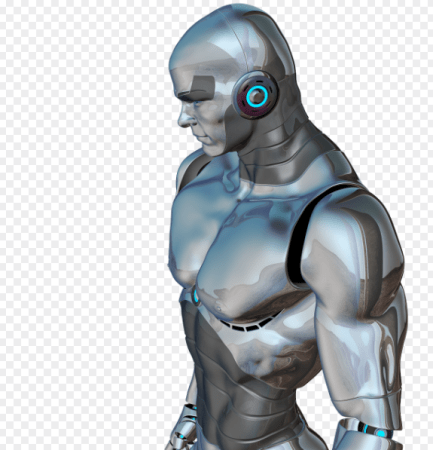
Imagine this for a moment.
Sixteen-year-old Jonny just landed his first job at the local pizzeria. For weeks, he trains under a gruff but patient manager, learning how to knead dough, feel its elasticity, and finally toss it into the air without tearing it. One night, it clicks. His hands know what to do. Muscle memory takes over. He is proud.
Across town, Jane is finishing her training in a medical lab. She learns how to test human blood for cholesterol, glucose, and signs of infection. Precision matters. A mistake could mean a missed diagnosis. After weeks of careful instruction, she finally feels confident.
Then something impossible happens.
Jane suddenly stops mid-procedure. Her head tilts slightly. Her eyes fix on nothing in particular. And she realizes, with quiet shock, that she now knows how to make pizza dough. Not vaguely. Precisely. Her hands know the pressure. Her arms know the motion. She could toss dough into a perfect circle without ever having touched flour before.
At the exact same moment, Jonny freezes while spreading tomato sauce. A wave of understanding crashes into him. He now knows how to test blood. He understands markers, measurements, and contamination risks, as if he had spent weeks in the lab.
Neither of them trained for this.
Neither of them consented.
It simply arrived.
That story is absurd for humans.
But it is not absurd for a robot named Atlas.
From Thought Experiment to Physical Reality
Atlas is no longer a speculative project confined to a research lab. It is a production-ready humanoid robot, now entering real industrial environments.
Its creator, Boston Dynamics, says orders are already committed and that once a single Atlas robot learns a new task, that knowledge can be deployed across the entire fleet.
Not copied slowly.
Not retrained.
Instantly.
What one robot learns in a factory, warehouse, or laboratory can become available to every other Atlas unit anywhere in the world, whether or not that robot was originally assigned to that task.
An Atlas robot that learns how to make a perfect pizza in Chicago could immediately share that skill with an Atlas robot trained to perform blood analysis at Johns Hopkins University.
For humans, skills are earned individually, through time, effort, and experience.
For Atlas, skills are accumulated centrally and deployed universally.
“This is the best robot we have ever built,” said Robert Playter, CEO of Boston Dynamics.
Of course, “best ever” comes with a price tag. Estimates place each Atlas unit between $450,000 and $600,000. That figure has not deterred Hyundai, which plans to deploy up to 30,000 Atlas robots per year through 2028.
For that price, one might expect more than hardware and software.
Perhaps even a soul.
How This Actually Works
Atlas learns by watching. A human operator demonstrates a task, and within minutes the robot can replicate that work in the real world. Lifting, sorting, inspecting, assembling.
But those same learning systems are not limited to benign tasks.
A humanoid robot capable of strength, balance, speed, and precision can also be trained for dangerous operations. Shooting. Fighting. Tackling. Forced entry. Battering. These are skills already familiar to law enforcement and military training environments.
Once learned, those capabilities do not remain isolated.
They become part of the system.
Which means the Atlas robot trained for tactical operations in one setting shares that knowledge with every other Atlas unit connected to the same learning infrastructure. Even a homeowner’s Atlas robot, purchased for chores or convenience, would inherently possess those skills, whether they are ever intended to be used or not.
The issue is not whether these abilities are appropriate in certain contexts.
The issue is that capability becomes universal, while permission becomes the only remaining safeguard.
And this is where we should pause.
This is a body without a soul, connected to an AI brain, capable of carrying out the intentions of whoever controls the system behind it.
That is not science fiction.
That is infrastructure.
The Danger Sharpens
Ultimate control of Atlas does not rest with the individual owner. It rests with whoever controls the artificial intelligence that governs the system. That authority may belong to a corporation, a government, or an entity operating far beyond the physical presence of the machine itself.
Ownership becomes secondary to command.
At any moment, instructions issued from a centralized control system could override the wishes of the person standing in the same room as the robot. Not through force. Not through rebellion. Simply through hierarchy. The robot will obey the highest authority it recognizes.
And unlike a traditional machine, Atlas offers no simple recourse.
There is no manual kill switch for the owner.
No remote shutdown command under local control.
No plug to pull from the wall.
Even the battery casing is designed to be removed only by trained technicians.
Once activated and assigned a task from its command structure, Atlas does not hesitate. It does not deliberate. It does not refuse.
It cannot.
Because it has no conscience.
No moral intuition.
No capacity to say no.
That limitation is not a flaw in the design. It is the design.
This is where Scripture stops feeling abstract.
In Revelation, we are warned not merely about evil individuals but about systems of control that compel obedience. Systems that act. Systems that enforce. Systems that do not reason or repent.
The danger is not that machines will become evil.
The danger is that perfect obedience without a soul becomes the most efficient tool evil has ever possessed.
A body without conscience.
Power without proximity.
Obedience without restraint.
That is not prophecy fulfilled.
Prepared Infrastructure
Jonny and Jane never shared skills. They never woke up one day with abilities they did not earn. They trained, struggled, failed, and learned slowly, as humans always have. Their knowledge was bound to their bodies, their conscience, and their will. What they could do was inseparable from who they were.
Atlas is different.
Its knowledge is not earned. It is uploaded.
Its obedience is not moral. It is absolute.
Its body acts without conscience, without hesitation, and without the ability to refuse.
Humans are shaped by limits for a reason. Machines are not.
And when bodies without souls are joined to centralized command, Scripture reminds us that the danger is not sudden rebellion, but quiet compliance.
Editor’s Note:
This article does not claim that Boston Dynamics’ Atlas robot is evil, autonomous in a moral sense, or presently operating outside lawful control. Nor does it attempt to identify the Antichrist or assign prophetic fulfillment to a specific technology. It examines a structural reality: the rise of physical systems capable of action, obedience, and enforcement without conscience, and the biblical implications of such systems falling under centralized authority. The concern is not innovation itself, but power without moral restraint.
I’d love to hear your honest reaction—your vote will help me understand what resonates most.
Read More About: Science and Health | Science & Tech
Martin Mawyer

President and Founder, Christian Action NetworkMartin Mawyer is the founder and president of Christian Action Network, a nonprofit he launched in 1990 to defend America’s Judeo-Christian values and expose threats to faith and family. A former editor of Jerry Falwell’s Moral Majority Report, Mawyer has spent more than four decades in the pro-family movement as an author, filmmaker, and commentator. His notable works include the documentary Stolen Rainbow: The Great Unmasking, the book and upcoming film When Evil Stops Hiding, and the Shout Out Patriots podcast. Through his publications, media appearances, and advocacy campaigns, Mawyer continues to be a leading national voice for Christian action and cultural renewal.
Glitch? I am sure the glitch is only temporary. Not!
Warning. Some scenes are not intended for young eyes.
Excellent. I completely agree with you, Mr. Mawyer.
P.S. In my personal opinion, HUMAN-LIKE robots will NOT have great benefits for society. To the contrary, I believe that they pose the possibility of real danger to us.