

by Joseph DeMaio, ©2023

(Jun. 27, 2023) — [Please see Part 1 of this series here. – The “CKA” work referenced throughout is here. – Ed.]
The Clement/Katyal Article
The Clement/Katyal article – hereafter, for the sake of brevity, “CKA” – sets out, in some thirteen loosely-related contentions spread over four pages, the proposition that, if one is merely a “citizen at birth” or a “citizen by birth,” with no need for any later naturalization proceedings, and regardless of whether one parent is a foreign citizen or the birth takes place abroad or at sea, that person is eligible to the presidency or vice-presidency as a “natural born Citizen.” Respectfully, your humble servant differs.
1. “Spurious Arguments”
At the outset, the authors end the very first paragraph of the article by asserting that voters should be able to choose from all constitutionally eligible candidates, “free from the spurious arguments that a U.S. citizen at birth is somehow not constitutionally eligible to serve as President simply because he was delivered at a hospital abroad.”
Where to start…, where to start?
First, the peremptory – and faintly presumptuous – characterization of a contrary argument as being “spurious” is intellectually dishonest, as it presupposes at the outset that the issue has been “settled” and that any subsequent differing opinion is disfavored and worthy of being disregarded. The adjective “spurious” is defined as “outwardly similar or corresponding to something without having its genuine qualities: false.” Stated otherwise, the initial paragraph of the article telegraphs the targeted end result that any contention differing from the conclusions set out in the rest of the piece are baseless and should be rejected. One should save one’s time in reading the whole document and go about pursuing other, purportedly better tasks. Hardly scholarly.

Second, there is abundant historical evidence that the Founders – as opposed to 21st Century pontificators on the meaning of terms in the Constitution – referenced, relied upon and adopted the principles and definitions of persons who constituted a “natural born citizen” as set out in a 1758 treatise on international law. That treatise was (and even today, remains) “Le Droit des Gens” or “The Law of Nations,” by Swiss attorney, jurist and legal scholar Emer de Vattel. In Book I, Ch. 19, § 212 of that tome (hereafter, “§ 212”), the definition of a “natural born citizen” is set out as being “those born in the country, of parents who are citizens.” The phrase “in the country” does not mean “beyond the country” or “beyond sea,” and the term “parents” is expressed in the plural, not the singular.
Third, against the backdrop of this definition, a contention that it is purportedly “spurious” to believe that one must be born “in” the country where one’s parents are already citizens of that country is itself spurious and ill-informed. As documented hereafter, the Founders – again, not to be confused with 21st Century self-proclaimed “authorities” – referenced and relied extensively upon de Vattel and his treatise as they were drafting the Constitution.
Indeed, the Supreme Court has even specifically noted that de Vattel and his treatise were the most frequently cited sources for principles of international law in the 50 years following the American Revolution, plainly including the period when the Constitution was being drafted. See United States Steel Corp. v. Multistate Tax Commission, 434 U.S. 452, 462, n.12 (1977). Moreover, the contemporary relevance de Vattel and the utility of The Law of Nations in interpreting the Constitution was recently reaffirmed by the Supreme Court in Franchise Tax Board of California v. Hyatt, 587 U.S. __, 139 S. Ct. 1485, 1493 (2019).
And even more recently – i.e., June 15, 2023 – three Supreme Court Justices of widely differing philosophies and judicial temperaments concurred in Haalland v. Brackeen, __ U.S. __, __ S.Ct. __, 2023 WL 4002951 (2023), that reference today to de Vattel was both prudent and proper. The case involved the interpretation of the Indian Child Welfare Act (“ICWA”) under the Constitution for, among other issues, the proposition that even conquered indigenous nations, including the Indian nations of North America following European colonization, retained their “self-governing” sovereignty over their internal affairs. In his concurrence with the majority opinion holding that the ICWA was not unconstitutional as an invasion of “states’ rights,” Justice Gorsuch, joined by Justices Sotomayor and Jackson, cited de Vattel and The Law of Nations for its principles related to the retained self-governing powers of Native American tribal nations.
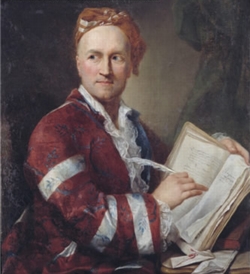

Underscoring the CKA’s somewhat less than unbiased analysis of the issue, not once in the document did the authors cite to or even acknowledge the existence of de Vattel, even in a dismissive way. Some might argue that this approach more resembles result-oriented propaganda than objective scholarly analysis.
2. “Sources Routinely Used”
The article next asserts that “[a]ll the sources routinely used to interpret the Constitution confirm that the phrase “natural born Citizen” has a specific meaning, namely, someone who was a U.S. citizen at birth with no need to go through a naturalization proceeding at some later time.”
It is far from “spurious” to note that, by omitting any reference at all to a source “routinely used” to interpret the Constitution – Emer de Vattel’s treatise, as confirmed in the U.S. Steel, Hyatt and Haaland cases – the CKA falls far short of a complete analysis. The article, composed in 2015, can be excused for not citing the Hyatt and Haaland cases already discussed, as they were not even decided until 2019 and 2023. A similar excuse, however, cannot be recognized for the article’s failure to cite (and distinguish or dismiss) U.S. Steel with its acknowledgment of the continued vitality of de Vattel and the principles articulated in his seminal treatise…, including in § 212 of the tome.
As for the CKA’s assertion that the nbC term has a “specific meaning, namely, someone who was a U.S. citizen at birth with no need to go through a naturalization proceeding at some later time,” while that is true for a legitimate “de Vattel § 212” nbC, the inverse extrapolation is a non sequitur. Specifically, recalling that all nbC’s are also native born “citizens,” but that not all “native born citizens” are nbC’s, the article’s “specific meaning, namely” language is meaningless. Or, more simply, although all Corvettes are Chevrolets, not all Chevrolets are Corvettes. The notion that the mere obviation of later “naturalization proceedings” is the equivalent of birth as an nbC is nonsense, and yet that is the core principle residing at the heart of the CKA.
3. “Birthplace Irrelevant”
Next, the article asserts that, subject to some parental residency requirements, “someone born to a U.S. citizen parent generally becomes a U.S. citizen without regard to whether the birth takes place in Canada, the Canal Zone, or the continental United States..,” citing (by footnote) 8 U.S.C. § 1401(g). That statute provides that, among others, persons who are declared to be “nationals and citizens of the United States at birth:” include:
“(g) a person born outside the geographical limits of the United States and its outlying possessions of parents one of whom is an alien the other a citizen of the United States who, prior to the birth of such person, was physically present in the United States or its outlying possessions for a period or periods totaling not less than five years, at least two of which were after attaining the age of fourteen years….”
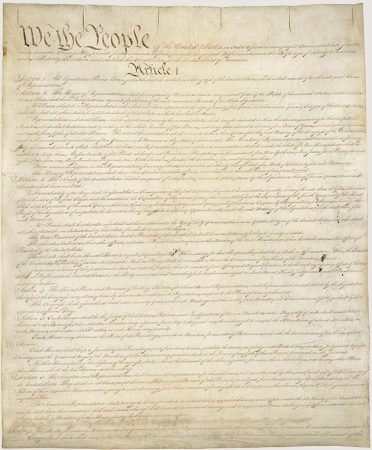
So what? Congress has declared such persons to be “nationals” and “citizens… at birth,” but has not declared them to be “natural born Citizens” for Art. 2, § 1 Cl. 5 eligibility purposes. Indeed, since the power of the Congress is strictly limited by Art. 1, § 8, Cl. 4 of the Constitution to legislating regarding “uniform Rules of Naturalization” (Emphasis added), and not unilaterally amending the Constitution with “end-around runs,” it is less than rocket science to understand that a congressional alteration of the meaning and intent of the Founders set out in the nbC clause of Art. 2, § 1, Cl. 5 is forbidden.
Congress attempted to do just that in 1790 when enacting 1 Stat. 103, deeming (using the phrase “shall be considered”) children born abroad to citizen parents – in the plural – to be “natural born citizens.” Realizing its error only five years later, it repealed that statute by 1 Stat. 414, thereafter declaring such children to be only “considered as citizens of the United States.” The Congress has never since used the phrase “natural born Citizen” in its statutory enactments.
And as for the CKA’s suggestion that the place of birth is purportedly irrelevant as well – whether “in Canada (Sen. Ted Cruz), the Canal Zone (Sen. John McCain), or the continental United States (ummm…, does this draw into question Barack Obama’s purported birthplace in Honolulu?)” – disregarding the “place of birth” core of the “jus soli” or “law of the soil” principle deemed to be the crux of the myriad analyses of the Congressional Research Service (“CRS”) on the matter could be seen as heresy, or, at minimum, inconsistent.
4. “Common Law and Enactments of the First Congress”
The CKA then asserts:
“The Supreme Court has long recognized that two particularly useful sources in understanding constitutional terms are British common law (citing Smith v. Alabama) and enactments of the First Congress (citing Wisconsin v. Pelican Ins. Co.). Both confirm that the original meaning of the phrase ‘natural born Citizen’ includes persons born abroad who are citizens from birth based on the citizenship of a parent.”
Once again: even assuming those assertions are correct – a questionable assumption as discussed later – so what? The fact that British “common law” was considered a “useful source” – a phrase appearing only in the CKA, but not in the Alabama Supreme Court decision – does not exclude other “useful sources.” As confirmed by the Haaland (2023), Hyatt (2019) and U.S. Steel (1977) Supreme Court decisions already noted, another “useful source” seemingly referenced by both the Founders as well as the Supreme Court was – and even today, is – Emer de Vattel’s seminal work, The Law of Nations…, although one would not know that from reading the CKA.
Moreover, no doubt inadvertently omitted from the CKA, in the Alabama case the Court, after stating the utility of referencing British common law as an exception to the rule that there is no “U.S. common law” when reviewing the constitutionality of state laws, noted that the Alabama statute there under consideration did not come within the exception. Thus, in that case, British common law had no application. The CKA’s citation thus seems anomalous.

With regard to the Pelican case, the proposition for which the CKA cites it – the gravitas of the First Congress’s enactments vis à vis the Constitution – relied, in turn, on an earlier Supreme Court case, Ames v. Kansas. Commenting on the “contemporaneous and weighty evidence” of the true meaning of the Constitution by examining legislation passed by the First Congress, the Court in Ames, reviewing a law passed by Congress, the Judiciary Act of 1875, 18 Stat. 470, stated:
“It thus appears that the [F]irst Congress, in which were many who had been leading and influential members of the convention, and who were familiar with the discussions that preceded the adoption of the Constitution by the states, and with the objections urged against it, did not understand that the original jurisdiction vested in the Supreme Court was necessarily exclusive.” (Emphasis added)
In other words, Congress is not infallible and sometimes goofs in its enactments. And when it discovers those errors, it sometimes, unlike in Ames, corrects them without the need for judicial intervention. It is posited that this is exactly what happened in 1795, when Congress repealed 1 Stat. 103 and replaced it with 1 Stat. 414 after recognizing that it could not “slant” amend Art. 2, § 1, Cl. 5 of the Constitution by unilaterally enacting a contrary or conflicting statute. As discussed, post, Founder James Madison may have been the one who realized the error and participated in the effort to correct it.
5. “nbC Phrase Intended to Include Persons Born Abroad if ‘A’ Parent was a Citizen”
The CKA next asserts that both British common law and the “weighty” enactments of the First Congress “confirm that the original meaning of the phrase ‘natural born Citizen’ includes persons born abroad who are citizens from birth based on the citizenship of a parent.” (Emphasis added) This contention merits closer examination.
To begin with, the use of the term “includes” suggests a present tense, present day applicability. That suggestion, of course, collides with the reality that the repeal of 1 Stat. 103 by 1 Stat. 414 – eliminating the ‘Considered as natural born citizens” language of the repealed statute and replacing it with “considered as citizens of the United States” – eradicated, from and after 1795 until the present date, any and all claims that the “children” in question were anything other than just “citizens of the United States,” but still, only if born to “U.S. citizen parents.” They did not become as a consequence of 1 Stat. 414 a “natural born Citizen” but were to be accorded only the rights of a “citizen of the United States” again, if born to citizen parents…, in the plural.
The CKA intimation that, despite the repeal of the “natural born” modifier of 1 Stat. 103 by 1 Stat. 414 a mere five years after it was originally mistakenly enacted, somehow its “ghost” lives on to this day is nonsense. The “original meaning” of the phrase, it is posited, required under a § 212 analysis birth in the United States to parents both of whom were already U.S. citizens.
The CKA notion that only one parent need be a citizen directly contravenes the intent of the Founders that zero potential for the insinuation of foreign influence into the presidency be allowed. If the CKA “citizen at/by birth” interpretation were to be accepted, the result would be the construction of a dual-allegiance/split-fidelity “pathway to the presidency” for aliens and foreigners instead of the “foreign influence barrier” the Founders intended to erect.
The highly restrictive definition in § 212 – and, it is posited, the one the Founders finally adopted – eliminates the potential for competing citizenship and allegiance claims of multiple countries, some adhering to jus soli principles (law of the soil and place of birth) and others adopting the protocols of jus sanguinis (law of the bloodline). The Founders sought to eliminate the potential for all such claims, not just some of them: § 212 does precisely that while the CKA approach does exactly the opposite.
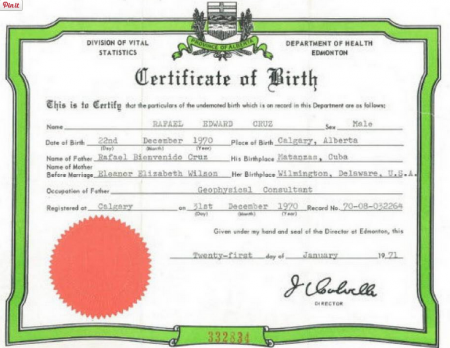
Furthermore, the ineffective renunciation by Sen. Ted Cruz of his Canadian/American “dual citizenship” did nothing to alter his status when he entered this world on Dec. 22, 1970 in Calgary, Alberta, Canada to a mother (claimed to be a U.S. citizen) and a father acknowledged to be a citizen of Cuba.
If there is a 21st Century desire to allow presidential eligibility for aliens, foreigners and/or naturalized citizens, the option is to amend the Constitution or persuade the Supreme Court to so rule. The alternative of cobbling together words and concepts that are directly opposed to the Founders’ original intent in 1787 should not be an option.
6. “Natural Born Subjects”
The next argument offered up by the CKA is that, under British “judge-made” common law (as well as statutory law):
“children born outside of the British Empire to subjects of the Crown were subjects themselves and explicitly used ‘natural born’ to encompass such children. These statutes provided that children born abroad to subjects of the British Empire were “natural-born Subjects . . . to all Intents, Constructions, and Purposes whatsoever.”


The purpose of this contention, of course, was seemingly to advance the argument that, since the Founders were familiar with those “British Subject” laws which were “binding law in the colonies before the Revolutionary War…,” they would “naturally” want to adopt the same principles and definitions of the foreign nation that has just been soundly defeated by George Washington and a bunch of patriots who had simply “had enough” of the British boot on their necks. Seriously…, why would anyone think differently?
From Blackstone commentaries of the laws of England. Somewhere in the indroduction section the forth, of the countries subject to the laws of England Blackstone states “And therefore the common law of England, as fuch, has no allowance or authority there ; they being no part of the mother country, but diftinct (though dependent) dominions. They are fubject however to the control of the parliament”. So were put in the control of parliament, with the power to write laws that needed the approval of the Privy Council and the King. As far as children being natural born subjects can be found in the colonial charters which state that the children of natural born subject would be treated as if born within the dominion. Going back to 1606 It was the children of nbs parents with were granted status.
Response from the author:
——————–
Your comment regarding Blackstone’s observation as to the applicability of British “common law” in colonial British America in the founding period is a significant “find.” The actual quote is found at p. 108 of the version of his treatise here: Online Library of Liberty: Commentaries on the Laws of England in Four Books, vol. 1 – Portable Library of Liberty (libertyfund.org). The find casts into doubt the broad CKA claim that the common law and statutes of England “were binding law in the colonies before the Revolutionary War.” Blackstone’s quote suggests the opposite. The find also proves that the more eyes that are laid on the posts at The P&E, the better…, and that had your humble servant discovered Blackstone’s observation first, it would most assuredly have been included in the “Deep Dive” challenge to the CKA. Many thanks to you and all others interested in revealing the truths underlying the nbC issue.
Thank you. Also visit the Colonial Charters starting the Virginia Charter of 1606 for Jamestown. Most of the rights of the future Americans can be found there.
Including citizenship birthright from the parents.
The CIA (a civilian as opposed to government agency, with “oversight” apparently by nobody) handpicked a Communist and Muslim mentored, undocumented, citizen of three different countries (British Kenya, Indonesia, and possibly the United States), criminally disposed (I can easily name several crimes including perjury, sedition, election fraud, and treason), dope-smoking, sexually conflicted, pretty boy with more of an Arab-American look than Black and a knack for hypnotic-like public speaking, Manchurian Candidate, BARACK HUSSEIN OBAMA, and installed him as our 44th president (despite not being constitutionally eligible or qualified in practically any sense except that the CIA liked him and saw him as someone who could be a popular leader of our country and the “New World Order”). As slow-Joe Biden might say: “That’s a fact, Jack” and “You’ll have to pay for play if you don’t believe it!” Anyway, what in the H_LL is the CIA doing to our election process, constitution, and our hopes of making America great? The same applies to our U.S. Supreme Court and especially Chief Justice John “I’ll Swear-in Anyone” Roberts Jr. For confirmation of all of this, may I suggest that you contact any one of the 52 signers of the ridiculous and untrue Biden for president letter (Leon Panetta, John Brennan, retired General Michael Hayden, and 49 others who conspired to commit election interference and fraud in 2020). WHERE IS, OR SHOULD I SAY WHO IS, A WILLING AND FEARLESS PATRIOT WITH THE POSITION AND AUTHORITY TO STEP UP, TELL THE ABOVE TRUTHS, AND FINALLY HOLD SOMEONE AND/OR SOME AGENCY ACCOUNTABLE? Is everyone on the Left above the law? As a matter of what certainly might be a fact, are there any enforceable laws at all today? Amen, my fellow future Komrades.
John Jay
Supreme Court Judicator (New York)
Governor New York State
Tom, here is information on Obama’s, “Hypnotic Speaking techniques”. When this is mentioned many people will say, “that would never work on me!” That may be true, but it worked on millions of Americans. Karen’s and others were fainting at the sight and sound of Obama The Fraud………..Obama’s hypnotic speaking technique here:
http://whale.to/c/an_examination_of_obama.html
Several times I pulled up the transcript to an Obama speech. The difference in what you heard and what he said was day and night. As I listened to the speech I kept getting a feeling of something not right.
In my opinion, Pastor James David Manning has a more “Hypnotic
Speaking Technique” than does Barrack Hussein Obama… Unfortunately
Manning has been canceled and no longer has a platform, where as Obama
is still out there lying without fear of being cancelled…